I use terms like hemodialysis and peritoneal dialysis often but most people probably don’t know what that means. I sure didn’t know anything about three years ago. I found some nice pictures online.
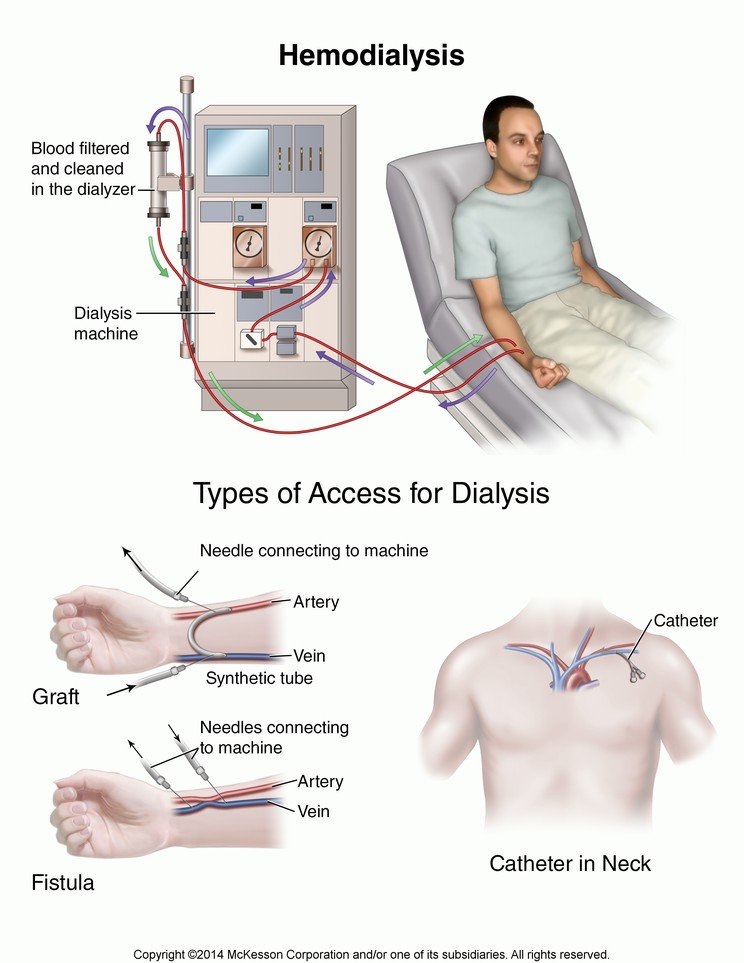
I go to the St. Joseph Hospital Renal Center three times a week for hemodialysis. It’s a non-profit dialysis center. Most patients are at a for-profit center like DaVita or Fresenius. Currently I have a catheter in my chest, my second one. I just had surgery to put in a fistula in my right arm above the wrist. When that matures and works, I’ll need to have the catheter removed, again.
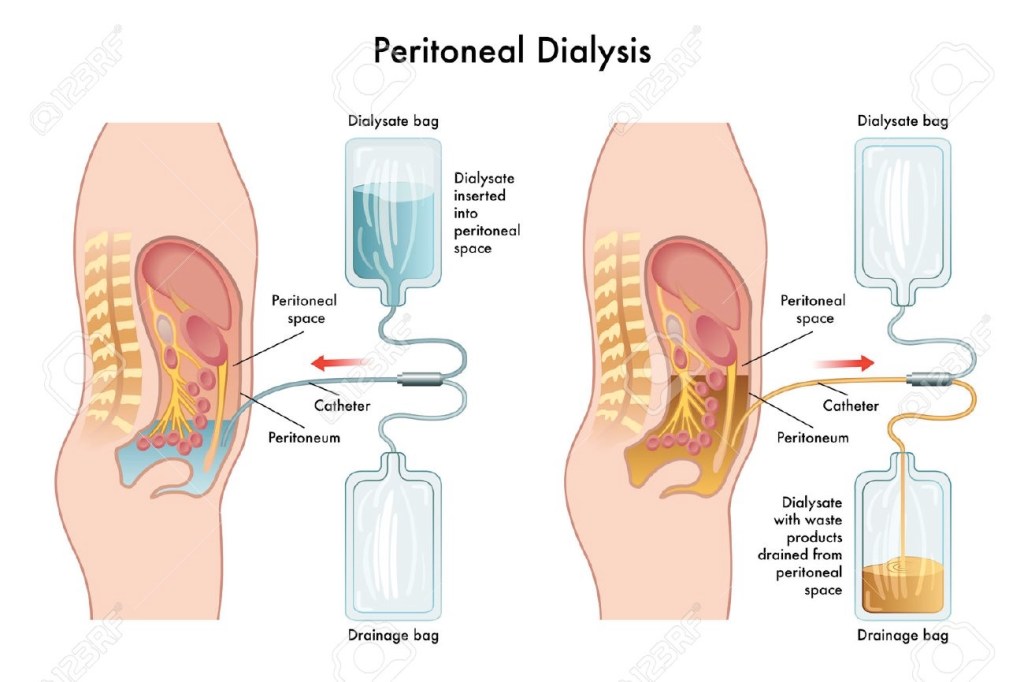
For six months I switched to peritoneal dialysis which required a different catheter. That was put in during April last year. Basically you put a dextrose solution in your abdominal cavity and let osmosis remove toxins and excess fluid by passing them through your abdominal wall membrane. The used solution is then drained and disposed. This fluid exchange can be done manually 4-6 times a day, taking about an hour each time.
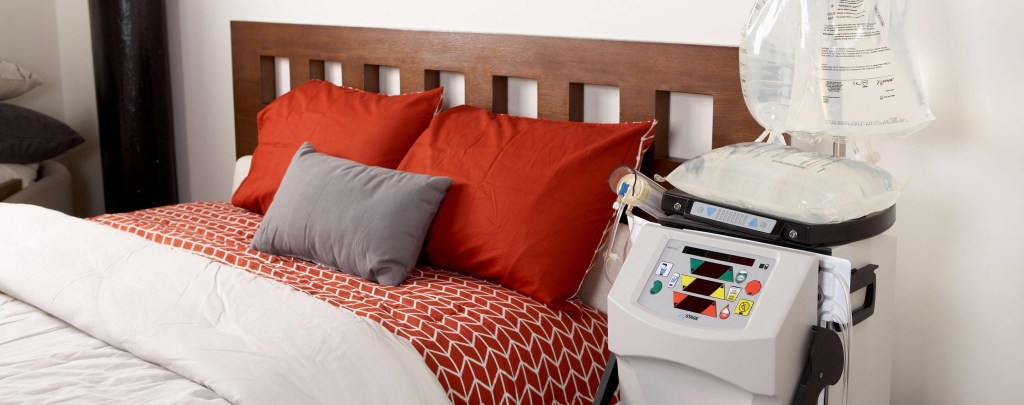
For me, instead of using manual exchanges, I has a machine that basically pumps fluid in and out of my abdomen overnight so I can work during the day with minimal interruptions. I would attach three bags of dextrose solution totaling 15 liters and the machine would cycle the fluid five times in and out of my abdomen. I also had to do a manual exchange around noon each day for extra dialysis. It turned out that my peritoneal membrane wasn’t suited for dialysis so I had to stop and go back to hemodialysis during the same time as my heart bypass surgery.
Also available is home hemodialysis. Basically it’s a different machine that allows you to do dialysis at home. If my living donor kidney transplants don’t work out, that may be an option for me later.

 Life with chronic diseases