So for over a month I thought everything was going well with the kidney except for a few borderline test results. However, my creatinine spiked two weeks ago so I had another video appointment with UCLA today. This meeting took much longer since the nephrologist was once again evaluating whether to release me to my regular nephrologist.
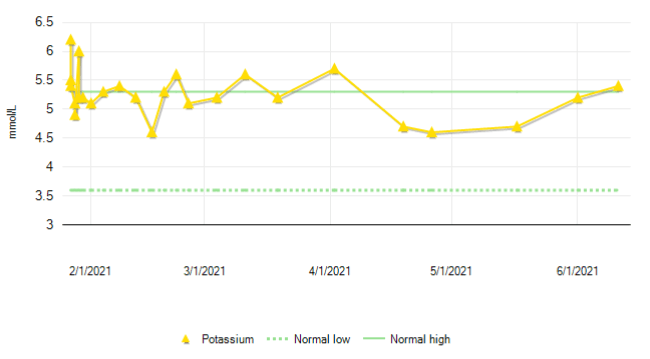
The issue this time is high hemoglobin combined with high potassium. My potassium has been borderline high since transplant, and this time, the result was 5.4 mmol/L:
The hemoglobin results post-surgery were super low since I had anemia while on dialysis, but it has steadily increased until it is now borderline high. High hemoglobin can lead to blood clots that may end up in the lungs causing pulmonary embolism, or the brain causing a stroke. Great!
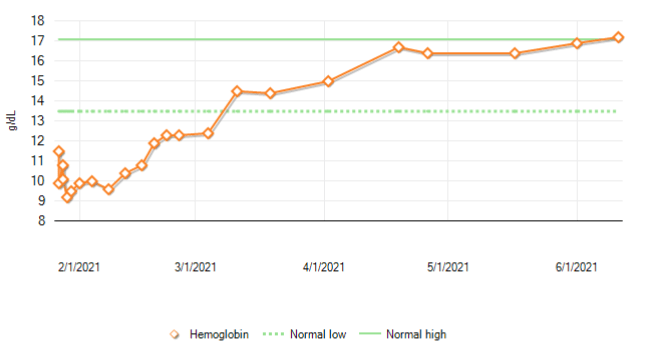
Persistent high hemoglobin after a kidney transplant indicates post-transplant erythrocytosis (PTE). It is defined as having hemoglobin results above 17.0 g/dL and hematocrit >51% for six months. My numbers are 17.2 and 53.5%, but for just the last test. Nevertheless, UCLA wants me onsite next week to talk about options. They were going to prescribe me Losartan to lower the hemoglobin, but that can raise potassium, which was too high already. Instead, UCLA prescribed Lokelma to try and lower my potassium first. If they can lower my potassium and my hemoglobin stays high, they will also prescribe Losartan. Otherwise there is a procedure to physically remove the hemoglobin from my bloodstream. Obviously, I want to avoid that scenario.
==========

Back to the creatinine problem, this time the numbers were a bit lower at 1.39. It is still above normal range, but much better than 1.58. I did the same blood test a few days ago for St. Joseph Heritage, and the number was 1.50. Combined with the inconclusive kidney ultrasounds, the UCLA nephrologist was not concerned about any rejections.

 Life with chronic diseases
2 thoughts on “Kidney Complications”