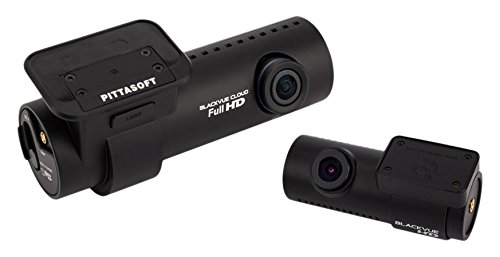
I have a Blackvue DR650S-2CH in my Tesla Model S. I purchased it right after I bought the car in December 2016. This was before Telsa allowed owners to record output from the many onboard cameras. Since my car is too old, I still cannot record from any of the Tesla cameras, so my Blackvue is the only dashcam footage I have.
Several years ago, I purchased a “high endurance” 64 GB SD card from Lexar. I do not know if there is any difference compared to “regular” cards, but the dashcam does experience direct sunlight and large temperature fluctuations. It probably cost me a little bit more, but SD cards are cheap. Well, the Lexar card failed yesterday. The camera kept saying “check SD card” over and over, and I was unable to access the card from several computers. As a replacement, I purchased a 128 GB Samsung PRO Endurance SD card for $15 on Amazon. Since my Blackvue writes to the SD card every minute, it is a tougher operating environment versus using the card for data backup.

Since this particular card was on sale, I purchased three of them. I have some home security cameras that can take a SD card so I will likely replace whatever card is in there now with these Samsung ones.
Looking through my SD card stash, I found some really old stuff. The smallest capacity card I have is only 16 MB. That is megabytes, not gigabytes. It holds eight thousand times less than the 128 GB Samsung card I just bought, and it is in the large SD card format. I worked ten plus years at a fabless semiconductor company, so I know all about Moore’s Law and die shrinkage, but this still amazes me.

Next to the 16 MB card, there is a 128 MB card. A one-minute MP4 video exported from my Blackvue camera is ~64 MB so it can hold only two videos. Not too useful. Then there are 2 GB to 128 GB cards, including one branded Amazon Basics. The Lexar card at the top right is the one that failed yesterday in my Blackvue camera. There are several more 32 GB and 64 GB SD cards, primarily Sandisk, that are scattered in multiple devices. To think my first mass storage device was a $800 Seagate hard drive that only held 32 MB.
==========
I was a bit worried about using a 128 GB card in my Blackvue camera. I thought I read the largest compatible card was only 32 GB, even though the 64 GB Lexar card worked fine until it failed. I just inserted the 128 GB card, and the camera was able to initialize the card.
Using 64 MB file size for the front camera and 32 MB for the rear, each minute uses up 96 MB of storage space. Divide that by 128,000 MB (close enough), I can store almost an entire day of continuous recordings (actually 22.2 hours). The camera does not record if it detects that the car is parked (there is a GPS sensor in the camera), and it does is no activity in view of the camera. I used to get about two days’ worth of recordings with the 64 GB card, so I expect at least three or four days of recordings with the larger 128 GB card.

 Life with chronic diseases