Post-Dialysis 1/3/2021

I just got home after today’s dialysis session. Due to New Year’s Day being on Friday, the weekend schedule was shifted back one day. As I mentioned before, my weight was pretty high. Even after removing my thick jacket (but leaving my shoes on), the scale said 83.5 kg. I usually take 0.5 kg off for miscellaneous clothing but I cheated a bit more and told the tech I weighed 82.5 kg. That means I had to cheat at the end weigh-in too. Even at that weight, the tech decided that we would remove 3,800 mL of fluids, probably the most they’ve tried during one session.

Right at the beginning, there was a problem. The arterial needle didn’t go in that smoothly, and it hurt really bad. The venous needle was a bit better but there was a dull pain in my arm that wouldn’t go away. After about 30 minutes, the tech decides to move the needle since the pressure was wrong, and it hurt a lot worse. He ended up removing the arterial needle and jabbed me further up the arm. Initially, he missed the vein, but was able to hit in with a second needle. He jokingly said he was praying. Not sure how much of it was serious.

I started getting dizzy around the two hour mark. Both my feet were super numb for some reason but I tried to lie flat in the chair to raise my blood pressure. I guess it worked okay since I was averaging 140/80, even as the machine eventually pulled out 3,732 mL of fluids. When I stood up at the very end for the final blood pressure reading, I almost fell over, and the reading was 85/50. Not good. I took a few sips of water, waited five minutes, and tried again. This time it was 104/70 (or something) so good enough. Walking out, I was still pretty dizzy but felt better once I sat down in my car. The weight reading was 80.1 kg, which was 83.5 kg – 3.7 kg + a few sips of water. I ended up telling the tech that I weighed 79.2 kg so I have to watch what I eat/drink for the next few days. Of course, I was starving and stopped by Raising Cane’s to get four chicken fingers a la carte. No drinks. I ate them while driving home. They were super hot (temperature) and tasted awesome. I think I should get a job there after retiring from my real job. I leave you with a chicken finger video.

==========

Ugh, so tired. I think I woke up for a bit at 2:00 pm but I slept until almost 7:00 pm. Meanwhile, two of the dialysis needle insertion points are still bleeding, visible through the band-aids. I’ve gone through four of them already.


Orange County Vaccine Distribution

Since the COVID-19 vaccine became available, I have not heard anything about the distribution schedule for Orange County. Through Reddit, I found an official site with some information.

However, like many government websites, it has a lot of text but not that much useful information. The question everyone is asking is when they will be eligible to get the vaccine, and basically we are told that they are still developing guidelines. Huh? The vaccine has been available for weeks. I know supply is scarce right now, but at least have a plan in place. What if a large quantity of vaccine suddenly becomes available? Are they going to sit on their hands or scramble and throw a crude plan together overnight? Ugh. So much incompetence in government.

Even the current schedule is confusing:

I am guessing that we are in Phase 1A for Tier 1 and Tier 2 population? The explanation says Phase 1A: Critical and Healthcare Workers. Critical what? Critical healthcare workers, critical workers in general, or just critical people? Then they go on to explain Tier 1 but the last bullet just says Dialysis centers. Again, what about dialysis centers? Does Tier 1 include only dialysis center workers or patients as well? The three previous bullets in the same section are very detailed, yet the last bullet has zero information. If dialysis patients are not in Tier 1, and dialysis centers is not mentioned in Tier 2 and Tier 3, then are we (patients) included in Phase 1B and 1C?

Digging deeper, bullet #2 says,

Skilled nursing facilities, assisted living facilities, and similar settings for older or medically vulnerable individuals and residents in these settings

So non-healthcare workers are include in Tier 1. This population makes sense since that is a very high-risk group and there has been many documented deaths. My point is that dialysis centers are fairly similar. The workers do come in contact with a lot of patients but only 3x when compared to dialysis patients (three shifts per day). Dialysis patients are usually pretty high risk since many have multiple medical complications. I haven’t heard of a virus breakout at a dialysis center yet, but patients are basically immobile for 3-4 hours, unable to remove themselves from unsafe situations or environments. If dialysis centers are considered high risk areas, then us patients also share that risk along with the workers.

In addition, there has not been any communication from my dialysis center staff on any information they may have that may be relevant. Like always, zero information when you need it next. I guess I just keep doing what I have been doing for the past 10 months and hope I get the vaccine call before I get sick and die.

==========

I found an academic article online that suggests dialysis patients, especially in-center patients, are at very high risk, with short-term mortality at 20%.

Coronavirus disease 2019 (COVID-19) has affected the care and outcomes of patients treated with dialysis worldwide. In this issue of Kidney International, 3 reports highlight the disproportionately severe impact of COVID-19 on patients on dialysis, noting its high prevalence, particularly among patients receiving in-center dialysis. This likely reflects patients’ limited ability to physically distance as well as community exposures, including residence in areas with high rates of infection. Patients on dialysis are at extremely high risk should they develop COVID-19, with short-term mortality of 20% or higher. Accordingly, it is imperative that the kidney community intervenes to reduce the threat of COVID-19 in this vulnerable population by focusing on modifiable factors, including universal masking of patients and staff and enhanced screening, including testing for COVID-19 in the patients who are asymptomatic during times of high local prevalence.

https://www.kidney-international.org/action/showPdf?pii=S0085-2538%2820%2931203-5

Overweight 1/2/2021

Ugh, I’m so dead for tomorrow. I just weighed myself and I’m at 83.2 kg without much clothing. With clothes and shoes, less my 0.5 kg adjustment, I’ll probably come in at 84.0 kg. I was below 80 kg on Thursday so I’m way over my last weight, and dry weight is still 78.2 kg. I heard a tech bitch at another patient Thursday for being 4.5 kg over, with talk of ER visits and ventilators. If I’m ~6 kg over, they are going to freak out and schedule additional sessions.

I’m not even sure what happened. I measured myself at 82.1 kg this morning, a bit high but manageable. I had some coffee (~300 mL) and an egg sandwich for breakfast. I even skipped lunch. I don’t think I ate or drink anything else, except for a few Korean crackers at lunchtime. Don’t know why the scale read 1.1 kg gain. My mom made beef curry over rice for dinner. There’s no way I can eat that: rice and curry sauce is mostly water. She also baked some Costco mini-eggrolls so I had a few of those so I wouldn’t starve. I really think the dialysisi center went too low with my dry weight but they’re hesitant to raise it after lowering ti consistently over the last few months. Not sure what I’m going to do. If I think I can be disciplined over the next few sessions, I can “cheat” and do a bigger adjustment before/after so it looks like a gradual decrease over time. Of course, the problem gets worse if I keep gaining fluid weight. I guess I can always take off my sweatshirt and sh9es and another 0.5 kg for the remaining clothes. That will lower the baseline but that also means taking longer at weigh-ins going forward.

Tiredness

I’ve been very tired lately. Not sure if it’s just dialysis catching up to me, or my inability to sleep well at night. After dialysis this morning, I went and got some lunch and charge my car. I got home at around 11:30 am and took a nap. I think I woke up at 2:00 pm and 4:30 pm but went back to sleep. I didn’t get up until around 7:00 pm to eat dinner. After dinner, I cleaned up a pile of paperwork, then napped a bit more. Now it’s 11:30 pm and I probably slept 10 out of the last 12 hours and I’m still tired.

I probably won’t be able to sleep tonight though. My biorhythm is all messed up.

==========

I’ve been trying to sleep during dialysis without much success. It’s mainly because of the sucky chairs. When it’s fully reclined, the chair is not exactly flat, and my feet are dangling of the end of the footrest. If I stay in that position, my back starts to hurt after about 30 minutes. Today however, I tried leaning a bit to my right, since sleeping to the left still puts pressure on my heart and chest cavity. I had to be careful because of all the tubing and I couldn’t move my right arm, but was able to rotate about 30-40 degrees to take some pressure off my back. It wasn’t exactly comfy but I was able to fall asleep for about an hour. I’m going to try that on Sunday to see if I can get more rotation and a bit more sleep.

Pleural Effusion Again?

😰… I’ve been a bit slack in controlling my fluid intake this week. My “dry” weight is currently 78.2 kg, but I ended Sunday’ session at 80.x kg (I can’t remember the exact number). I don’t think I went overboard with food and drink. In fact, it’s about 2:00 am right now (can’t sleep again) and I am starving. The scale at home is not calibrated with the scale at the clinic but I am 82.6 kg this morning without shoes. I typically weight myself at the clinic with shoes on, and then subtracting 0.5 kg to get to a consistent baseline. This would put me at ~83.0 kg, which is only ~3 kg increase but ~5 kg over dry weight. Since my blood pressure has been dropping precipitously near the end of each session this past week, the clinic have not been super aggressive with the ultrafiltration (UF) or fluid removal as they would like. They may even add another session for UF if I can’t lower my weight on my own.

All that is secondary. I’ve also noticed that my breathing has become more labored, especially if I lay down on my left side. That has always been marginally the case, but it feels a bit worse this week. I feel much better than a few months ago when I definitely had ~500 mL of fluid in my chest cavity, but maybe some has diffused back.

Recently, I’ve felt like the guy with an angel on one shoulder and the devil on the other, arguing about self-control. The right thing to do is to watch what I eat and drink more diligently since my weight is creeping up, and my phosphorus/potassium lab results are high. However, I’m getting more urges to forget all that, and eat/drink whatever I want. Maybe it’s spending nine months in semi-isolation that’s weakening my resolve? Or that I’m so close to the end of the tunnel for a kidney transplant but it on-hold indefinitely due to the recent COVID resurgence?

Ugh…

https://www.thekeyplay.com/content/2018/november/1/angel-vs-devil-boston-college-edition

Blood Pressure Rollercoaster

Today was a super eventful day at dialysis. Maybe it was because it was a Sunday when the clinic is hot typically open. I mentioned previously that I had problems sleeping this morning so I was already exhausted when I got to the clinic. Also, I thought I was going to be very overweight so I skipped breakfast. Finally, my morning blood pressure was satisfactory at 143/80/60 so I also skipped all my morning medications, including the Tradjenta as I was not eating.

I was having problems staying awake during the 15 minute drive to the dialysis center. Not a good start. My regular tech was still out on vacation so another MWF tech poked me. Even with lidocaine, it hurt a lot going in and kept hurting for about 15 minutes. She probably hit a nerve by sticking the needle almost straight down initially. My blood pressure was pretty normal at this point at 158/78/65. but over the next two hours, it rose steadily until it hit 174/91/63 at about 7:40 am. Thinking that it was going to keep rising, I took all my morning meds, including the blood thinners and Tradjenta. Within about five minutes, the next reading was 123/73/68. The elapsed time was too short fo the meds to take effect so the 174 number was wrong?

From that point, my blood pressure started dropping more until I was feeling kind of nauseas and lightheaded. My BP got as low as 103/58/64 before I asked the tech to turn off the UF. For the next 15 minutes, we kept manually measuring my BP until a 98/60/65 popped up, but both readings before and after were in the 140’s/150’s. Again, I don’t know if the BP meter is accurate but having the number swing 50 points down then up didn’t feel good. At the same time, I think my blood sugar was crashing too since I didn’t eat anything for breakfast and I also only ate a small dinner the previous day, worried about being too much over my “dry” weight. I ended up drinking a small can of Sierra Mist and taking a few glucose pills to try and put some fluids and sugars back. Even though they took me off 15 minutes early, I sat in the chair after the session to recover and didn’t leave until 10:15 am. I was even more tired at that point but starving so I went to get lunch, ate it in the parking lot, and drove home to sleep. I just woke up at around 2:30 pm, still very tired, but feeling a lot better.

Looking forward to doing it all again on Tuesday.

Insomnia 12/27/2020

Ugh. I can’t sleep again. I am still exhausted during the day, but when I try to go to sleep at night, I end up staying up all night. It’s now 2:51 am. I actually fell asleep at around 8:00 pm but got up at 10:30 pm covered in sweat. I got up and took a long shower, and haven’t been able to fall back asleep. Part of the problem seems to be some fluid buildup in my chest cavity again. I can’t be sure without a CT scan or echocardiogram, but breathing is a bit harder, especially when I sleep on my side. I’m okay when sitting and standing so I can’t be 100% positive.

In addition, I’ve been experiencing cold sweats at night for about a month. I think I’m feeling cold due to anemia. I know the dialysis center has been injecting me (or the machine during dialysis) with Epogen to try and increase my hemoglobin levels. The nurse came by just last week to ask me about bleeding since my test resulted dropped below 10.0 g/dL. I told her I was bleeding for about a week post-colonoscopy so maybe that’s why I’ve been feeling so bad this week. Anyway, I pulled out an electric blanket that my coworkers gave me during heart surgery recovery and placed it on my bed. I would turn it on low/medium right before sleeping and it was glorious. However, soon I started waking up covered in sweat but cold. I’ve since put away the blanket but I’m still sweating a lot at night.

So for the past three hours, I’ve been lying in bed trying to find a good position to ease my breathing a bit, but also sweating because of the thick comforter while shivering from chills at the same time. I feel much better now, sitting at my desk with a thick jacket but I know the exhaustion will catch up with me during dialysis in few hours.*

==========

*Due to Christmas Day on Friday, the weekend dialysis schedule got shifted by a day. Friday patients were moved to Saturday, and Saturday patients were moved to Sunday when the clinic is usually closed. This means I had a three day break since Thursday’s session, partially accounting for the excess fluid in me. The head nurse already said I may need an extra session next week… ugh, I hope not.

Fistula Update 12/24/2020

Yup. It’s Christmas but the dialysis never stops. Well, the clinic is taking tomorrow off so the next two days get pushed out. My next session is now on Sunday instead of Saturday.

Due to the holidays, several of the dialysis center staff took days off. The tech that normally cannulates me is off for a few days so I thought the other tech would stick me today; they usually are assigned in pairs. However, the “substitute” was another staff member that normally just refilled supplies, such as saline, tubing kit, dialyzer filters, and blankets. He also sets up the dialysis machines for their cleaning cycles between patients. I’ve seen him since my first day at the dialysis center but I’ve never seen him work on a patient.

So, I was a bit surprised when he came over to hook me up to the machine. I was a bit worried at first since most techs have problems getting a clean insertions. He also used the top two insertion points; typically we use the bottom one (closest to wrist). I decided to let him try and it worked out great. He was a bit slower than the other techs but worked very carefully. The insertions did not hurt at all and was fine throughout the entire session. Even when he took out the needles at the end, it didn’t hurt at all. Often I get a weird pain sensation when the needles are pulled out.

However, I still felt like crap at the end of the session. I’m still not getting enough sleep and for me, it’s hard to sleep during dialysis. I also came in heavy again; not sure if it’s fluid or eating more. We only removed 3,000 mL of fluid today though I was about 4.0 kg over last session’s weight. I did get some cramps in my ankles earlier today so I don’t know if my dry weight is set to low now.

Dizzy Again

This make it the third day in a row that I was dizzy at the end of dialysis due to low blood pressure. Initially I wanted to leave a bit early today since I had an important work meeting to call into at 10:00 am. The tech started to unhook me at around 9:15 am, about 25 minutes early. However, my arterial access point started bleeding after needle removal even though I was applying quite a bit of pressure. It took about 20 minutes to stop the bleeding. Then when I stood up for the final blood pressure reading, I felt dizzy again. The lowest reading today was a 100/48. I did speak to the rounding nurse earlier and she had raised my dry weight from 78.0 kg to 78.2 kg. We’re going to use the Crit-Line again starting next session to determine if we’re pulling too much fluids out, causing the low blood pressure.

I rushed to grab some lunch after dialysis and got home at about 10:05 am. Meeting just got started so I didn’t miss much.

Good News From Medicare

The US Senate passed a bill yesterday to provide immunosuppressive drugs post-transplant for life. Previously, Medicare only pays for three years of medication post-transcript. For patients that won’t qualify for Medicare after that date, they have to find their own insurance or risk losing their transplanted kidney. I read that about 375 patients die each year from losing Medicare and not being able to afford the needed medication. This is supposed to save $400M over 10 years since thousands of patients can avoid a return to dialysis, which is also paid for by Medicare.

For me personally, this means I can consider retiring post-transplant. I’m in my early 50’s so if I go through the transplant soon, I will run out of Medicare coverage in my mid-50’s and need to find insurance coverage for 10+ years. That typically means getting a job and work-provided insurance. I do need to find out if Medicare will only pay for immunosuppressive drugs or will they continue as my primary health insurance, paying for 80% of all claims.

Dialysis Hypotension (updated)

Blood pressure gone wild!

My blood pressure kind of went crazy today during dialysis. Since I went to bed really early, I did not take my evening NIFEdipine pill. When I woke up at 1:30 am, I measured my blood pressure and the reading was 212/111. I quickly took the missed medication and tried to go back to sleep. I ended up doing about two hours of work instead.

Dialysis started out uneventful but at about two hours in, I started feeling faint. I had the tech manually measure my blood pressure and it was 89/50. He quickly reclined my chair, turned off UF, and gave me oxygen to breathe. Not sure what happened but I thought I was going to pass out. It took about another 30-45 minutes for my blood pressure to come back up. Meanwhile, another patient across the room was having major cramps and screaming. Just another day in the dialysis clinic.

==========

Update: 12/19/2020 9:30 pm

It happened again, though not as bad during dialysis. My BP this morning was 148/something so I took both the Metoprolol and Olmesartan during breakfast. BP started okay at the beginning of the session but with about an hour left, I started feeling a bit dizzy. The UF was set pretty high at 3,500 mL so maybe that had something to do with it. Since most of the session has already passed, the tech just reclined my chair but didn’t give me O2. My BP stabilized a bit but the last standing BP reading was 101/something and I definitely felt dizzy again. He gave me some water and had me sit for 15 minutes. I felt better but they were still worried because another patient had the same experience and ended up in an accident driving home.

I got home okay.

Monday Night Dialysis

Due to the colonoscopy, I asked to moved my dialysis treatment from tomorrow morning to tonight. I was supposed to get there at 5:00 pm but I got a call at 4:00 pm informing me that my machine was ready. I got there at 4:30 pm and a unfamiliar tech led me to the chair. I was a bit worried since we just had problems with my fistula Saturday, but he was able to cannulate the needles fine. Since they had to fit me into their schedule, I was only dialyzed for 3 1/2 hours, which was fine by me. Since the nephrologists come around on Mondays and Tuesdays, I saw the same doctor again. He said my phosphorus levels were really high at 7.7. Last month, the reading was 6.2 so something is weird. I’m eating mostly the same things and taking the binder. The only thing I can think of is the deli meat from the club subs I’m getting from Jersey Mike’s. They don’t publish the phosphorus content of their ingredients so maybe they are using one with high phosphorus levels.

The patient to the left of me came in 10 minutes after me. He saw my work-logo’ed clothing and asked if we were hiring. I told him to go online and look but automatically assumed that he was after a factory job. He didn’t look like a salaried office worker, but I probably don’t either. I think I made an assumption based on his race and age, even though I just took a class online a few weeks ago. Not good. He later had pretty severe leg cramps and was still groaning and moaning when I left.

On the right side was an Indian-looking woman. She appeared to be a fairly new patient and just came back from the hospital due to pneumonia. As the doctor talked to her, it turned out she had an infection with her chest catheter, and they had to set up an antibiotic IV for her. So far, I’ve avoided any access infection while on dialysis so I don’t know how it feels, but I heard it sucks big time. She seemed to be in a bit of pain; I hope she gets better.

I left dialysis at 77.9 kg and won’t be back until Thursday morning. My ending standing blood pressure was pretty low at 103/something. I’m counting on all the colonoscopy flush to come out and that I don’t absorb 4 liters of fluids.

Colonoscopy Prep Tomorrow

Since I’m sharing too much information already, here’s the actual instructions from the prep sheet:

DAY PRIOR TO PROCEDURE
Begin a clear liquid diet from the moment you wake up in the morning
Prepare your solution according to the direction on the container and refrigerate
Be sure to drink an extra 8oz of clear liquid every hour from 11am to 5pm (Gatorade preferred) to keep hydrated, it can be more than 8 oz.
At 6pm begin to drink prep solution 8 oz every 10min until 1/2 of it is consumed
Place remainder of the solution into the refrigerator

GAS TABLET
9pm
take 2 gas tablets with 8oz clear liquid
10pm take 2 gas tablets with 88oz clear liquid

Continue drinking clear fluid until bedtime/midnight

DO NOT TAKE ANYTHING BY MOUTH AFTER MIDNIGHT
Except
the morning dose of the prep.
Beginning 4 hours before your arrival time drink the remaining solution: 8oz every 10 minutes until solution is gone.

Do take BLOOD PRESSURE and/or HEART MEDICATION the morning or procedure with a SIP of water.
all other medications hold until after the procedure.

HAVE NOTHING BY MOUTH 3 HOURS BEFORE YOUR ARRIVAL TIME.

First, as a former “professional” typesetter (I worked at an advertising agency part-time for one year while in school), the formatting (bold/italics/capitalization/spacing) drives me crazy. I think they wanted to highlight certain points but there are only a few lines of instructions. The inconsistent formatting actually makes the page look chaotic and harder to read. Not what you want for a list of medical instuctions.

Second, my procedure arrival time is 7:00 am on Tuesday, so I moved my dialysis session to Monday (tomorrow) at 5:00 pm to 9:00 pm. I’m afraid the prep solution will cause diarrhea in order to flush out your GI tract so I can’t start taking the solution until after 9:30 pm. I have to push back the prior day schedule by 3+ hours but still get up at 3:00 am Tuesday morning to finish the prep solutions. I think I’m going to take tomorrow off from work, sleep the entire day, and just stay up after dialysis until I’m done with the procedure the next morning. Probably will spend the entire time sitting on the toilet anyway.

Finally, as I mentioned before, that’s a lot of fluid intake. I finished dialysis at 78.4 kg yesterday so I’ll drink until I get to ~80.5 kg since I don’t want more than 3,000 mL of UF at dialysis, especially if it may be a shortened session. Hopefully I will feel well enough after the procedure to pig-out for lunch Tuesday.

Fistula Update 12/12/2020

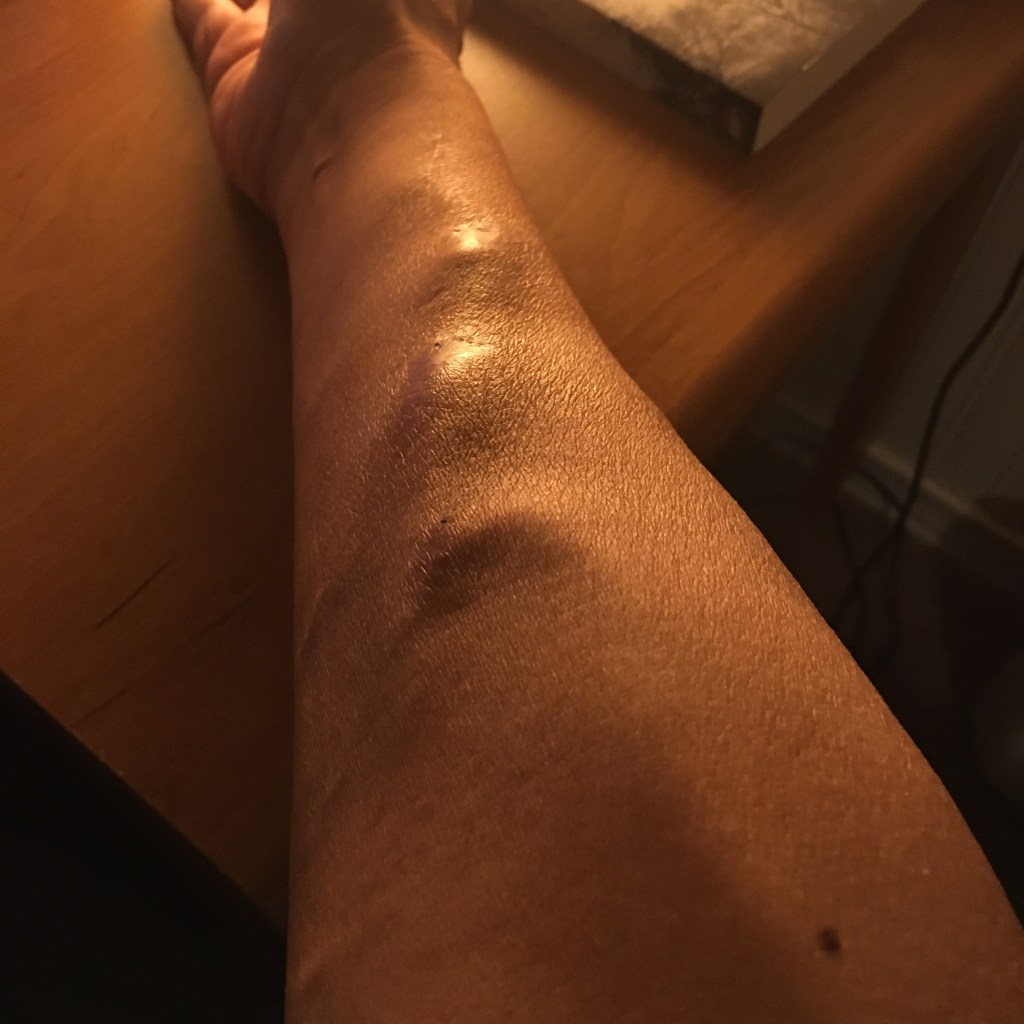
My fistula is ugly.

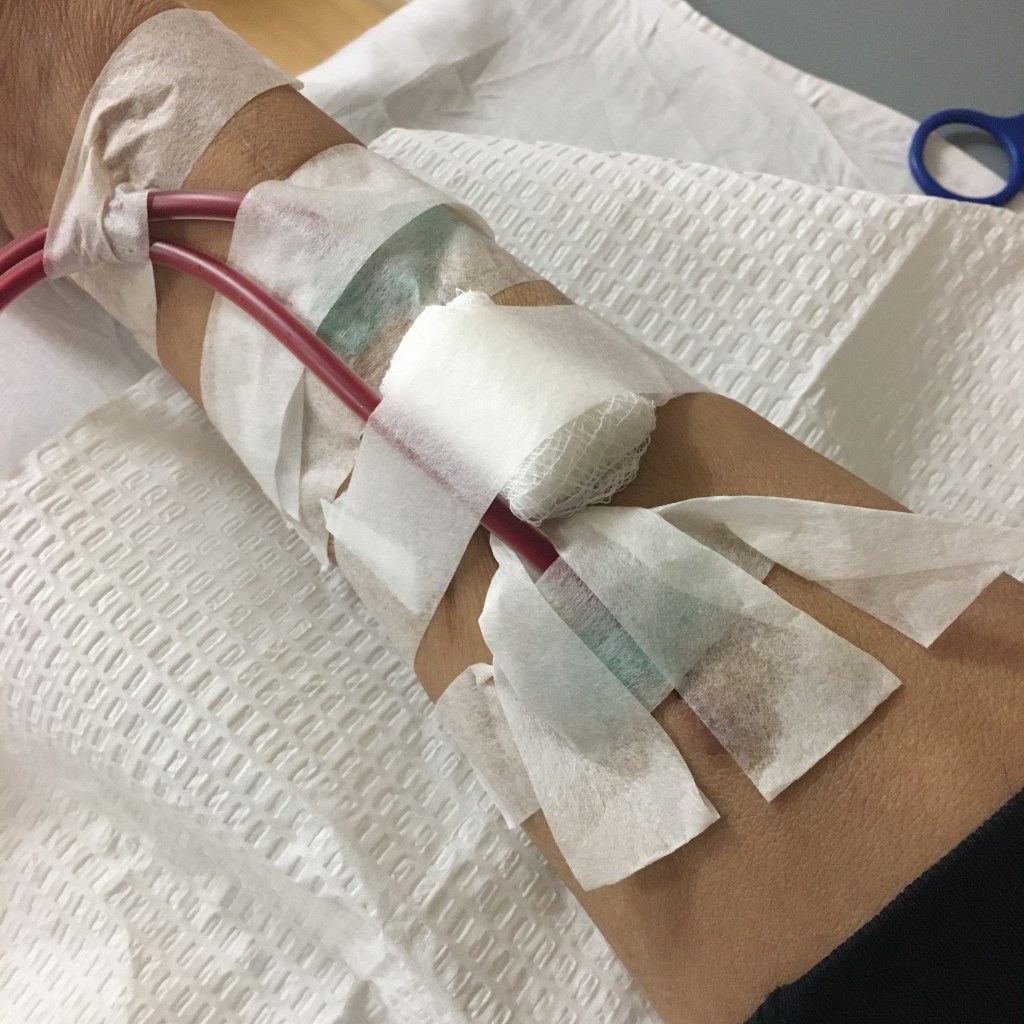
It’s not as large as some other patients but under certain lighting, it looks pretty bad. It also gave the techs some problems today. Everything was going well for the first 45 minutes. Then the arterial pressure alarm started screaming. The tech tried to rotate then reposition the needle but it started hurting. She then decided to switch the needle site so the other tech got another needle and jabbed me without lidocaine. Ooooowwwww! Holy sh*t did that hurt a lot. By then my entire arm was in pain, and my blood pressure was dropping fast. Usually they pull all the needles out at the end of the session, but they pulled the unused one now to see if it wold lessen the pain. Not really.

Since I was getting dizzy from the low blood pressure, the nurse came over to give oxygen and stop the UF fluid removal. Now there are three people surrounding my chair, with me in obvious pain. They ended up reclining my chair and giving me some ice for the arm. There was still a lot of pain but it was slowly subsiding. Great, another three hours to go.

It’s now about 8:30 am so I have another 1:20 to go. Arm is better if I don’t move it too much. Since the dialysis chair sucks and my back hurts if I recline too long, I’m sitting up again, but with the oxygen tube still stuck in my nose under the mask.

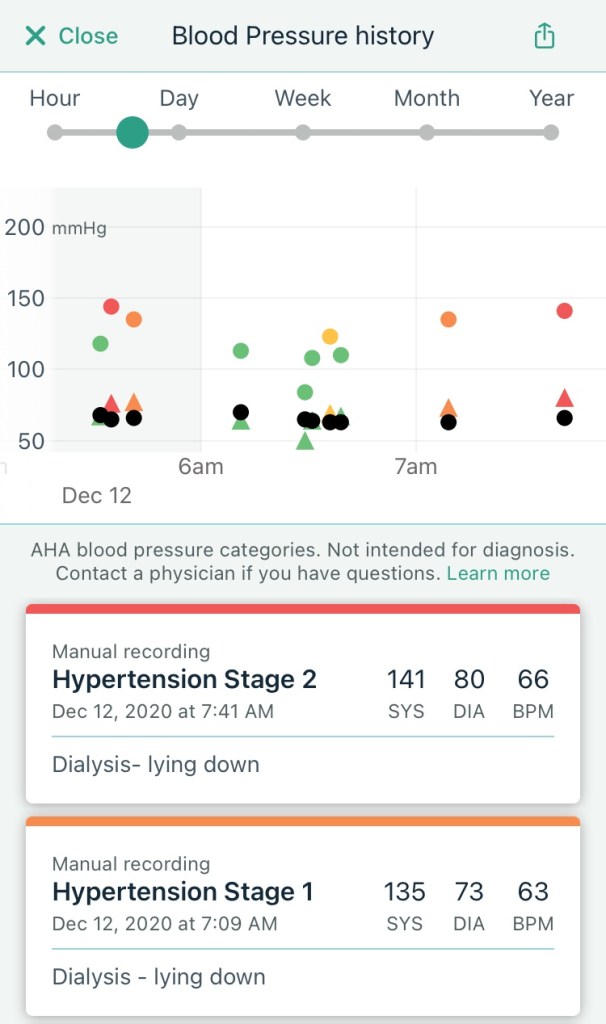
I’m weirded out by the huge blood pressure drop. I was very lightheaded and my vision started to blur. The tech said it was a natural reaction to stress and pain. I thought it would go up instead. Here is a chart for the first few hours.

The AHA categories are not too useful. I’m always in Hypertension Stage 1 or Stage 2. Even my low reading of 84/50 was recorded as normal even though I was about to pass out.

==========

It’s now 5:00 pm. The rest of the dialysis session was uneventful. They unhooked me at 10:00 am and I was out by 10:15 am. I took a short nap earlier, but my arm is still hurting a bit, and my right hand is somewhat numb. I am worried about going into dialysis on Monday and having “strangers” try to cannulate my fistula. I hope they don’t screw up.

Fructosamine

Wishful thinking.

Each time I see a new doctor, we find something else wrong healthwise. In this case, I thought my diabetes was pretty well controlled, but I guess not. My endocrinologist says that the regular hemoglobin A1C test is not accurate for dialysis patients so she ordered a fructosamine test. This basically tell us what my blood glucose levels are over the past 2-3 weeks. She also claims that most diabetes medicine are not effective for dialysis patients so I may have to use insulin if the test result is high.

Well, the test result came back and they’re high. My number was 479 µmol/L, while the reference range is 200-285. This translates to an A1C number between 8-9, which is clearly in the diabetes range. The strange thing is that my daily glucose number are still lowish: it was 89 this morning. How am I supposed to monitor my blood sugar if none of the regular tests are accurate?

Sigh. Maybe she can wait a few months to see if I get my kidney transplant and come off dialysis.

==========

F*ck. The endocrinologist office just called and it’s imperative that I start taking insulin shots as soon as possible before the transplant. I’m so disappointed. Don’t these doctors talk to each other? They’re all part of the same hospital/medical group. I’ve been on diabetes medication forever and dialysis for 3.5 years. No one, not my primary doctor, nephrologist, or nutritionist ever said that there was a secret test I need to take because everything else is inaccurate. If the fructosamine test is accurate, then I’ve spent the last three years thinking my A1C was ~5 to 6% when in actuality it was ~9%. WTF? And if it was that high, how was I getting hypoglycemia that was bad enough to require a trip to the ER?

==========

I’m so tired. I think it’s even more discouraging when you think you’ve made good progress by watching what you eat and exercising regularly, but then find out your lab results were all a lie. How can all these doctors and nurses tell me “good job on controlling your diabetes” when this fructosamine test says otherwise, and it’s bad enough that I have to get daily insulin shots?!

Colonoscopy Prep

Since I’m getting the related COVID test tomorrow, I went over the pre-procedure preparation instructions. On the day before the procedure, I can only have a clear liquid diet, and they want me to drink 8 oz of Gatorade every hour from 11:00 am to 5:00 pm. First, that’s about 1.5 liters of fluid that I have to get rid of through dialysis, and Gatorade is high in electrolytes like potassium and phosphorus. I also have to mix 4 liters of the Golytely solution and drink 1/2 of it that night and 1/2 of it starting at 3:00 am the next morning. All together, I’m supposed to drink ~6 liters of fluids in the 12 hour before the procedure. They must not have considered fluid restrictions for dialysis patients in their instructions. Multiple people said the Golytely is to flush your digestive tract so none of it should be absorbed. That still leaves about 2 liters of extra fluid. I guess I have to stop drinking right after dialysis on Saturday and hopefully the rescheduled Monday session will be able to remove enough excess fluids. Having fluids in your chest cavity and not being able to breathe sucked.

==========

From this paper, it appears that the incident rate for colorectal cancer in Asian males is 37.8 per 100,000 people. That’s not very much at all but I haven’t had the greatest luck with health issues.

Dialysis Blood Pressure 12/8/2020

My blood pressure is still pretty volatile, like a risky stock price. I took the exact same medication as I did last Saturday: one NIFEdipine ER the night before and skipping the other two medications in the morning. I probably weighed about a kilogram more so maybe there’s more fluid in the bloodstream. Here’s what I recorded from the dialysis machine:

TimeSystolicDiastolicBPMNotes
5:34 am1387161
5:40 am1386959
6:12 am1447861
6:41 am1417461
7:11 am1587960
7:42 am1488365
8:11 am1498565
8:41 am1298067
9:11 am1609064
9:45 am1257769standing

The readings appear to be 10-15 points higher (systolic) versus Saturday. The head nephrologist was rounding today and he looked at my readings but had no comments. I think the numbers are still high but everyone else at the clinic seems to be fine with the results.

The blood pressure readings also vary a lot depending on how I am sitting. Usually the last reading is taken while standing since your blood pressure drops when you stand. If it’s <100, then they won’t let you leave, especially if you drive. There was a huge 35 point drop from the 9:11 am reading. Your blood pressure is also higher if you are reclined or lying down. I forgot to record how I was sitting at each of the readings so that could account for some of the variability.

Dialysis Blood Pressure 12/5/2020

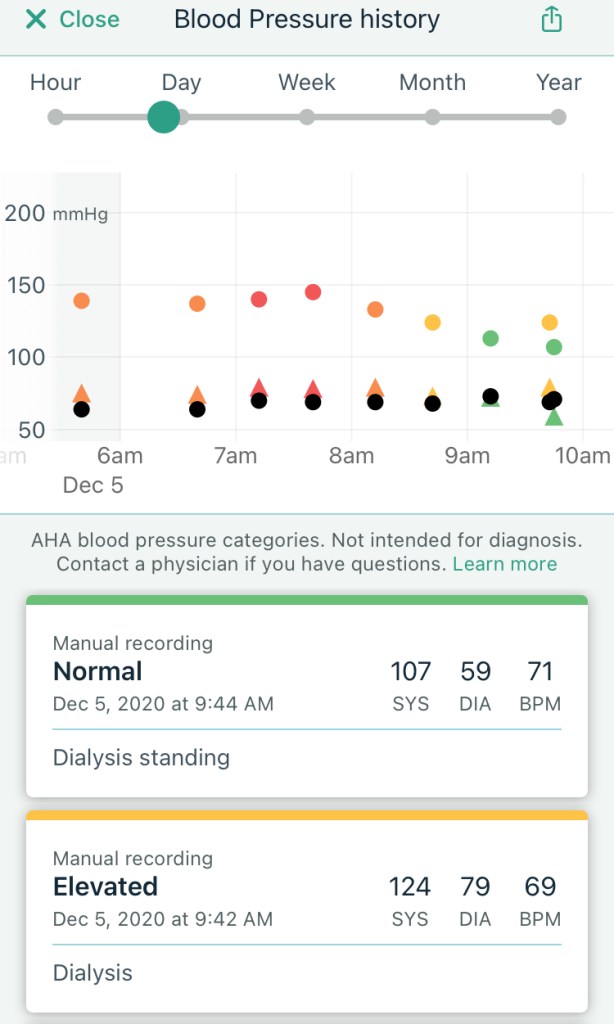
Since my right arm is pretty much immobilized during dialysis, I can’t really write or take notes. However, I do have a blood pressure app on my iPhone that’s used to download data from my BP cuff, and it allow you to make manual entries. So during dialysis, each time the machine took my blood pressure readings, I typed it into my phone. Here’s the report/chart for this morning:

Not too bad finally. This is without taking the Metoprolol and Olmesartan before dialysis. We removed the Crit-Line monitor but still removed about 3,200 mL of fluids today. The first reading at 5:40 am was 139/75, and the final standing reading was 107/59. A bit low due to orthostatic hypotension, but the nurses let me go home if the systolic number is >100.

Echocardiogram Results: take 2

Speaking of echocardiograms, my cardiologist just posted her notes on the repeat exam to the online patient portal. Again, there were a lot of words and numbers that don’t mean anything to me, but I did see a few important results.

  • LV ejection fraction is normal, at 57.1 %.
  • Prior examinations are available and were reviewed for comparison purposes. Compared to the study dated 10/29/2020 there is no longer presence of pleural effusion.

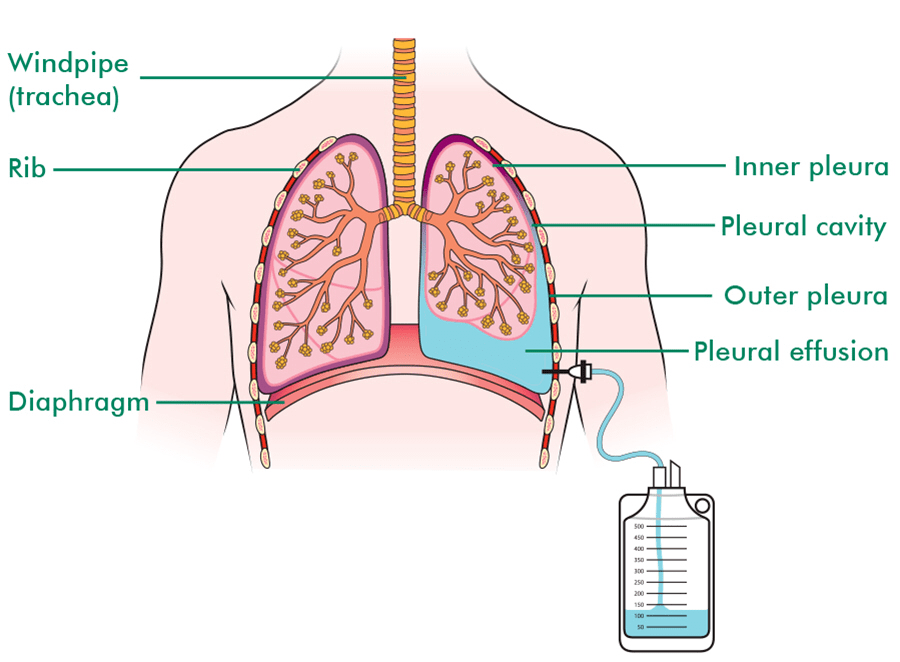
The last echo exam already came back with a LV ejection fraction of ~51% so this test just confirmed the normal results. The most important results is the “no longer presence of pleural effusion.” When the cardiologist told me I had fluid in my lungs, I guess they were telling me I had pleural effusion. It is defined as:

A pleural effusion is excess fluid that accumulates in the pleural cavity, the fluid-filled space that surrounds the lungs. Excess fluid can impair breathing by limiting the expansion of the lungs.

That’s exactly what happened to me suddenly back in April and lasted for about six months. Initially, we thought it was a symptom of my a-fib condition, and it did improved a bit after the ablation procedure. However, I was still having issues breathing, and a later chest CT scan showed there was still fluid restricting my breathing. With the recent “more aggressive” dialysis, I think we were finally able to remove most, if not all, the excess fluid so I won’t need to physically drain the fluid by other means.

https://www.macmillan.org.uk/cancer-information-and-support/impacts-of-cancer/pleural-effusion

I hope the results were sent to UCLA and they’re satisfied with the updated results. That leaves the colonoscopy as the final hurdle for my kidney transplant. Yay!

==========

Now that I know what I’m looking for, I found this in the results from the first echo exam:

  • Incidental Finding: There is a moderate pleural effusion noted in the left lateral region.

Interesting that my cardiologist noted it as an incidental finding, yet it was enough for UCLA to halt the transplant process until the fluid was removed and I was retested. Another peril of having two teams of specialists reviewing your medical results. 😷

Fluid Balance

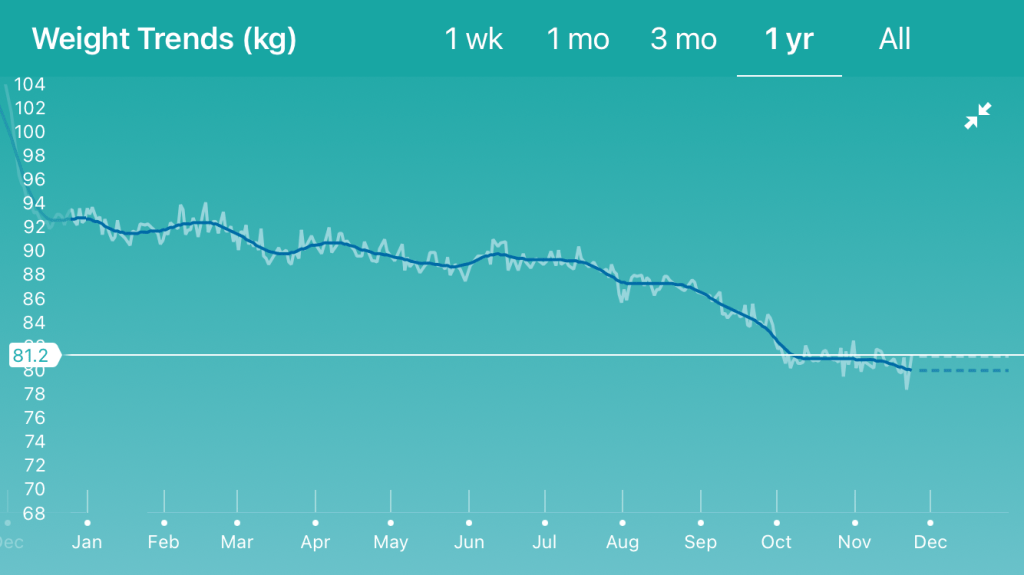
I’m a bit confused on what is going on with my fluid balance. I thought that I was losing weight but retaining fluids so my weight is fairly constant. Once we started removing more fluid during dialysis, my weight should drop more. My nephrologist thinks there a couple of liters of excess fluid by looking at my lower legs. After a week of using the Crit-Line monitor, my lower legs look pretty “normal” but my weight haven’t changed that much. My scale at home says I’m about 81.0 kg now, which is pretty consistent over the past several weeks.

YTD weight. I’ve been around 80 kg since October but blood pressure is much lower during the last week.

From what the nurse showed me, there’s several “buckets” of fluid: in cells, between cells, and in the bloodstream. I found this chart online:

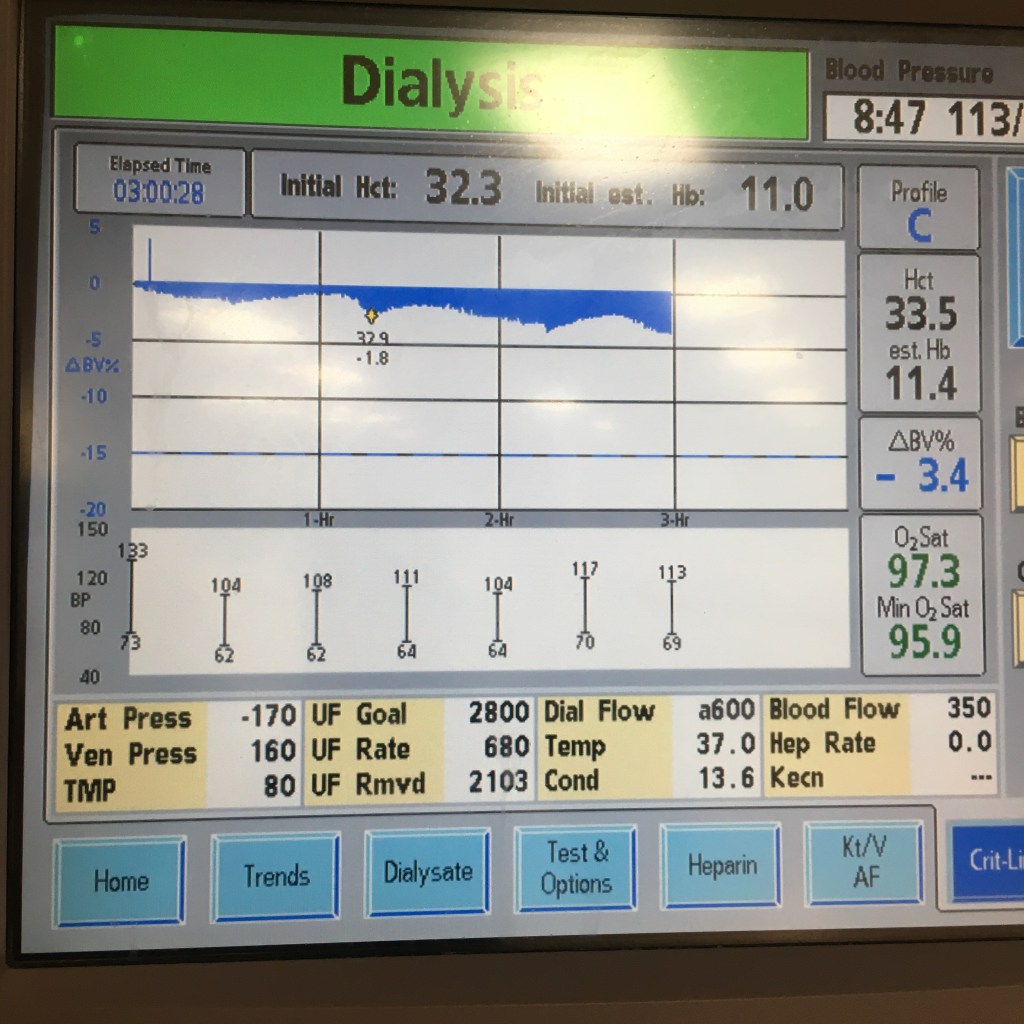
I’m not sure what my percentages are but we’re trying to remove more fluid than what is moving to the first area or blood plasma. I was told that during dialysis, as we remove fluid, it’s constantly being replaced by fluid in and between cells. It seems to make a difference how fast fluid is removed during dialysis, though I can’t understand why. Here is the Crit-Line graph from Thursday:

Initially, nothing much was happening. After an hour, the chart started to show a decrease in blood volume % change. It seems the flow rate between the different fluid buckets in the body is not constant either. Even though we didn’t change the setting after the marker, the chart values change constantly. Blood pressure is much improved as well, which supports the conclusion that fluid in the bloodstream is lower than before when my blood pressure was up to 180’s. I didn’t caputre Saturday’s chart but the blue wedge was much larger as we removed 3,200 mL of fluid and I ended at 78.4 kg. The only questions is what is different since my weight is about the same. Either I gained non-fluid weight (unlikely) or fluid is being retained in the cells but the absence of edema says otherwise. Very confusing.