Forgotten Labs

I have an appointment with my endocrinologist this Thursday. About four months ago, during an in-office appointment, she gave me some orders for lab tests. Since that was during my post-a-fib period, I was a bit distracted and buried the lab orders in a mountain of paper. Just now, I was able to find the paperwork again so I’ll need to have blood drawn after dialysis tomorrow today. Kind of ironic that I’ll get poked with another needle for blood after four hours of dialysis. Anyway, I hope the results will come out in time.

Since I don’t see my primary doctor that often, and the dialysis clinic takes blood samples for labs monthly, I haven’t had “regular” labs for a long time. In the past, results from dialysis labs have shown up in my online patient portal since they’re all part of St. Joseph hospital. This hasn’t happened lately and I’m not sure why. I’ve collected the summary results (on paper) given to my by the nutritionist:

Month67891011
Albumin4.34.34.64.44.54.4
Potassium5.25.25.45.35.65.5*
Phosphorus5.94.65.35.76.76.2*
Calcium8.88.89.48.99.19.1
Parathyroid Hormone455.9219.6307.2385.7
Hemoglobin A1C5.55.2
*The upper limit was changed from 5.5 to 5.0 in November; otherwise the potassium value would be in-range

I’m typically okay on lab results, with borderline potassium and phosphorus. It probably depends on what I eat during that month. I have an overall idea of what foods to avoid for each, but I’m not watching what I eat too closely. The high potassium is likely from getting Raising Cane’s combos what come with fries. I think the phosphorus is from cheese slices. For the past few months, I’ve been making knock-off Egg McMuffins for breakfast and including a slice of Kraft Singles. My nephrologist said to be more diligent in taking my phosphorus binders. Since it looks like a kidney transplant is likely soon, they’re not going to change anything for now.

Hemoglobin A1C test result ranges

For the endocrinologist, I think she is most concerned about the Hemoglobin A1C number. My results have been pretty good for about a year now. Normal range is under 5.7%. In April 2020, my results were 6.2%, which is pre-diabetes. The most recent results above were 5.5% and 5.2%. Too bad it’s too little too late, as the damage (chronic kidney disease and peripheral neuropathy) has occurred already.
COVID-19 Vaccine

So I guess I was wrong about the timeline. It seems like we’re a few weeks away from a FDA approved vaccine from Pfizer. The question is who will get the first few doses available. From STAT news:

Separately, STAT has learned that senior leaders in the Trump administration’s coronavirus response are pressing for adults 65 years old and older to be given first access to the vaccine. That approach contradicts the position of a committee that advises the Centers for Disease Control and Prevention on vaccine policy; the Advisory Committee on Immunization Practices has signaled for months that it will recommend health care providers be at the front of the vaccination line.

I think frontline healthcare workers should be one of the first to get the vaccine since their exposure risk is very high. It would also be a good environment to test the effectiveness of the vaccine in the wild. Nursing home patients make sense as well since their has been so many deaths in that population. I think the Trump administration is focused on seniors over 65 because they are higher risk, but also majority Republican voters as well. You can target the seniors in the nursing homes but if the rest of the seniors are socially distancing or isolating themselves, a few more weeks/months seems like low risk versus not vaccinating healthcare workers.

Since I have lots of health risks, I’m probably in the front of somebody’s list. Although it would be nice to get the vaccine and live vicariously, I think I can wait a few months since I’m working from home anyway, and the kidney transplant may be soon. Maybe I’ll get the vaccine post-transplant due to all the immunosuppressive drugs I have to take.

COVID @Work 11/26/2020

The cumulative count for positive COVID cases at all our work sites is now 461, with 414 recovered. That means there are 47 current cases overall. Since the communication email does not break down all the numbers by location, I don’t know how many people are testing positive at my worksite, which has over 5,000 people. I know the positive case count was pretty flat for several months but spiked up again in correlation to the overall trend in California. A couple of coworkers said that people have been coming back onsite more regularly but they will think about staying home more often again.

On a side note, the carpool sticker on my electric car expires in a month and I don’t believe I can renew it anymore. I was thinking of buying a new Tesla Model Y so I can get the sticker again, but now it looks like I’ll be working from home until an effective COVID vaccine is widely available. I’m guessing it will be another 6-12 months, and I can’t plan that far ahead. I’ll keep the old Tesla for now since it still drives fine; I just can’t use the carpool lane by myself anymore starting in 2021.

Echocardiogram Results: take 2

Speaking of echocardiograms, my cardiologist just posted her notes on the repeat exam to the online patient portal. Again, there were a lot of words and numbers that don’t mean anything to me, but I did see a few important results.

  • LV ejection fraction is normal, at 57.1 %.
  • Prior examinations are available and were reviewed for comparison purposes. Compared to the study dated 10/29/2020 there is no longer presence of pleural effusion.

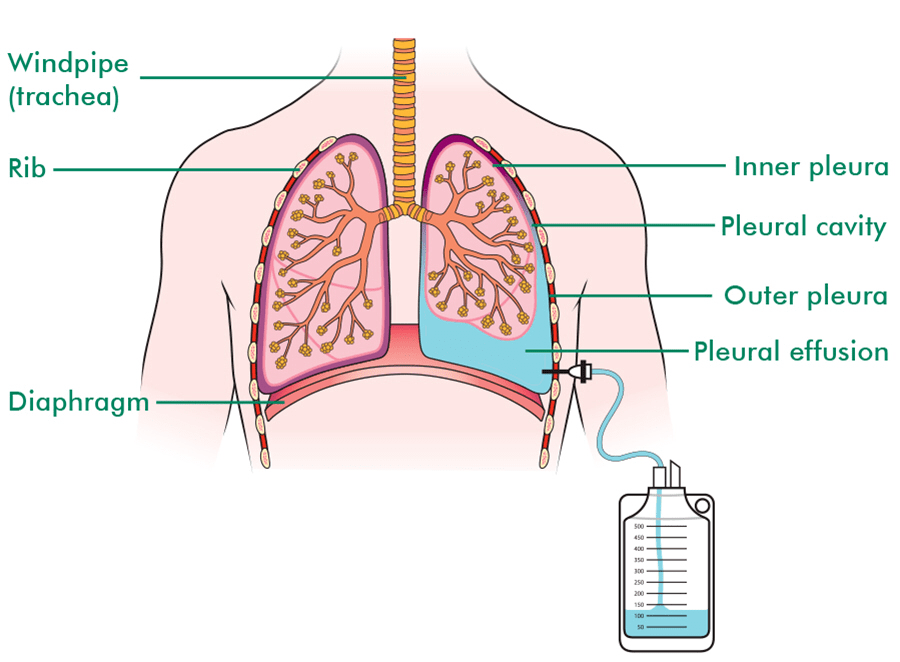
The last echo exam already came back with a LV ejection fraction of ~51% so this test just confirmed the normal results. The most important results is the “no longer presence of pleural effusion.” When the cardiologist told me I had fluid in my lungs, I guess they were telling me I had pleural effusion. It is defined as:

A pleural effusion is excess fluid that accumulates in the pleural cavity, the fluid-filled space that surrounds the lungs. Excess fluid can impair breathing by limiting the expansion of the lungs.

That’s exactly what happened to me suddenly back in April and lasted for about six months. Initially, we thought it was a symptom of my a-fib condition, and it did improved a bit after the ablation procedure. However, I was still having issues breathing, and a later chest CT scan showed there was still fluid restricting my breathing. With the recent “more aggressive” dialysis, I think we were finally able to remove most, if not all, the excess fluid so I won’t need to physically drain the fluid by other means.

https://www.macmillan.org.uk/cancer-information-and-support/impacts-of-cancer/pleural-effusion

I hope the results were sent to UCLA and they’re satisfied with the updated results. That leaves the colonoscopy as the final hurdle for my kidney transplant. Yay!

==========

Now that I know what I’m looking for, I found this in the results from the first echo exam:

  • Incidental Finding: There is a moderate pleural effusion noted in the left lateral region.

Interesting that my cardiologist noted it as an incidental finding, yet it was enough for UCLA to halt the transplant process until the fluid was removed and I was retested. Another peril of having two teams of specialists reviewing your medical results. 😷

COVID @Work 11/25/2020

Since our main headquarters is in California, I guess it’s natural that there would be a spike in the number of new COVID-19 cases as well. The cumulative number of cases at our site is now 188, a jump of 10 in the past two days. Again, I’m not sure if the new cases are from infections at work or outside of work, but I’m really glad that I can work from home. My main project these past few months is to evaluate a new software package. I think we’re about to close the deal with a Canadian company. However, due to border restrictions and quarantine, their implementation team can’t visit us onsite so everything has to be done online. I think that will make my job that much harder but there’s really no choice right now.

OCCOVID19

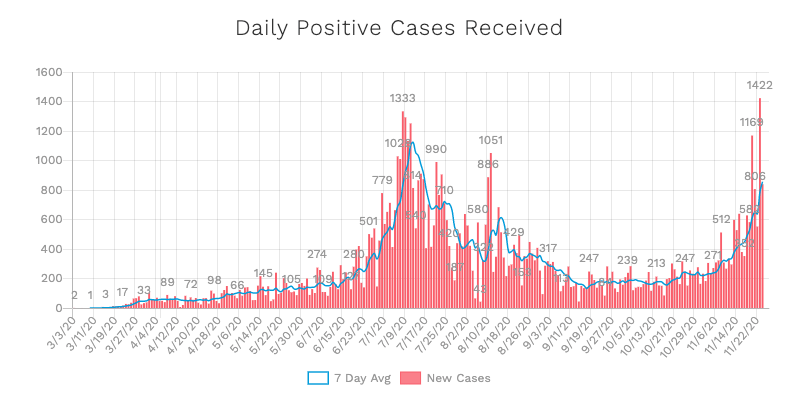
I found another website with Orange County COVID-19 data but with details by city and better visualization tools. Here is the number of new cases daily from March:

It’s pretty clear from this chart that there is a new wave of infections. If it’s correlated to people’s behavior during a holiday, then we’re in big trouble since Christmas and New Year’s Day is coming up soon. Here is the hospitalization data:

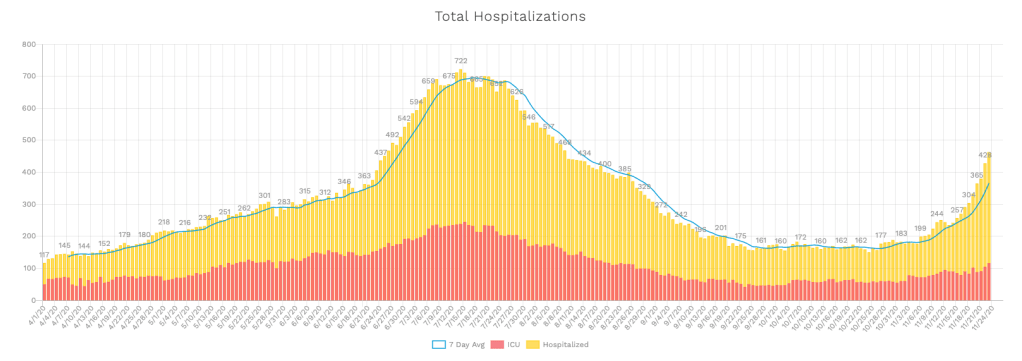
It doesn’t looks as bad yet but maybe there is a lag from when a person is infected to when they symptoms are serious enough for hospitalization. Alternatively, there were more hospitalizations in the first wave because no one was prepared. Now people in higher risk groups are taking more precautions so new infections are from healthier/younger people that tend to have less symptoms. It’s hard to tell without more analysis of the raw data.

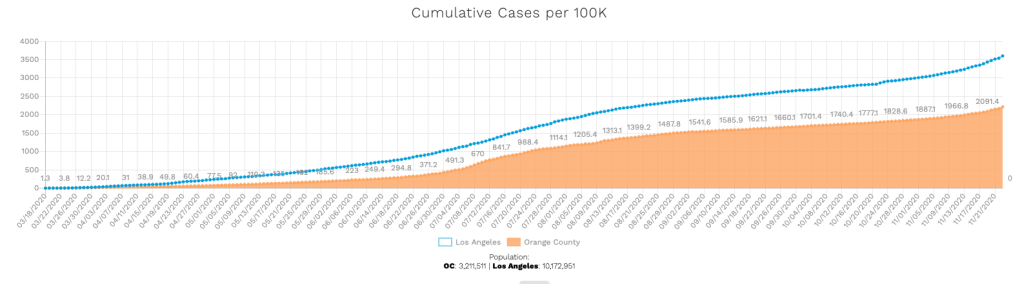
Another thing you hear all the time is Los Angeles County people complaining or shaming Orange County for it’s anti-maskers. I think that’s overblown since I see everyone wearing masks. For comparison, here is the number of cases per 100k for Orange County (bar) vs. Los Angeles County (line):

Los Angeles County is at around 3,600 cases per 100k (cumulative) vs. 2,200 per 100k for Orange County.

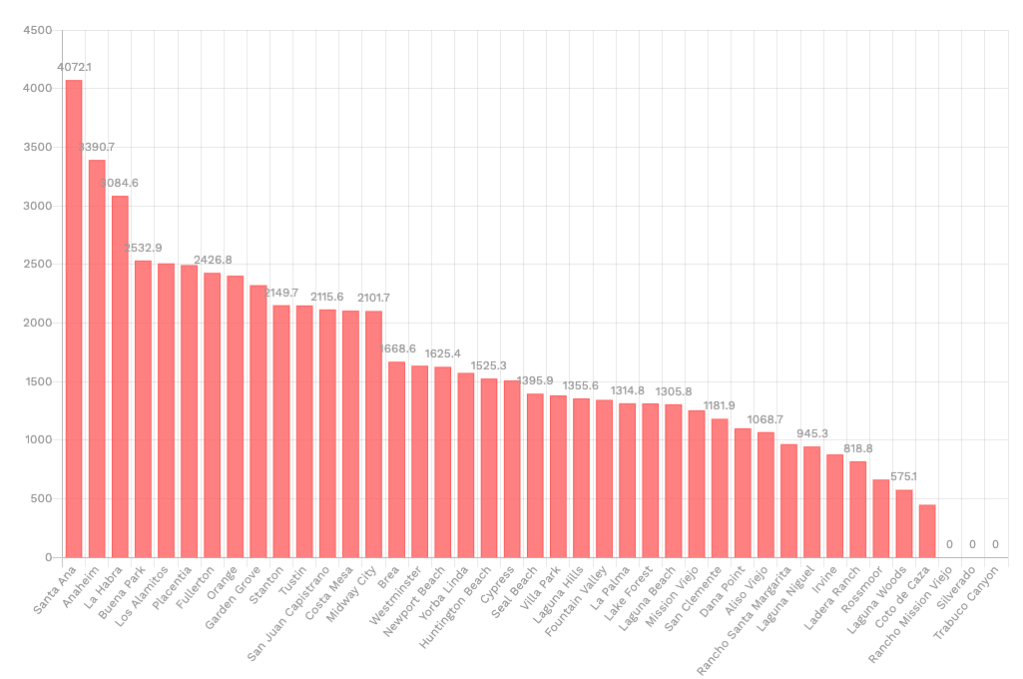
Not even close. Sure there are more people in Los Angeles County and the population density is higher, but LA’s case rate per capita is almost twice when compared to OC. If you look at the case rates by city, the anti-masker hotspots of Huntington Beach and Newport Beach are doing quite well in comparison to the rest of OC:

I think it’s fine to make sun of the anti-mask “Karens” or OC housewives but that can’t be the primary driver of the increases in cases. Personally, I think it’s due to people getting “quarantine” fever and going out to attend social functions.

Echocardiogram: take 2

I am scheduled for another echocardiogram this morning. UCLA Transplant Center requested it after my previous one since there appeared to be fluid in my lungs. After running the Crit-Line monitor during dialysis for the past two weeks, I think we took out a lot of excess fluid so hopefully UCLA will be satisfied with the results.

==========

It’s 11:00 am and I’m back home. The echo scan tool about 20 minutes. This time, I was looking at the machine and saw most of the scan results. Since it’s an ultrasound, the pictures were blurry but you can see the heart muscles and valves pretty clearly. The tech had to freeze frame and trace out several heart cavities on the screen; I guess that’s how they determine volumes. It was pretty weird looking a moving images of your own heart. The worst part of the exam was that the room was pretty cold and you have to remove your shirt. I was shivering for the first few minutes until he covered me with a small towel. I can’t interpret anything from the screen so I have to wait for my cardiologist to call me back.

COVID-19 Third Wave

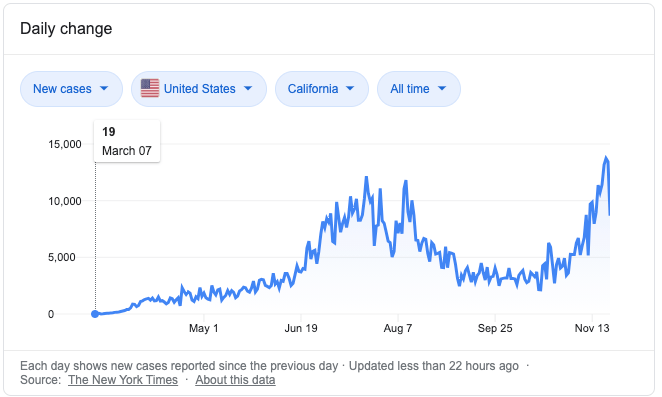
It’s July once again:

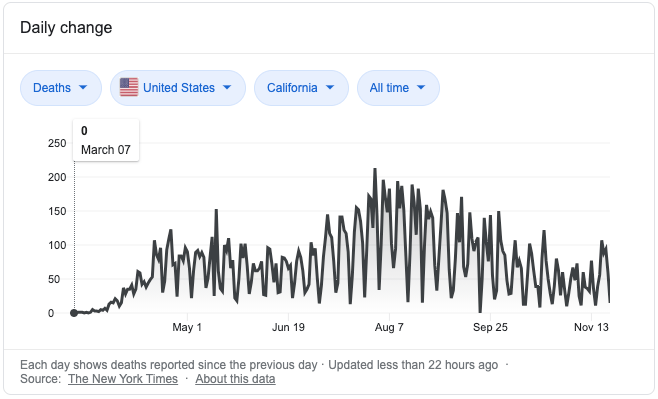
This is the new case rate for all of California. It seems like the increase is even worse than the second wave during June/July. We haven’t seen an increase in deaths, but that likely lags the number of infections. Here is the number of deaths for California:

For Orange County, the pattern is similar. The relevant data and charts can be found here. The only noticeable thing for me is the re-closing of restaurant indoor seating. It’s also confusing where all the new cases are coming from. Are people having huge parties recently? I read that there are a lot of anti-maskers in OC but I don’t see any where I am.

Thanksgiving

Here is my post from Thanksgiving last year:

Hopefully this time next year I will still be alive from my bypasses, and have received a kidney transplant so life can go back to normal.

Normal = does not suck

Remember I was two weeks out of the hospital, not really mobile, and in the dark about a lot of health related things. A year later, things are better but still no transplant. Life is still kind of sucky but I’m not dead yet. Interpolating from some discreet data points, probably 35-40% of dialysis patients die after 3 1/2 years. Again, that’s probably skewed towards older patients but it’s depressing to think about.

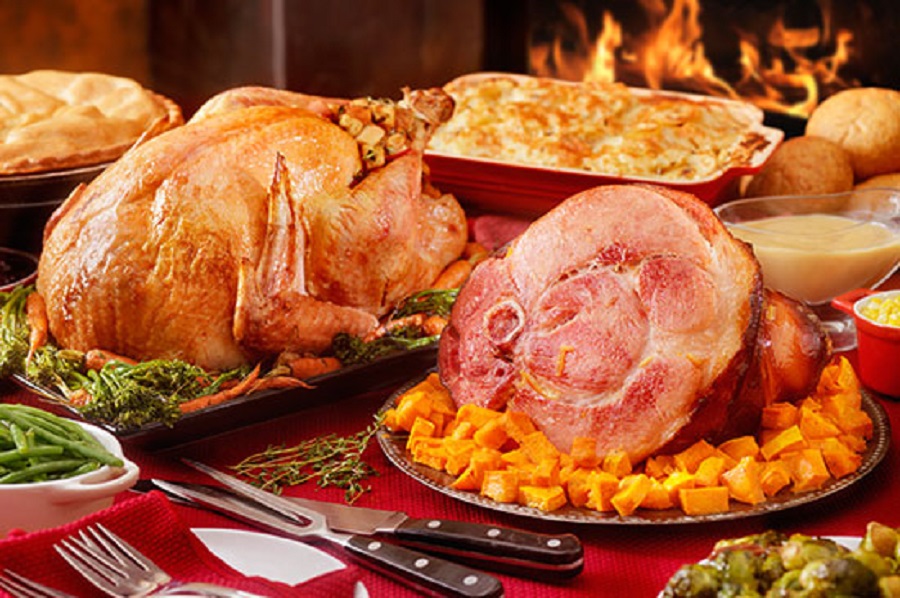
I can’t remember what happened last year but we probably didn’t do anything for Thanksgiving. I don’t remember bringing my walker to my sister’s house. This year, I’m a lot more mobile and pretty much 90% recovered from the bypass surgery. We typically meet at my sister’s house during Thanksgiving since their house is bigger and they have a nicer kitchen. We either have a traditional American Thanksgiving dinner with turkey, ham, and side dishes, or go full Chinese and have Taiwanese hot pot. I think we’re having turkey this year as my sister asked me to bring an apple pie from somewhere.

We use an electric hot plate instead of the chimney pot

This year is also different because of COVID-19. Orange County is a shitshow and in the midst of a third wave of infections.The CDC released some recommendations on having a safe Thanksgiving but it seems like people are still going to travel. I guess we’re not 100% safe either since we’re two households. I’ll probably wear a mask this time; typically we don’t masks when we meet up with my sister’s family.

Have a happy and safe Thanksgiving!

Tiredness

I’m not sure what’s happening but I have been really tired for the past week. Maybe it has to do with the higher ultrafiltration rate that started this past Tuesday. I’ve been pretty good with fluid control so typically we only have to pull 2 liters of fluid out. This week however, we’ve been pulling 3+ liters each session. I haven’t cramped yet but I am super tired after each session. For example, I was done at 10:00 am today. I then went to Raising Cane’s to get some lunch (4 chicken fingers) then got home at around 11:15 am. I took a nap immediately and didn’t get up until 6:30 pm. Even with such a long nap, I’m still really tired and will probably go back to bed now, even though it’s only 7:45 pm. Tomorrow is Sunday so I’ll probably be in bed the entire day.

California Curfew

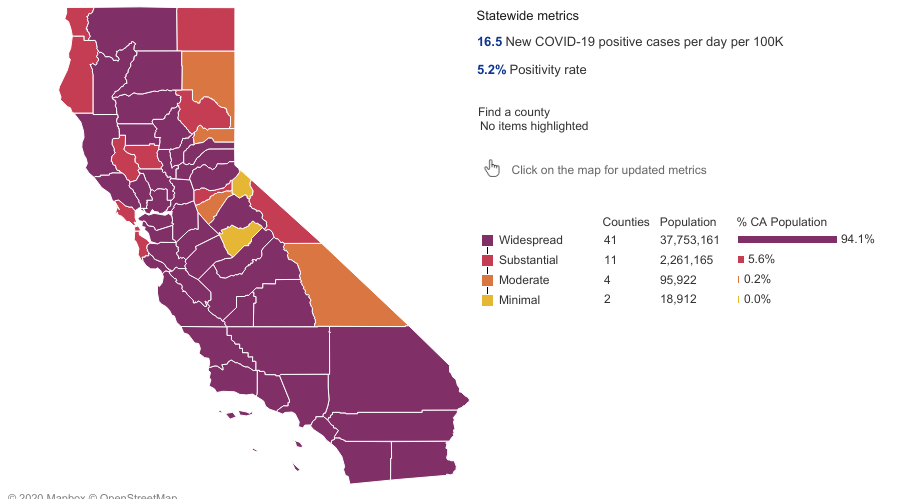
Governor Newsome has issued a curfew for all California counties that are in the “purple” tier, which includes most counties including Orange County. The curfew prohibits non-essential activities from 10:00 pm through 5:00 am.

It’s all purple

So I’m not sure how this will help. Are all the infection transmissions happening during that time? Are people meeting up and not practicing social distancing after 10:00 pm? Just not sure why he chose that period when typically no one is out. Also, who is going to enforce this? Local police? Do they have enough resources to stop every car and pedestrian to see what they’re doing out? Madness…

Personal Hygiene

For as long as I could remember, I would take showers everyday or every other day. While I was married, this was often at night since my ex-wife didn’t want me in bed if I was “dirty.” After the divorce, I usually took a shower in the morning before going to work. However, once I got the first chest catheter put in, all that changed. The main risk to a chest catheter is an infection. Since the catheter goes directly to the heart, any bacterial infection in the heart is serious and hard to treat. So for two years, I did not take any showers or baths. There were waterproof bandages that can be used to cover the catheter site, but I’m risk adverse so I avoided getting the area wet. I did not get an infection using the chest catheter for two years. But for two years, there were lots of towel baths and shampoos in the bathroom sink. I think it also got me into a habit of not showering regularly.

After I got my PD catheter and had the chest catheter removed, I started taking showers again. I did notice that I didn’t jump back into the 1 or 2 day shower schedule; I was taking showers less often than before. It’s like that wasn’t part of my daily anymore and taking a shower became an extra chore. When the second chest catheter was put in, I stopped taking showers again until it was removed in September. The additional 10 months didn’t help my personal hygiene habit at all. Now I’m taking showers again, but the schedule is more like weekly than daily. Kinda gross, but again, it’s not part of my daily routine anymore. I think I have to set reminder alarms for showers so I can pick up that habit again.

Pretty sure I’ll run into this problem again post-transplant while the incision heals.

Insomnia 11/18/2020

My sleep schedule is all messed up. I’m still going to bed at 11:00 pm-ish but waking up at 2:00 am almost every night. On workdays (MWF), that’s okay since I can try going back to sleep, then sleep in since I rarely have early meetings/calls. For dialysis days, I have to get up at 4:20 am so I usually end up not sleeping. I try to make it up during dialysis but having the blood pressure cuff go off every 30 minutes is not good for sleeping. However, due to dialysis, I’m always tired. I typically sleep for a few hours after dialysis, then do a bit of work, followed by another nap after dinner. Today, I slept in until 9:30 am, then had a bunch of work calls, and took another nap from 2:00 pm until now (~6:00 pm). Yet I am still very tired and will likely fall asleep right after dinner but wake up at 2:00 am again.

I guess I’m lucky to be able to work from home. Otherwise, I’m gonig to fall asleep driving to/from work again.

New Blood Pressure Cuff

I bought one of these from Amazon yesterday. It’s supposed to be delivered today.

List price on the Omron site is $90 but they’re available for $70 retail. We already have lots of blood pressure monitors at home, from a manual mercury sphygmomanometer, to a Bluetooth connected wrist device. All in, this is probably the sixth blood pressure monitor but I really wanted something without the vacuum tubing and that can connect to my phone. I’ve never been able to get a good/accurate measurement on the wrist device so I let my mom have it and purchased the Omron Evolve instead. I need to start tracking my blood pressure more consistently so hopefully the Bluetooth connectivity will make it easier.

sphygmomanometer

Cardiologist Call 11/16/2020

I really like my cardiologist. She called me again today in response to a message I sent her late last week. Instead of writing a reply, she decided to call instead. I had asked her about the “aggressive” dialysis comment from the UCLA transplant cardiologist and she said the echocardiogram showed I still have fluid in my lungs. She recommended that I stop taking my hypertension medication before dialysis so there is more “room” for the blood pressure to drop as the machine removes excess fluid. I told her that the dialysis center was already removing more fluid, and last two sessions showed a drop in blood pressure instead of the typical increase. Anyways, she ordered another echocardiogram to be done in about two week. Hopefully I will be rid of the pulmonary edema and UCLA will be satisfied with the health of my heart.

“Final” Podiatrist Appointment

I went to see my podiatrist again today. He wanted to check out my toe after he took out the stitches three weeks ago. It bled more for a few days but the wound is completely dry now. The podiatrist said to come back in six months and don’t step on anything sharp again. Thanks!

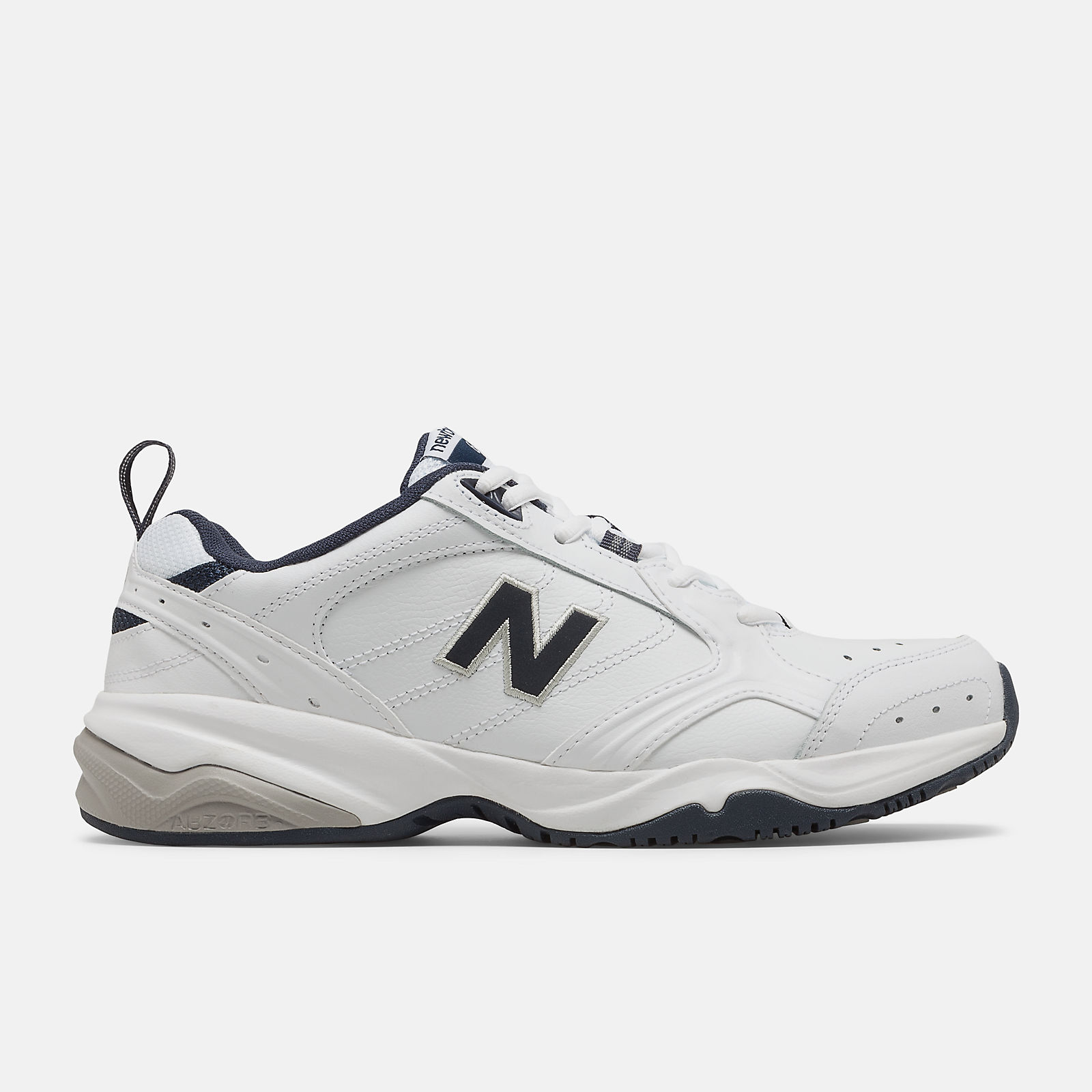
He also gave me a referral to get orthopedic shoes. The last time I went, which was several years ago, they showed me a bunch of ugly-assed shoes. I ended up choosing a New Balance MX624 cross-trainer. I remember being charged over $200 for the pair, which was paid by insurance. Since then, I’ve been buying the same shoes on Amazon for ~$70. Today, as my podiatrist was writing the referral, he said that Medicare should pay for the shoes. I guess that is the problem with the healthcare industry. Most people have insurance, either Medicare or private insurance through work. Because we don’t see or pay the entire bill, we don’t shop for the best deals. When was the last time you saw a price list at your doctor’s office or in a hospital? Never, right? I have no incentive to price shop even though my taxes pay for Medicare, and my company pays for other insurance claims. Since I’m also a shareholder of my company, I’m indirectly paying the claims.

I wonder if people notices I’ve been wearing the “same” shoes for the past 6-7 years.

One-Year Post-Surgery

It’s been a year since my open heart bypass surgery. The surgery was on November 14, 2019. I think they started at around noon and I woke up at 1:30 am the next day. I was on the operating table for about seven hours and it took another five to wake up. I was technically “dead” during the surgery since they had to stop my heart and lungs to operate but I don’t remember anything. One moment I was getting wheeled into the OR, and the next moment I was trying to wake up.

I guess you can call it a second birthday since I would probably be dead now if I didn’t have the surgery. From the ER lab results and subsequent stress test and CAT scan, I probably had a heart attack days or weeks prior to the surgery, and would like had more if they didn’t replace my clogged arteries. However, it has been a difficult year, made much worse by COVID-19. I had my diabetes under control for a few years but being on dialyis and being post CABG surgery just makes me doubly at risk. For the past nine months, I’ve been at home or at dialysis, with probably less then a dozen other outings: sister’s house, work, last Thursday’s church cell meeting, etc. Not a good start on a new life. I was all gung-ho about recovery a year ago. I seriously thought I would be running 5k or 10k races after a year, but I didn’t count on all the subsequent heart issues like a-fib and pulmonary edema. Now I’m looking forward to another “birthday” when I get a kidney transplant, hoping that will be the “real” start of a new and healthier life.

Critical Illness Insurance

I talked about my work getting additional voluntary insurance starting in 2017. I’ve signed up for it since the beginning, though I have not made any claims yet. Since I’m coming up to my one year surgery anniversary, I thought I would call Allstate and ask about deadlines. The CSR said they would like the claims within 90 days (!) but may take claims up to a year. I then asked about ESRD and she said that they take the first day of dialysis as the incident date. Well, that’s over four yeas ago so I’m pretty much SOL on that. Even the CABG claim will take a few weeks to get the paperwork complete so I probably won’t get that either. The ESRD diagnosis was supposed to pay out $50k, and $12.5k for CABG surgery. The CSR suggested that I file a claim anyway since I won’t get anything if I don’t file; worst case scenario they reject both claims.

I should have asked this a long time ago, but filing the claim makes the medical problems more concrete. I’m a procrastinator and it’s costing me a lot not to file these claims but I don’t feel like caring. I guess now I know the deadlines, I’m filing the kidney transplant claim (also $50k) as soon as I have it scheduled.

ER Visit: One Year Ago

On November 11, 2019, I visited my peritoneal dialysis nurse for a scheduled appointment. While I was there, my heart rate was running at 130+. My nephrologist happened to be at the clinic as well so she listened to my heart and suggested that I visit the ER. That led to an EKG and some blood tests, and next thing I knew, I was back on hemodialysis and prepping for heart bypass surgery.

One year later, things are still not back to normal. Most of it has to do with the COVID-19 pandemic, which affected just about everyone. I think I was pretty much recovered from heart surgery after three months off, but then had some episodes of atrial fibrillation and fluid imbalance problems. I also managed to lose about 60 pounds during these 12 months. It’s been a pretty crappy year as documented by all the posts in this blog, but hopefully things will get better post-transplant surgery.

Peripheral Neuropathy 11/9/2020

For the past three days, I’ve had pretty intense nerve pain attacks. Two nights ago, it was the inside of my right foot. Then last night, there were two spots on my left foot. Fortunately, those areas of pain stopped this morning. However, while I was sitting down eating dinner, another attack started on the top of my left big toe. This one is hurting pretty badly now. The pain would last for 2-3 seconds and is increasing in intensity.

I mentioned before that these attacks used to come once a month and last for about 24 hours. Now it seems that there is a new pain area each day. I’m popping Tylenol like candy and usually it has no effect. I basically have to try an fall asleep through the intense pain and hope that everything subsides when I wake up. I don’t know if this is a temporary thing or if I will have neuropathy attacks daily from now on.

==========

Ugh. I guess I rubbed my toe to hard trying to massage the nerve ending. Not only did it not help any, now I have a blister on the top of my toe. In the past, I thought it was because I used a massage wand but just using my thumb will cause a blister too. Fortunately, it’s not too big and on top of the toe and I drained it and put an band-aid over it.