Bioartificial Kidney

The Holy Grail of Chronic Kidney Disease (CKD) is not dialysis or even a transplant, but a viable artificial kidney. There has been ongoing research, but there also seems to be little progress. I have posted about The Kidney Project (TK) a few times as they seem to be the only significant artificial kidney project.

UCSF released some news a few days ago that seems to point to some significant progress. TKP said they have successfully tested a prototype bioartificial kidney. There is a YouTube video that explains further:

Basically, TKP was able to produce a hemofilter that filters out toxins from the bloodstream using membranes made from silicon semiconductor wafers. They also made a bioreactor with “renal tubule cells” that will maintain fluid balance and other metabolic functions. Combined, the hemofilter and bioreactor is implanted like a transplanted kidney, and powered via the patient’s blood pressure. It sounds awesome if it actually works. There are currently ~93,000 people waiting for a kidney transplant due to a shortage of donated organs. A viable artificial kidney will improve quality of life for a lot of people.

My biggest fear after the kidney transplant is EOL organ rejection. If the transplanted kidney fails before I die, then I will need to go back on dialysis. Likely I will be ~70 years old by then so the chances for another kidney transplant will be very low. If an artificial kidney is readily available, that could be another option.

3rd Moderna Shot

Yay! I got my third Moderna vaccine shot today. I did end up driving to work for the vaccination, and they did not reject me for having two previous shots. Of course, I see this on the news as soon as I get home from work:

Supposedly now the FDA and CDC are working on getting a booster shot approved for immunocompromised people. I would like to think my message to the CDC (and subsequent review) helped, but it is pretty unlikely.

Back to what happened today. As I mentioned before, I pre-registered online but did not get a rejection email so I went to our cafeteria at around 11:30 am. There was only one other person in front of me, and only about four people in the post-vaccination waiting area. The intake person followed up on some medical questions, but she did ask whether this was my first or second shot. I said second because I had to fill out the date of my “last” shot online. She then sent me to a nurse. While she was prepping my arm, she also asked about my vaccine card. Of course I did not have it, so she got out a blank card. She then asked the supervisor what to write, and also asked me where I got my first shot. When I said UCLA, they said they could look it up online. I thought you needed a PIN to access that data for individuals, but maybe they have different rights. Anyway, the supervisor sees that I already had two shots. I basically told them that my first shot was right before transplant surgery, and I was pumped full of immunosuppressive drugs right after. I also said (embellishing a little) that my doctor believes that shot was ineffective, and that I should get another shot ASAP. The supervisor looked at me in the eye, and said, “OK.” The nurse then gave me the shot, filled out the second line on the vaccine card while leaving the fist line blank, and sent me on my way. Easy peasy.

It’s been about 10 hours and no significant reaction year. My arm was okay right after the shot, but the injection area is more sore now. I also felt a bit lightheaded after climbing the stairs after dinner, but I experience that occasionally due to low blood pressure. Several people told me that the worst reaction will come tomorrow, if at all, so I am hoping I feel terrible when I wake up tomorrow. 😅

Stressed Out

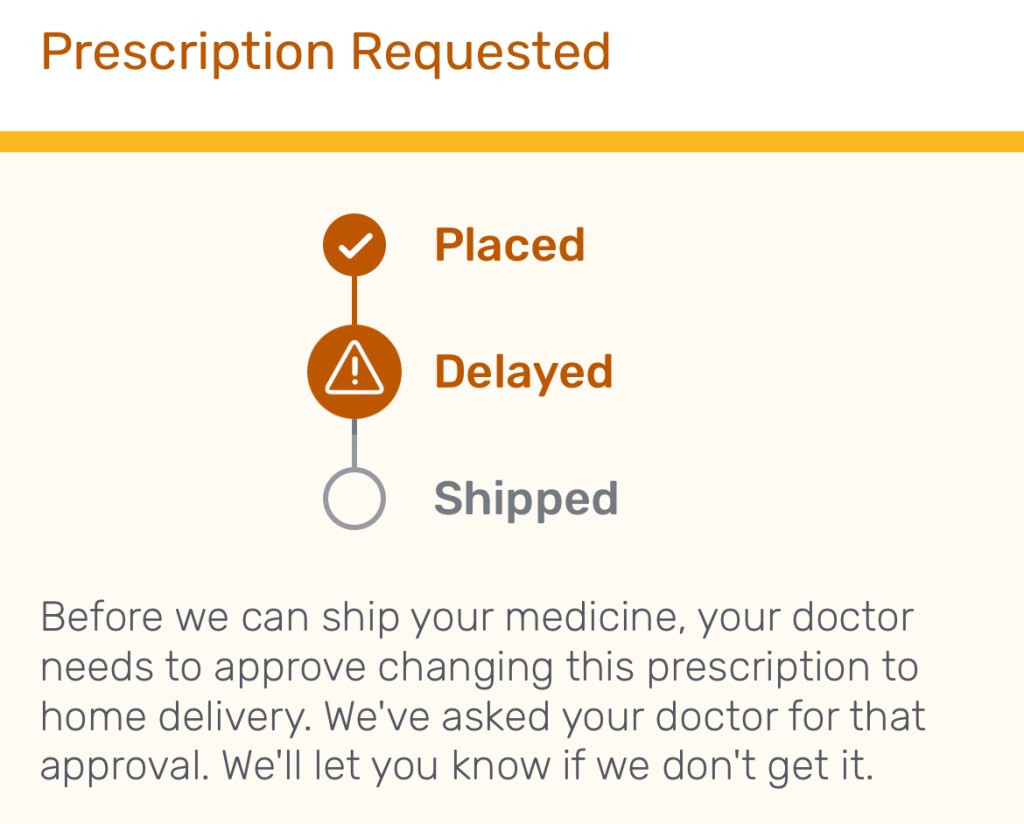
It has been a stressful morning. I checked my tacrolimus refill on the app from my mail-order pharmacy, and there was a big warning sign

The order was “place” on Tuesday and seems to be stuck. I called the mail-order pharmacy and they said they were waiting for a callback from my nephrologist’s office. I then call my nephrologist and they said my doctor was out of the office. I reminded them that I run out of this anti-rejection medication next Tuesday, and that is with taking the lower dosage from the previous refill. Well, at least they are responsive. The office staff is getting another nephrologist in the office to sign the prescription, calling the mail-order pharmacy, and then calling me to give me status. Still, a bit stressed out that I may run out of my primary anti-rejection medication.

I also have not heard back from work or USC Pharmacy on my pre-registration for an “illegal” second vaccination tomorrow. This is stressing me out as well. I fully expect to be rejected, but was hoping to hear back before driving 40 miles to work in LA traffic. Wishful thinking, I know…

==========

Ugh, 2:45 pm and no updates. I just called the mail-order pharmacy and they still have not heard from my nephrologist’s office. Not sure what is going on. I guess I have to harass them again.

I do have plan C though. Plan A was getting it from my local pharmacy and that failed. Plan B is what I am dealing with right now with the mail-order pharmacy. Plan C is refilling my existing prescription (though for slightly less dosage) with UCLA Pharmacy.

Man, I did not expect to do live blogging. Just called my doctor’s office and they faxed(!) in the prescription within 15 minutes of my call this morning. I am guessing that it is sitting in some queue that gets cleared periodically? Hopefully this resolves itself by tomorrow morning. If not, then I can call UCLA for the refill and either go personally to get it, or have them mail it to me.

Medical System Issues

I am not sure what the right title should be for this post, but I ran into several issues today, and they are likely related to the overly complex medical delivery and insurance system we have here in the United States.

Since my nephrologist increased my dosage of tacrolimus, I needed a new prescription so I do not run out. I had them send it to my regular pharmacy which does not accept Medicare Part B, but have filled a previous prescription for tacrolimus for $10. This time however, the pharmacy said my work insurance would only pay a portion, and my co-pay would be ~$140. She looked into they system and could not figure out why it was only $10 last time, but a lot more today. I told them to hold on to the meds until I called my insurance.

While I was at the pharmacy, I asked them about a second vaccination. They said they were not allowed to offer another shot to anyone that is already vaccinated due to FDA rules. Now that all our vaccination data is in a database, it is easy to check everyone’s vaccination status. The pharmacist basically said the only way is to lie about your vaccination status but I do not know what happens whey they try to enter my data (again) into the vaccination database. I was told to wait for the FDA to make a determination but that will takes months since there does not seem to be any urgency for the 2.7% or ~10 million Americans that are immunocompromised.

==========

I just called my work insurance and no one was available to answer the call, so I left a voicemail. I also called UCLA pharmacy about accepting prescriptions from outside the UCLA Health system, and they said it was no problem. I guess I have to cancel my order at my local pharmacy and have my nephrologist resend the prescription script to UCLA pharmacy.

==========

Sigh. Just as I clicked Publish for this post, a “get vaccinated” commercial came up on the TV set.

Additional Vaccine Doses

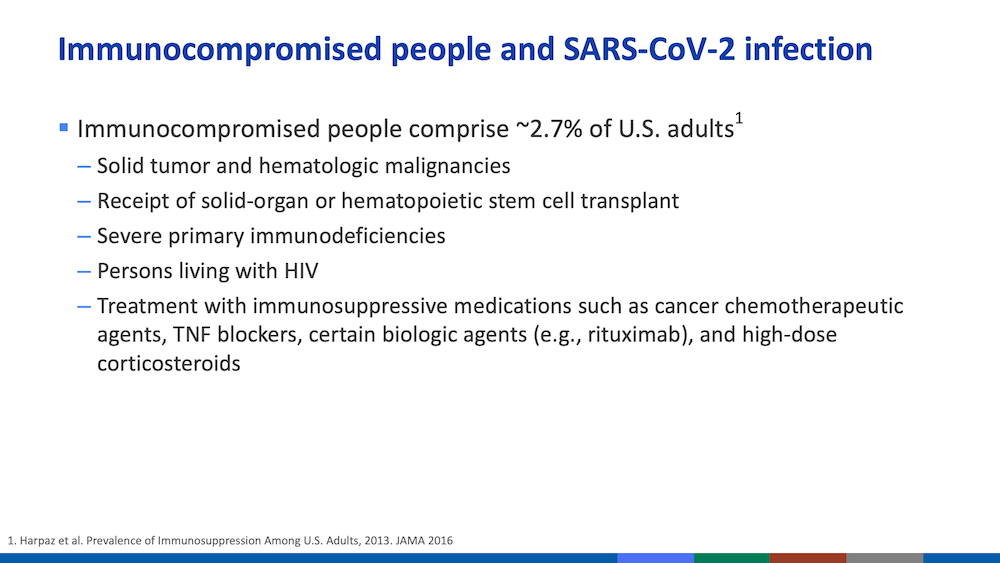
I saw a link on Reddit to a CDC presentation regarding additional vaccine doses for immunocompromised people (IP) (PDF). It outlines steps needed to have the CDC recommend additional doses, but we are still very far away from that. It appears that we are still in the reviewing data process, and still required FDA approval under the Emergency Use Authorization for the vaccines.

There were four slides under the section “What do we know now?”

I am #2 on the list, but do not know what portion of the ~2.7% are organ transplant recipients.
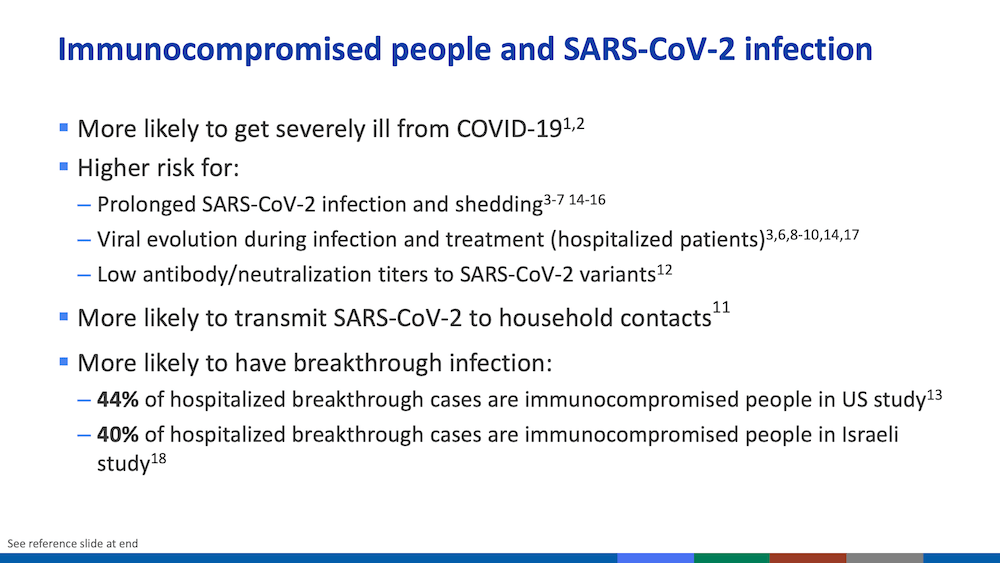
Even though IP are ~2.7% of the population, they/we account for 40-44% of hospitalized breakthrough cases. Again, they do not disclose what % of breakthrough cases are from IP. It is likely lower than the 40-44% since infected IP are “more likely to get seriously ill from COVID-19.”
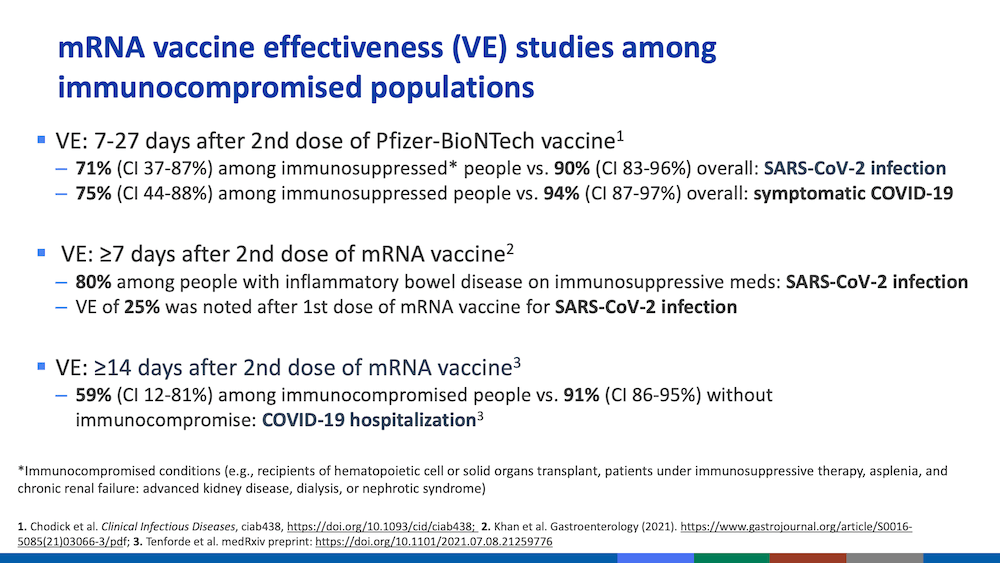
This one is a bit confusing because I think they are combining data from several categories. It does appear that vaccine effectiveness (VE) is lower in IP than in the general population: 75% vs. 90% for infections, 71% vs. 94% for symptomatic cases, and 59% vs. 91% for hospitalization. Some of the non-mRNA vaccines (Sinovac, Sinopharm) are around this level of VE anyway so maybe it’s not that bad?
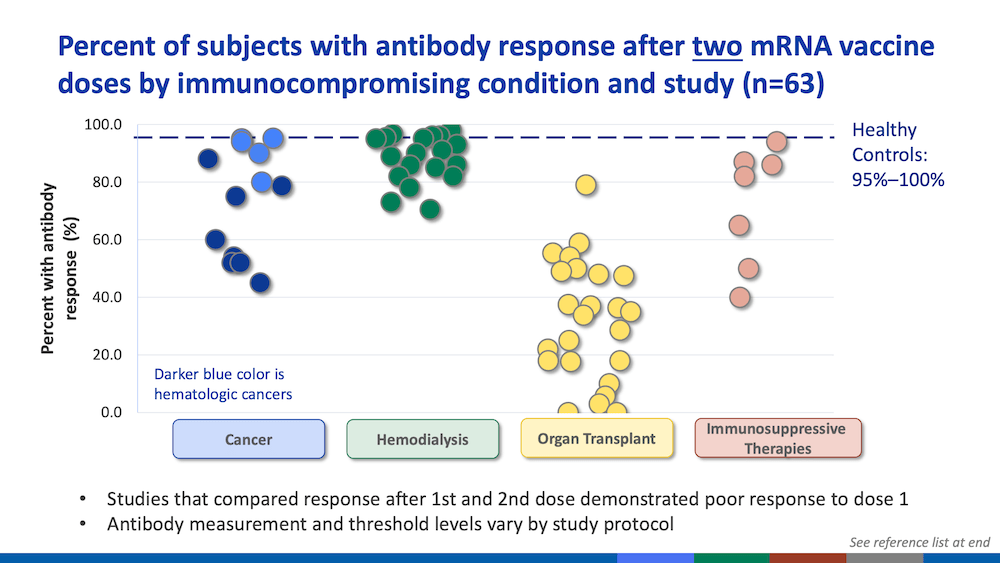
This is a small sample size (n=63), but it seems that organ transplant recipients have the worse antibody response out of all the IP categories. I was on hemodialysis for several years, and was categorized as a high-risk for infection at the beginning of the pandemic. However, it is probably due to cardiovascular and respiratory issues rather than the immune system. So the response to the vaccine should be fairly normal, but once infected, symptoms will likely be more serious.

Again, since the data is not segregated by type of immunocompromised people, it is hard to estimate the increase in infection risk, even subjectively. My reading is that if there is a response to the vaccine, it is about 2/3 the effectiveness vs. non-IP. However, this may be lower for organ transplant recipients since the anti-rejection medications are specifically designed to mute any immune response.

In my case, I am slightly hopeful since my first vaccine shot was about 18 hours before surgery. I do not know if that is sufficient time for the immune system to develop any protection. Post-surgery, I was on a higher dosage of anti-rejection medications compared to today, but I do not know objectively whether it was a larger then normal dose. The transplant center did start to lower my dosage after about two weeks so there may be a slight chance that the second vaccine shot was somewhat effective, even though I did not experience any response side effects.

I am thinking about this daily because I am invited to my boss’s party next weekend. It is indoors but with a lot of open doors plus patios and balconies. In the past, the room was somewhat crowded. If I go, I am going to wear a KN95 mask, but it will be difficult to maintain a six foot separation from everyone else. It is difficult to manage risk where there is essentially no data. I am bringing my sister as my +1 guest. She is excited to go but she understands if I decide to skip the event.

OG Nephrologist

I just saw my “local” nephrologist. She is not really OG since she is the third or fourth nephrologist I have seen outside a hospital. When I was initially asked to see a nephrologist due to deteriorating kidney function, I found someone close to all my other doctors. I think she was an Indian woman and I saw her for quite awhile. At some point, she left the practice and I was assigned to the main nephrologist, but he was an ass. As soon as they hired a replacement, I was transferred to him, a Korean man. That went on for awhile, but my kidney function kept decreasing. He also left the practice to move to San Diego, so I got a referral from my primary care doctor, and ended up at the current medical practice. I was supposed to see the primary nephrologist, but was scheduled for another doctor who was more available, and she has been my nephrologist for five or six years now.

The was my first appointment with her since my transplant. UCLA was supposed to send a package with all my notes, medications, and test results. Of course, she has not received anything. I was low-key expecting this since UCLA has probably thousands of active patients, and you are monitored by a team of doctors instead of just one. Good think I had all my records on MyChart on my phone. Long story short, she did not change anything in terms medication or care, but she did have lots of questions for UCLA. The big surprise to her was how fast UCLA stopped my prescription for mycophenolate (Cellcept). She said many patients are on that medication for life, yet it was discontinued for me only after a month. She also said that patients typically get more anti-infection medication for longer periods, while I was only one one, atovaquone.

Even though my nephrologist has worked with UCLA before, I believe she refers most of her patients to St. Joseph Hospital for transplant. I also started there, went through orientation and tests, and met the transplant surgeon. Unfortunately, their transplant social worker was terrible, and rejected by sister as a donor for basically no reason. When I retold the story to my nephrologist and dialysis social worker, they both wanted more information so they could refer the transplant social worker to the licensing board for review. We did not follow through however, and just transferred my case to UCLA. It does sound like the St. Joseph transplant surgeon is much more risk adverse, and keeps transplant recipients on high doses of anti-rejection medications for many years. UCLA seems like the opposite. Hopefully I chose correctly.

ProPublica Kidney Transplant Article

Initially, I ended the previous post with a paragraph regarding an article on ProPublica written by the same journalist that contacted me nine months ago. However, as I read the first few paragraphs of the story, I felt it needed its own post for discussion.

ProPublica is a nonprofit newsroom that investigates abuses of power.

ProPublica begins all their stories with the above line. It pretty much tells the reader their biases and how they will tell the story. After reading the first few paragraphs, I was not wrong.

First, there are plenty of things that are wrong with the dialysis industry. I came up with the following just from memory (no Google):

  • Two for-profit companies control 70% of the market
  • Medicare coverage provides distorted incentive to maintain the status quo and milk the system for profit
  • Very little public awareness on the impact of dialysis on ESRD patients
  • Even less awareness on the need for organ donation

Just from the recent ballot proposition fights in California between the for-profit dialysis companies and SEIU (employee union) demonstrates even the industry cares only about profits and not patients.

Having said that, ProPublica is obviously biased against dialysis and transplant providers. First, if I assume my interview request in September 2020 is related to this story, the timing is a bit off. The actual article was published on December 15, 2020, but the subject of the article passed away earlier in August. So, by the time I was contacted, they already had most of the information needed for the article. What did they need my story for? A supplemental article about how getting a transplant suck for everyone?

If you read about the life of JaMarcus Crews, it is definitely a more compelling story than if they had written about me. JaMarcus was was black, living in Alabama, and likely experienced a lot of discrimination/racism in life and the whole dialysis/transplant process. Me, being a middle class Asian in California and getting relatively good care, will be a boring subject for the story ProPublica wanted to tell.

I found a few questionable items at the very beginning of the article.

When it was over, and all anyone wanted was sleep, JaMarcus drove to the wide parking lot at Target to wait for his cashier’s shift. He missed working at the bank, but a nine-to-five was no longer possible.

It is true that in-center hemodialysis takes up a lot of time, but many people work full-time. ProPublica just says this without any sources or statistics. I worked full-time for the first two years of hemodialysis and during peritoneal dialysis. If JaMarcus was a teller, then he must be at the bank in person, which makes it difficult, but not impossible. He could be assigned different tasks during dialysis days. It heavily depends on how willing employers are to accommodate the employee’s dialysis schedule. I was lucky but also essential to my company, so they were very accommodating.

JaMarcus didn’t tell his wife or son that he was making calculations in his head: most people didn’t survive five years on dialysis. He was nearing seven. His mother had died in year eight.

This one is totally false and can be researched with a quick Google search. I posted on this topic a lot, and most sources say that mortality is 20% after the first year of dialysis, and 50% after five years. That is definitely not “most people didn’t survive five years on dialysis.” The statistics are also skewed by older dialysis patients with multiple medical issues. JaMarcus was 36. That does not mean there is no risk, since JaMarcus did pass away, but the statement is absolutely false.

Having gone through all of this, ESRD and dialysis is definitely a huge problem that needs more attention and research. JaMarcus’s story is sad, and not even unique. I know my comments may be premature based on the first few paragraphs, but one-sided stories like these just entrench people and hinder progress. I am still amazed that I am not dead after years of ESRD and dialysis. If you browse through r/transplant on Reddit, there are lots of anniversary stories from transplant recipients. Of course, the process could be better, but I am hugely grateful and satisfied with my experience. Everyone I have engaged with, from my nephrologist, dialysis nurses and techs, transplant coordinators, surgeons, post-care doctors, to phlebotomists, have been compassionate and caring. The main issue is the scarcity of transplant organs that causes all these issues downstream. ProPublica should focus on that part of our society, but that does not fit their mission of investigating the abuse of power.

Maybe I will change my mind after reading the entire article.

==========

Just saw these lines at the very top of the story:

For years, JaMarcus Crews tried to get a new kidney, but corporate healthcare stood in the way.

He needed dialysis to stay alive. He couldn’t miss a session, not even during a pandemic.

That is lame. Whatever you think about “corporate healthcare” in general, JaMarcus weighed 400 pounds and had heart problems. There is no way he was going to get on any transplant list when healthy people must wait 8-10 years. I can see him getting a transplant if there were lots of organs available, but with only 10% of people on the waitlist transplanted each year, he needs to improve his health situation. No way this is the fault of “corporate healthcare.” Also, WTF is “corporate healthcare?” Of course, it is large hospitals (corporations) doing transplants. You do not want the procedure done in someone’s garage, for fuck sakes.

I also do not understand the second sentence. I had to go to my clinic during COVID pandemic. That is the only place I went outside of my house. Even without a pandemic, dialysis patients cannot miss sessions since that will mess up your health even worse. Is this the fault of “corporate healthcare” too? How is this racism? I thought ProPublica was like NPR: a good news source that leans a bit left. But so far, this seems like a total hit piece.

In hindsight, I am glad the journalist did not follow-up. I would be really pissed off if I were part of this story the way it was told.
Alkaline Phosphatase

There was a post recently on Reddit’s r/transplant subreddit about high alkaline phosphatase (ALP), and what it means for the transplant.

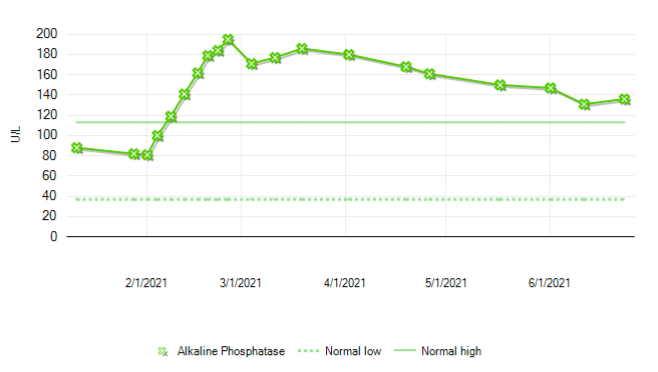
I have wondered about this test as well. My numbers were low post-transplant, but have been above the high limit since mid-February. However, at all my clinic appointments with UCLA, none of the doctors has ever mentioned my ALP results. After a few months, I also just ignored this result in a sea of numbers.

Here are my results. Since the high at the end of February, ALP levels have been steadily decreasing. The OP in the reddit post said his number was around 300; that is much higher than my result results.

I had no ideal what ALP was, other than it was an enzyme from the “ase” ending. MedlinePlus (.gov) had this description:

ALP is an enzyme found throughout the body, but it is mostly found in the liver, bones, kidneys, and digestive system. When the liver is damaged, ALP may leak into the bloodstream. High levels of ALP can indicate liver disease or bone disorders.

https://medlineplus.gov/lab-tests/alkaline-phosphatase/

If you search for ALP and post-kidney transplant, most of the results are from academic papers, which are usually more narrowly focused on something specific and much harder to read/understand. I did find one webpage on NKF, but it mainly focused on bone disease.

There are several comments on the Reddit thread, but I find the level of intelligence on Reddit is generally pretty low. Hopefully, people that comment on medical questions have either medical training or personal experience, but neither has access to the OP’s medical records. I think there is a lot of fear and uncertainty around medical issues, but I would not trust some random comment on an Internet forum. Maybe this is a more worrisome trend of people not trusting their own doctors? Or maybe they want validation on a life choice (illegal drugs, smoking, alcohol use) not recommended by their transplant doctors?

Back to my results, the UCLA doctors were pretty thorough when reviewing my test results each week, so maybe being a bit high on ALP levels is no big deal for now.

Dog Sitting, Day 2

First day went pretty well. The two dogs are pretty well behaved so not much disciplining. However, they are huge attention hogs so they are always coming up to you. One likes to bring squeeze toys, and the other will lick you legs below the knee if you are wearing shorts.

The transplant team did ask me several times if I had pets, and it sounded like an infection risk post-surgery. It seems that healthy dogs appear to be pretty safe per the CDC. I think I just need to be more careful when picking up their poop. There is a side path at my sister’s house where the dogs can pee and poop, but after letting them out several times with no results, I had to walk them down the street to a grassy area so they can sniff around. They both took the biggest dump, so I had to bring doggie poop bags and pick up after them. My sister also has a rule that they get a treat after pooping so they were looking at me expectantly when we got back home.

It really is like taking care of two small children that cannot talk. Just 10 more days to go.

Final Post-Transplant Appointment

Well, kind of. I had an in-clinic appointment this morning to discuss my transplant at UCLA, and they did agree to turn me over to my regular nephrologist. They tried to do this several times, but there was always a test outside of normal range. I guess all the test results looked good enough for them to finally release me, but I do have a follow-up appointment with UCLA in four months.

I was a long morning. My appointment was at 9:30 am, which meant I had to be there by 7:30 am to draw labs. Both Waze and Tesla navigation said about 90 minutes, so I left the house at 5:30 am, did not arrive until 7:20 am. The clinic was pretty deserted so I was called almost immediately by the phlebotomist, but that left me with a full two hour wait until the clinic appointment. I ended up at the main hospital cafeteria, ate some breakfast, and basically sat around for 90 minutes. Back at the clinic, the appointment was pretty quick. The lab results turned out fine: my creatinine levels dropped down back to 1.30, or within normal range. My calcium levels were a bit too low this time, so the doctor told me to stop taking Sensipar*. Of course, I just placed a refilled with my online pharmacy for a three-month supply, arriving in two days. They are keeping me on the Lokelma since it appears to help with my high potassium. The hemoglobin levels have fallen to normal range so we did not go over any of the issues I posted about here.

UCLA nephrologist unsure what happened to cause the sudden rise. He said sometimes a test result will come back all weird so they will test a few more times to verify.

I asked the doctor about the kidney ultrasounds again. He repeated that the findings were pretty normal. My old kidneys have atrophied slightly, which was typical, and there are some benign cysts but nothing to worry about. For the new kidney, the arterial flow is a bit high, which usually indicates some blockage (renal artery stenosis). However, since the kidney is working well, they there is no concern.

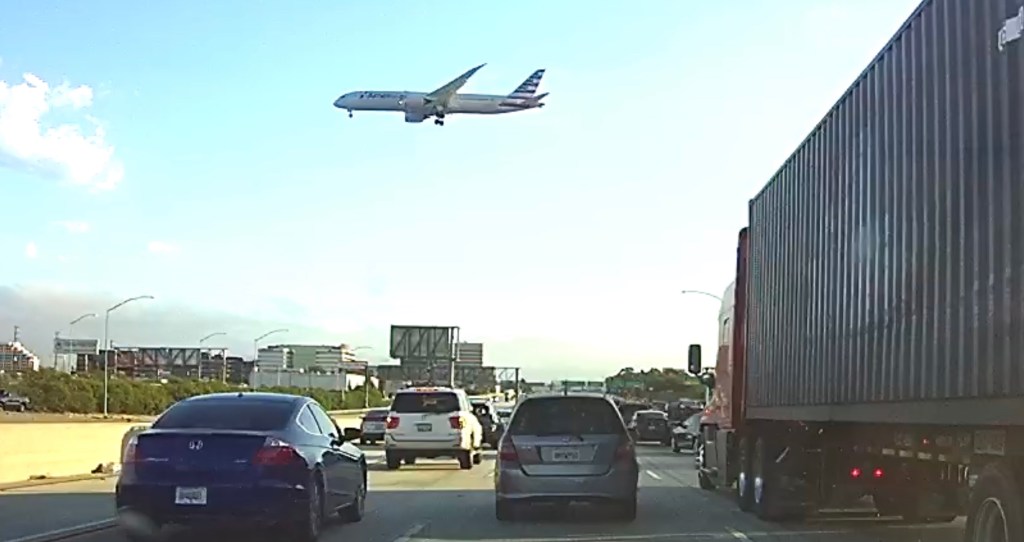
I got back to my car at around 10:00 am, and the drive home took about an hour and was pretty uneventful. Traffic northbound on the 405 was still very bad, even at 10:30 am. On the way to UCLA, an American Airlines Boeing 777 flew over the freeway right in front of me near LAX. It looked really huge in real life, but the fisheye lens on my carcam made it look small.

==========

*The Sensipar prescription refill cost me a $10 copay, but my work insurance (or my company since we are self-funded) had to pay ~$2,000. If you divide that out assuming a 40 hour work week, it is about $4/hour for the medication. For minimum wage workers, that is >50% of their gross salary. I am all for free markets, but some of these drug prices are ridiculous.

No More Sweating?

I am still sweating in general. However, I mentioned before that sometimes when I eat, I would starting sweating profusely, especially when I am eating something with carbs like a sandwich or pasta. There are times where I had to use several paper towels to wipe away sweat before it started dripping onto my food. The conclusion was that it had something to do with being diabetic, but no one I spoke with was sure of the cause.

Since the transplant, I have been distracted by a bunch of stuff, but I just noticed that I was not sweating anymore while eating. I will use Raising Canes as an example. Typically I will sweat a lot when eating their chicken fingers. It did not matter if I ate the food in my car or at home, the sweating would start right after I start eating. The last two times though, there was no sweating at all. In fact, I do not believe I have experienced any episodes of gustatory sweating post transplant. This is very strange since the transplant did not fix my diabetes, i.e., I am still diabetic. In actuality, due to a combination of anti-rejection medications and new kidney, my blood sugar is worse. Based on my fructosamine results, the endocrinologist thinks my A1C is above 8.0,, which is pretty high. All other things being equal, the sweating should be worse, not gone.

Maybe I should pose this question to my endocrinologist next time.

Kidney Complications

So for over a month I thought everything was going well with the kidney except for a few borderline test results. However, my creatinine spiked two weeks ago so I had another video appointment with UCLA today. This meeting took much longer since the nephrologist was once again evaluating whether to release me to my regular nephrologist.

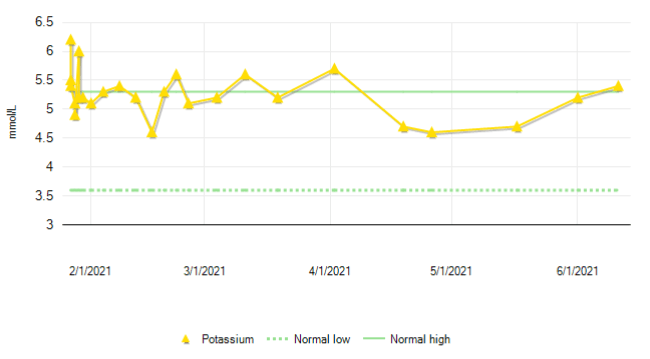
The issue this time is high hemoglobin combined with high potassium. My potassium has been borderline high since transplant, and this time, the result was 5.4 mmol/L:

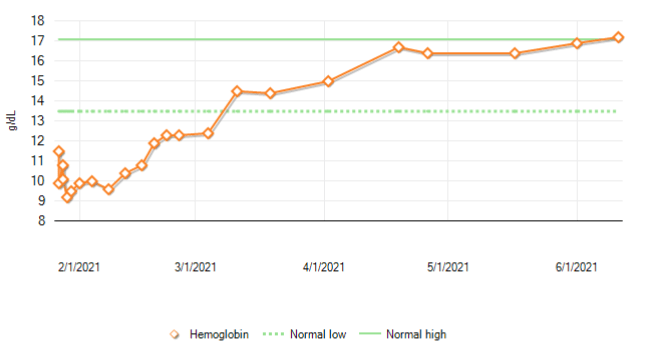
The hemoglobin results post-surgery were super low since I had anemia while on dialysis, but it has steadily increased until it is now borderline high. High hemoglobin can lead to blood clots that may end up in the lungs causing pulmonary embolism, or the brain causing a stroke. Great!

Persistent high hemoglobin after a kidney transplant indicates post-transplant erythrocytosis (PTE). It is defined as having hemoglobin results above 17.0 g/dL and hematocrit >51% for six months. My numbers are 17.2 and 53.5%, but for just the last test. Nevertheless, UCLA wants me onsite next week to talk about options. They were going to prescribe me Losartan to lower the hemoglobin, but that can raise potassium, which was too high already. Instead, UCLA prescribed Lokelma to try and lower my potassium first. If they can lower my potassium and my hemoglobin stays high, they will also prescribe Losartan. Otherwise there is a procedure to physically remove the hemoglobin from my bloodstream. Obviously, I want to avoid that scenario.

==========

Back to the creatinine problem, this time the numbers were a bit lower at 1.39. It is still above normal range, but much better than 1.58. I did the same blood test a few days ago for St. Joseph Heritage, and the number was 1.50. Combined with the inconclusive kidney ultrasounds, the UCLA nephrologist was not concerned about any rejections.

I-405 = Freeway Hell

So I went to the main UCLA campus for a couple of kidney ultrasounds today. The appointment was at 2:00 pm. Since it is Friday, I knew traffic would be bad. Still, I spent a total of 4 hours driving today. I left my house at noon-ish, and arrived at UCLA at 1:20 pm. Since I needed to pick up a prescription, that worked out well. The radiology lab was super busy today. With half the seats blocked off due to COVID measures, the waiting room was almost fully occupied. Surprisingly, I did get called at the appointed time, and the ultrasounds took about an hour. The tech was very nice and talkative, so much so that I thought about telling him to pay attention to the procedure. 😀

I paid for parking ($14!) and left UCLA at around 3:00 pm. At first both Tesla navigation and Waze showed a two hour drive back home. As I drove, that slowly grew to two and a half hours. While the Tesla onboard navigation told me to stay on I-405, even though it was basically a parking lot, Waze kept trying to route me off the freeway and onto surface streets, all to save a few minutes. I ignore Waze. With Autopilot in heavy traffic, the Tesla can really drive itself. There are no intersections or pedestrians on the freeway, and it is trivial for the navigation computer to hold the lane and keep distance. IMHO, it is much more work to drive on local streets. I did cheat a bit in Long Beach by driving in a few off-ramps that merged back onto the freeway, along with probably thousands of other drivers. That saved about three minutes according to the nav computer.

One think I did notice though is there are a lot of terrible drivers. Either they are incompetent, or being intentionally dangerous. When Autopilot is engaged in my Tesla, I usually relax more, and get to “spectate” a bit. You really notice how aggressive or entitled some drivers are. I would bet that a lot of the actual traffic slowdowns are caused by inconsiderate drivers forcing others to brake so they can save a few seconds, or jump one space in line. I also saw several cars driving on the shoulders at fairly high speeds while the regular lanes are stopped. Super dangerous.

I guess I am spoiled from not driving to work for the past 15 months. One silver lining of unknown vaccine efficiency for transplant recipients is still having a (good) excuse for avoiding crowds. I will likely not have to go into work until we start having COVID vaccine booster shots.

==========

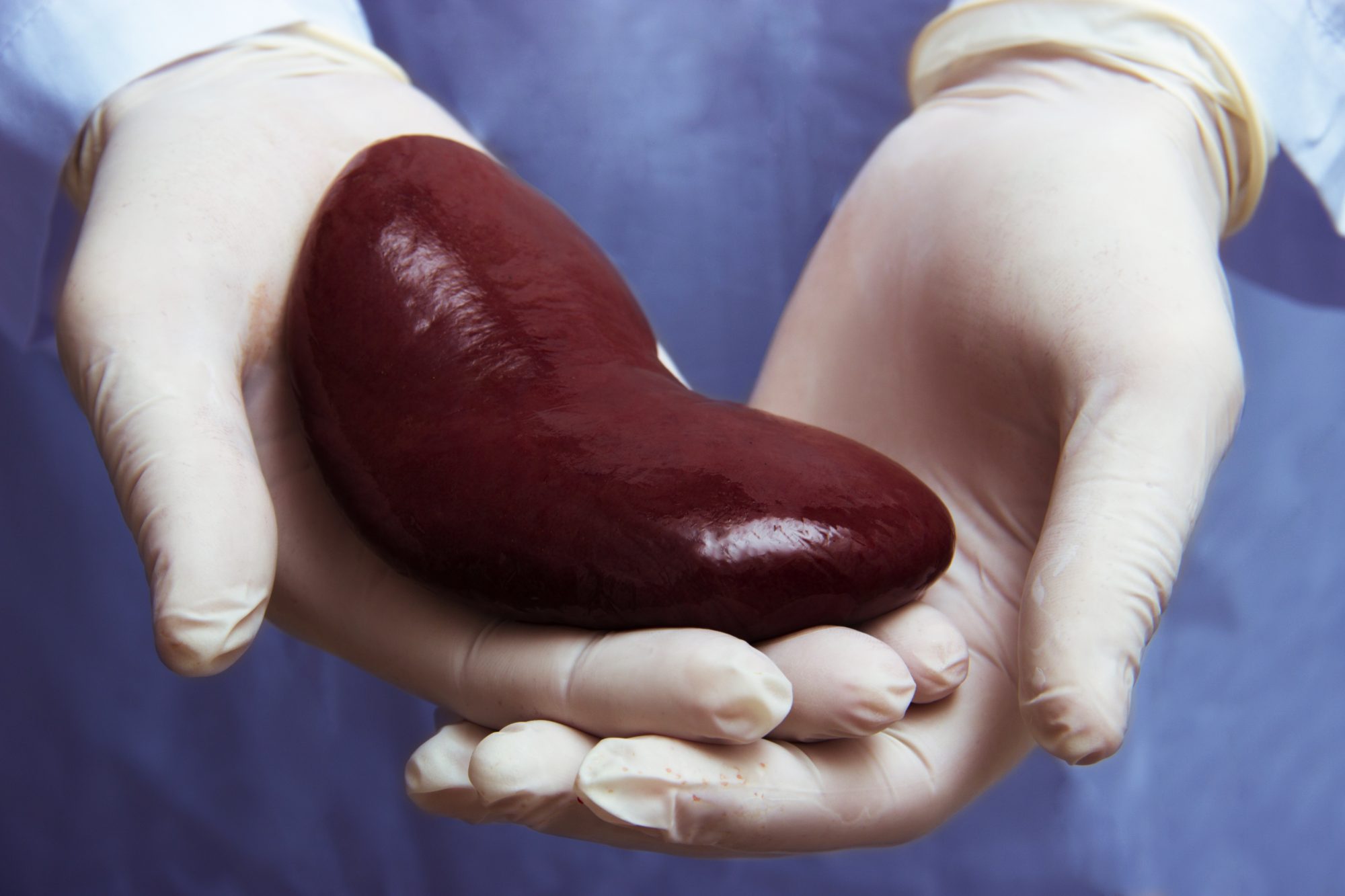
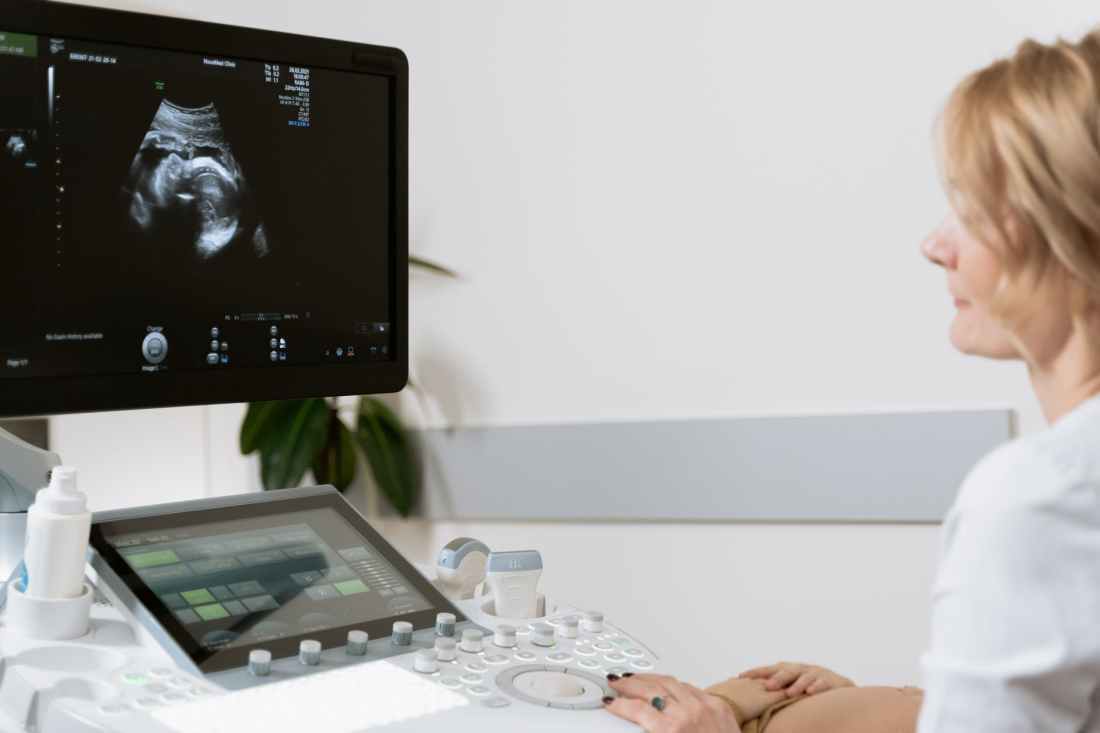
Almost forgot. Since the ultrasound took about an hour, the tech turned the computer screen towards me so I could see the actual images and videos. He also explained a few things to me. It was pretty interesting to see the actual kidney and blood/urine flow in/out of it. Too bad I did not take a photo; my phone was stashed on a chair along with the other stuff in my pockets. I also did not realize how big a kidney was. A few people were posting pics of their “new” kidney. Maybe these were deceased donor kidneys? UCLA certainly did not show me my sister’s kidney before they transplanted it in me.

https://www.openaccessgovernment.org/tackle-kidney-disease/76397/

Not sure if that is a real kidney or just a model for a stock photo, but it is pretty large. I have three of them now. Doctors said bad kidneys will atrophy so maybe my two old kidneys are taking up less room.

More UCLA Appointments

*That is not me. I am not pregnant.

I just complete my video call with UCLA this morning. As expected, they want another appointment in 10 days due to the spike in my creatinine levels. Usually if the number increases by >20%, they want to figure out why, or see the number drop back down on the next test. In addition, the doctor wanted another ultrasound, this time of the arteries connecting the new kidney. Since this ultrasound is only available at the Westwood site, they cancelled my appointment tomorrow in Palos Verdes, and set up another one at 100 Medical Plaza for both scans. That means I have to drive to UCLA campus on a Friday afternoon. Ugh. The drive there will be fine, likely no more than 90 minutes, but the drive home at 3:00 pm will take over two hours for sure.

I just looked at my Google Calendar and there is a medical appointment almost every other day for the next two weeks. This reminds me of the bad ol’ days right after heart surgery when I had a ton of appointments plus 3 days of dialysis each week. At least there is no dialysis this time.

==========

The doctor was pretty puzzled by the sudden increase in my creatinine levels. She said since the donor match was so good, there is very little chance of an organ rejection. The additional ultrasound scan is to make sure the artery supplying blood to the new kidney is not blocked in any way. I read cases where the kidney moves and twists the artery, blocking blood flow. I also read that dehydration will likely increase the creatinine levels so I am going to drink a lot of water the next week prior to the lab test.

More Medication Side Effects

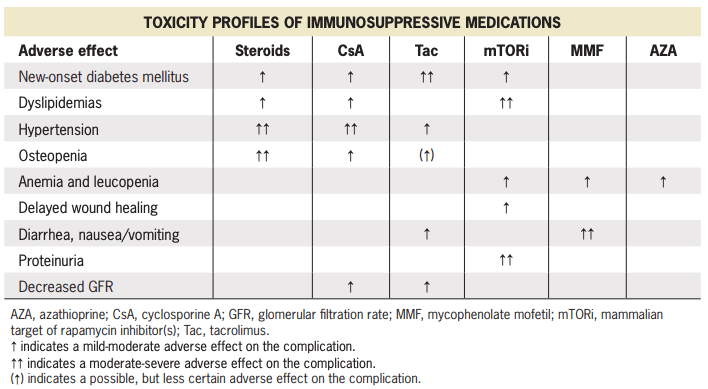
Post transplant, I looked up the side effects of all the medications I was prescribed. The focus was on the three anti-rejection medications since they had the most negative effects. Here is another one I found from the National Kidney Foundation:

https://www.kidney.org/sites/default/files/02-50-4079_ABB_ManagingTransRecipBk_PC.pdf

Once again, I was prescribed the following medication categories: Steroids, Tac, and MMF. The MMF stopped after a few weeks, but I am still taking prednisone and tacrolimus. Looking at this list, the adverse effects with the most total ↑’s are diabetes, hypertension, and osteopenia. I know I have the first two conditions, although the hypertension is a lot better controlled recently. I had to look up osteopenia and it is basically bone mass loss. I am not sure if I have or developed this condition, but I do not remember doing a bone density test ever.

Back to my current issues with blood sugar, I am hoping that the tacrolimus is partially responsible for the difficulty I am having. Maybe if UCLA ever decreases or removes my tacrolimus dosage, or I get more used to it, my blood sugar will drop enough to stop the insulin shots. Finally, the last line in the chart above has decreased GFR attributable to tacrolimus as well. Perhaps that is causing the spike in my creatinine numbers? But if so, why now?

Creatinine Spike

Just when I thought the transplant was going well, and UCLA is about to release me to my regular doctors, the latest test results show a big increase in my creatinine test result.

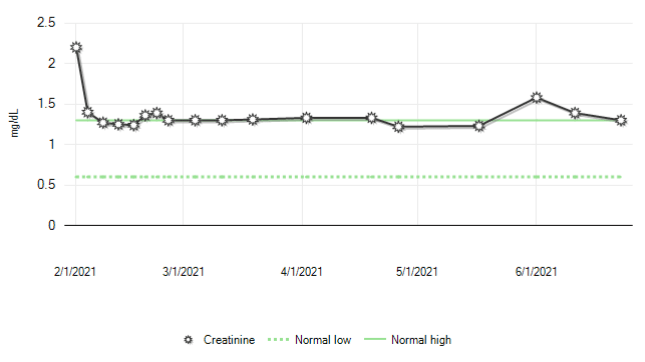
This is a chart of creatinine levels from 2/1/2021. The “normal high” line is at 1.3 mg/dL. I have been pretty close or below the line since a week after the transplant, but now the number is at 1.58. That implies a eGFR of 50. Two weeks ago, the numbers for creatinine and eGFR were 1.23 and 67 respectively. I do not know if this is common to have large swings in creatinine levels post surgery. I do have an appointment with UCLA so I am sure they will discuss it with me. This makes me feel that tomorrow’s appointment will not be the last one since they likely will want another follow-up test and appointment.

On that topic, I have been getting random flashes of pain in area where I think the new kidney sits. It is never a sharp pain, and goes away quickly. I also have these random spikes of pain all over my body that I attribute to peripheral neuropathy, especially in my ankle/feet (one is starting up in my right ankle as I type), so I was never concerned. When I go to clinic in person, the doctors also have me lie down and then press on that area; there were never any issue with that either. I did notice a little more pain from that area this past weekend but do not know if it is related to the higher creatinine levels. Finally, I have had three Natera Prospera tests and they have not mentioned any signs of organ rejection.

Hopefully this is an one time thing, and my creatinine levels drop to normal levels during the next set of lab tests.

Time Management

Now that I am four months post-transplant surgery, I have almost forgotten how much time dialysis take up.

My first hemodialysis (HD) experience started with 3.5 hours twice a week. It eventually changed to three time a week. My scheduled time was from 12:30 pm to 4:30 pm Tuesday/Thursday/Saturday. This was before COVID so I drove to work Monday/Wednesday/Friday, and worked from home Tuesday/Thursday mornings. I would bring my laptop and cell phone, and managed to do some work with the help of my analyst in the office. For weeks where I was too tired to work in the mornings, I took a PTO day to cover.

When I switched to peritoneal dialysis (PD), I started going into the office daily, but that meant zero free time during the week. I could watch TV or use my computer after connecting to the cycler, but would have a 20 foot tube attached to me. I found out later that during dwell times between cycles, I could disconnect the tube, and reconnect before the next cycle. This however, increased the risk of infection each time I disconnected, but I could move around the house for an hour or so.

After the bypass surgery and returning to HD, my schedule was now T/T/S from 5:30 am to 10:00 am. This was fine while I was out on medical leave, but not so good once I returned to work. I ended up doing the same thing as before: going into work 3 days and working from home for 2 days, except in the afternoon. After COVID hit in March 2020, I started working at home full-time. I still took a vacation day here and there to cover for missing hours, but that got tedious too. Finally, I switched to a part-time schedule (30 hours/week) that allowed me to keep my health insurance, but with a 25% pay cut.

Post-transplant, I took about 9 weeks of medical leave, and returned to work full-time starting April 2021. Since I am taking anti-rejection medications, I am working from home every day. I have got used to not seeing people from work, but it is difficult. I think I work better if I can talk to people in person, but realized that society has changed, perhaps permanently, due to COVID. Most of my staff were working from home this past year (all computer related), and will likely work a few days from home each week after things return to “normal.:” For me, after 3.5 years of dialysis, it is still hard to think about the next treatment session. Some days, I lose track of what day of the week it is, and try to join conference calls that are scheduled for another day. In addition, as California is opening up in a few weeks, I do not know what my work expects from office workers that do not need to be there physically. Since I do not know if my Moderna vaccine shots are effective, I will likely stay home for a few months more.

Creatinine Levels

One of the most important indicator of kidney function is the level of creatinine in your blood.

A creatinine test is a measure of how well your kidneys are performing their job of filtering waste from your blood.

Creatinine is a chemical compound left over from energy-producing processes in your muscles. Healthy kidneys filter creatinine out of the blood. Creatinine exits your body as a waste product in urine.

A measurement of creatinine in your blood or urine provides clues to help your doctor determine how well the kidneys are working.

Mayo Clinic

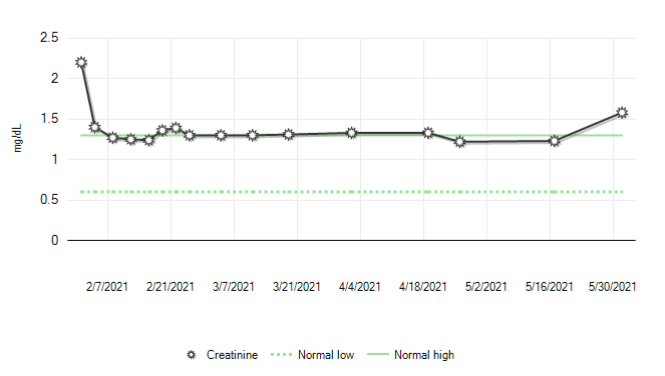
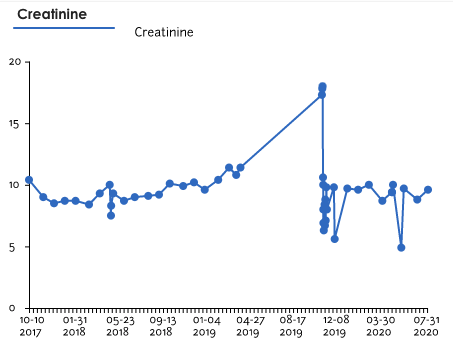
Since the transplants, I have had minor issues with lab results, primarily potassium (too high), calcium (also too high), phosphorus (too low), and blood sugar (way too high). However, the creatinine levels were pretty solid, though on the high end of normal. Here is a chart pre-transplant:

The huge spike was right before my bypass surgery when the nephrologist determined that peritoneal dialysis (PD) was not working for me anymore. Since this chart is from St. Joseph, the six month I was on PD with Satellite Health is missing. Typical readings were between 9 and 10 while I was on dialysis.

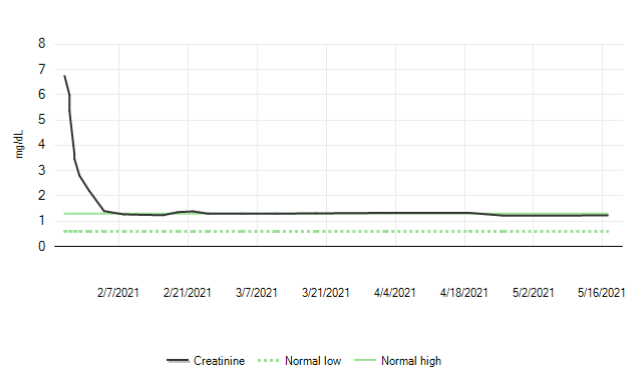
Here are results from UCLA starting the day after transplant:

My creatinine levels dropped pretty quickly right after surgery, and after less than two weeks, stabilized at around 1.3. The transplant has seemed pretty happy about my creatinine numbers so I am happy too.

Final x4 Appointment

Just when I thought I was out, they pull me back in!

Michael Corleone, The Godfather: Part III

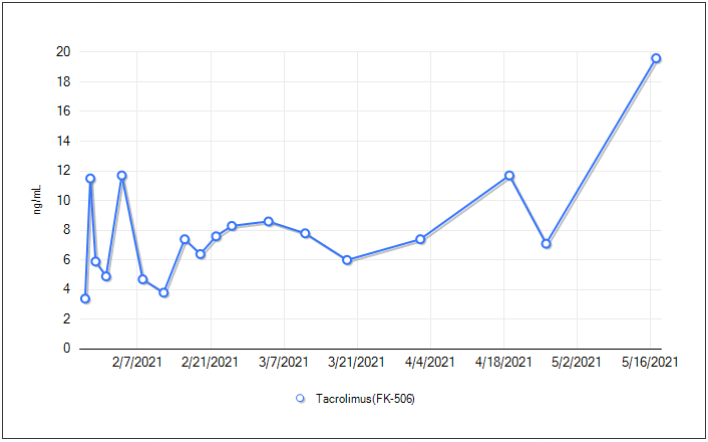
Not a mafia boss, but that how I feel after the “final” UCLA post-transplant appointment. Not sure if I mentioned it previously, but they initially scheduled an in-person appointment, but changed it to a video call later. That meant I had to schedule a lab appointment in Laguna Hills. Since it was kind of last minute, my lab appointment was at 11:30 am. Not wanting to miss my tacrolimus and prednisone pills in the morning, I took them at 8:00 am as scheduled. As a result, my tacrolimus test result was through the roof, and ended up being invalid. There is no “normal” range given, but I read that from 7 to 11 is a good result.

Tacrolimus test results from 1/28/2021

Since the result was useless diagnostically, the nephrologist wanted me to schedule another appointment with them. I guess they want me case to be perfect before releasing me back to my regular nephrologist. That was not all however. The reason they asked for this past appointment was due to a high calcium test result. Well, it was even higher this time, though still small. They also added a new test for PTH or parathyroid hormone. My numbers while on dialysis was crazy high, like 400+, when normal is 10-51. This time, my result was 85, but I have nothing to compare to since this was the only result for this test. To counter this and high calcium, I was prescribed Sensipar. Instead of reducing medication, I picked up another one.

Finally, just to rule out some issue with my kidneys, UCLA ordered a kidney ultrasound. It was strange since I just got an ultrasound less than a month ago, but this time it was for my old kidneys. Sometimes recipients get cysts or kidney stones in the old kidneys, and one of the symptoms is high PTH. This time, instead of going to UCLA for the ultrasound, they were able to make an appointment for me at a site in Palos Verdes. Much closer drive, except it will be Friday afternoon when I am done. Probably the worst time to drive from South Bay to Irvine. Along with my no show podiatrist rescheduling, there were a lot of phone calls and coordination to schedule this latest batch of medical appointments.

No Immunity?

I saw an article on NPR today about COVID-19 vaccine and transplant recipients. Basically, the doctors are saying that even if you are vaccinated, you should assume that you have no immunity.

Right now, Haidar says, the best advice he can give his patients is to get vaccinated — but keep living cautiously, adhering to the same masking and physical distancing precautions they’ve been following throughout the pandemic.

And just assume you’re not protected, he advises. “I know it sounds lame, but this is all that can be offered now.”

NPR Website

At least he’s right that it is super lame. The article also says experts do not recommend getting an antibody test since it may not measure the right things. WTF? Then what was the basis of the Johns Hopkin study? How did any of the vaccine manufacturers come up with their efficiency numbers? You game me two vaccine shots and you do not know if it did anything at all?

I did ask one of the UCLA nephrologists about this back in late March. Basically she said the same thing. You probably have some immunity, but it will not be as strong as “normal” people, and no, do not get an antibody test. Initially, I thought I would be able to physically go back to work a few days a week, and maybe travel a bit since the last time I travelled was back in 2015. Now it looks like I have to keep hiding out indefinitely since I live in the land of anti-mask and anti-vaccine morons.

==========

The article did mention that a lot of the immunity issues come from anti-metabolites. I was taking mycophenolate right after surgery, but that tapered off quickly. It is likely that there was still decent levels of the medication in my body when I received the second vaccine shot, but I have been off that medication for several months n0w. Maybe a third/booster vaccine shot will work.

Tacrolimus vs. Mycophenolate