Blood Sugar Update

Three and a half months post-transplant, most of my test results are looking normal. Even my blood pressure, which has fluctuated a lot both before and after transplant, has settled down somewhat to ~140 systolic standing and ~120 standing. The only remaining problem is blood sugar. I have type 2 diabetes for many years. While on dialysis, whatever insulin I naturally produce stays in my body since it is not filtered out during dialysis. However, post-transplant, the combination of anti-rejection medication side effects and new kidney flushing out insulin means high blood sugar and need for insulin shots. I finally figure out how to export and graph blood sugar readings from my meter. Here is data since last November when I switched to the new meter:
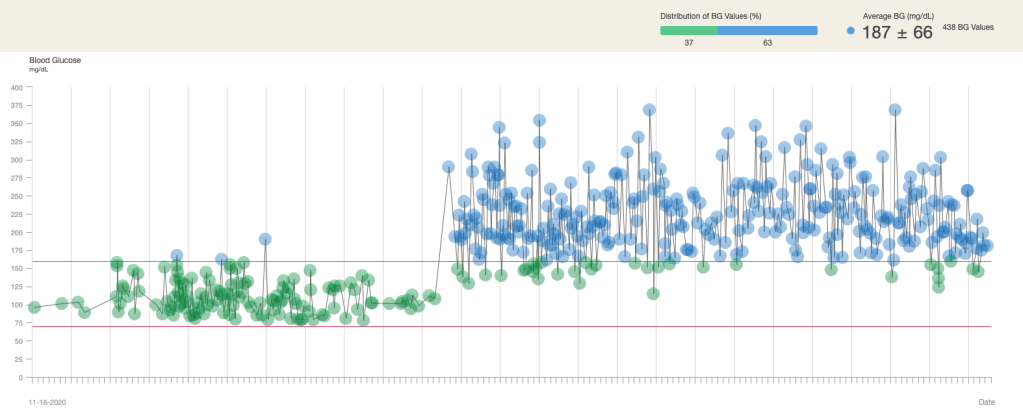
The text is a bit hard to read, but it is pretty obvious when the surgery occurred. Post-surgery, I have been on three different insulin injection schedules. Again, it is hard to see, but the first 1/3 period after transplant was just Humalog on a sliding schedule. The second 1/3 period was two insulin pens but at a low dosage. Finally, the last 1/3 period has the same two insulin pens but will a higher dosage. There is a slight downward trend at the end of the graph. It is likely a combination of lower tacrolimus dosage and me actively avoiding food with added sugar. Hopefully the trend continues.

The data also says that there are 438 readings on the chart. The time scale is just shy of six months so that averages out to 2.5 lancet pricks per day. If you look at the fingertips of my left hand, you can definitely see hundreds of tiny dots showing where blood was taken for each blood sugar reading. My iPhone 12 camera cannot focus close enough to get a decent photo; I may have to get out my SLR and a macro lens to see if I can get a clear pic.
90 Day Kidneyversary

I did not know this was a thing, but if you Google, there are a ton of links and images. I guess it makes sense since it is basically the beginning of a new life for the kidney recipient. Of course it had to be super commercialized but any excuse for cake is good!

My kidney transplant was on January 27th, so today is the 3 month/90 day milestone. The kidney is still working great. My latest creatinine results were a bit lower (better) than last week at 1.22, which translates to a eGFR of 68. Not perfect, but great compared to when I was on dialysis. I thought I would be done with UCLA clinic appointments, but evidently I need one more before they let me go. I also thought they would reduce my tacrolimus dosage, but it appears unlikely at this point. There was a post on Reddit about kidney recipient’s medicine list, and most people seem to have lower tacrolimus dosages. Luckily, I am only on two anti-rejection medications so maybe that is why I need more tacrolimus? Due to the perfect match with my sister, the nephrologist I saw yesterday said the kidney could potentially last forever, however long that is.

Final Final Final Appointment

Ugh, they tricked me again. I went to UCLA transplant center for what I thought was the final in-person appointment before sending me back to my own doctors in Orange County. In fact, the appointment last week was supposed to be the final appointment, but the doctor decided to cut my tacrolimus dosage so he wanted one more set of labs to check levels again. Since the “normal” range is not provided on the lab results, I do not know if my number is high/low/okay. All I know is they cut my dosage when the result was 11.7, and they also think today’s result of 7.1 is a bit low. In addition, my calcium levels are 0.1 mg/dL above the high range limit, so he wanted to see another test before I go back to my regular nephrologist. All the other numbers, including phosphorus and potassium, are all within normal range. Blood sugar is still high, but I think I can lower it a bit by reading food nutrition labels and information on added sugars more carefully.

Since I am out of free nights at Tiverton House, I scheduled the appointment as late as I could, which is 11:00 am. That means I need to have labs done by 9:00 am, so I need to leave the house at 7:00 am at the latest. 50 miles from my house to UCLA takes over 1.5 hours during morning commute/rush hour.

The appointment is in two weeks.

Donor Billing

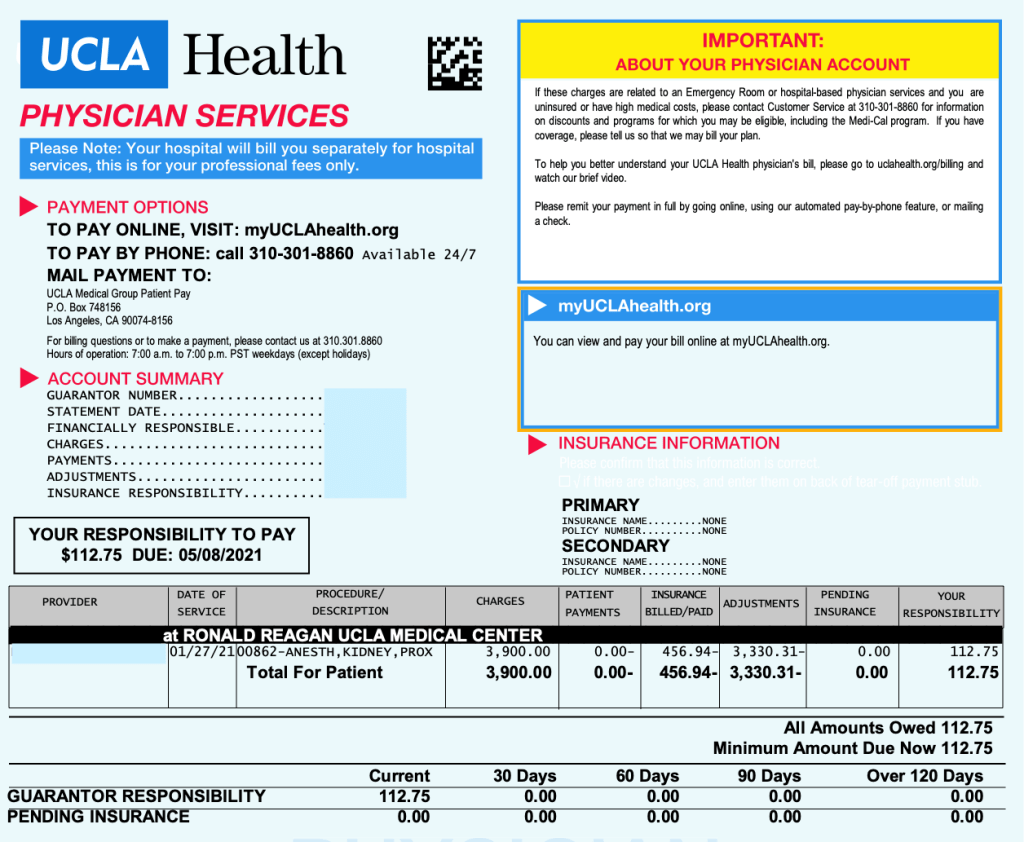
I received my first bill from UCLA for the kidney transplant. The amount due was ~$112 and it was for some pre-op charges for my sister, the donor. I checked my work insurance’s website and there was no rejected claim for that amount. Since I still have Medicare, they did pay for most of the bill, and UCLA billed me for the rest. I checked with my work insurance and they said transplant donor medical expenses are covered, before and after surgery. I also messaged UCLA’s billing department on Monday and they finally answered me today. Evidently, they do not have my secondary insurance information, yet the medical center has billed Blue Shield over a dozen times for doctor charges, hospital fees, tests, and pharmacy co-pays. It it a different account since the charge is for my sister? I believe they use a common patient number across all billing accounts so why are they missing insurance information?

To make things worse, you cannot include attachments to a message reply. You can attach pictures to the initial message, but only two files or something. Anyway, I ended up copying all the information on the insurance card in the reply message. Strange, they can perform a perfect kidney transplant in 3-4 hours but cannot coordinate medical data within the same building. I hope this resolves this billing issue.

==========

Here is the billing statement. The initial amount was $3,900 but there was an adjustment of $3,330.31, which is probably reducing the billed amount to the Medicare price of $569.69. Medicare then paid ~80% (not sure why it is not exactly 80%) which leaves a $112.75 balance.

Again, if I do not have insurance and pay for the transplant out-of-pocket, would I then be billed the full $3,900? That is messed up!

Final Final Appointment

I thought my in-person appointment at UCLA was the final one with the transplant team, but they told me to come back again this coming Monday. The doctor said they wanted to check my kidney ultrasound taken yesterday, plus they also reduced my tacrolimus dosage and wanted to see if lab results are stable after a week.

Speaking of lab results, the numbers all look pretty good so the medical team felt I am ready to go back to my regular doctors in Orange County.

TestResultNormal Range
Potassium4.73.6 – 5.3
Glucose13966 – 99
Creatinine1.330.6 – 1.3
Calcium10.18.6 – 10.4
Phosphorus2.72.3 – 4.4
Tacrolimus11.7N/A
Test results from UCLA Medical Center 4/19/2021

My creatinine levels are just over the high limit, but the doctor said it was still normal and stable so no worries. Glucose is still high but much better. Since my local endocrinologist is managing my insulin, they did not have any comments. The Tacrolimus levels jumped a lot from last test so they reduced it by 25% to three pills each time.

The transplant center also asked me to make an appointment with my regular nephrologist so I think next week’s appointment is the final one. I may have to go back every three months for a kidney ultrasound until they are satisfied that the lesion in my sister’s kidney is benign.

Organ Donation Opt Out

Today I learned (TIL) that the UK has an opt out system for organ donors. Usually, to become an organ donor after death, you have to opt in, or make a decision that you want your organs donated. If you do nothing, it is assumed that you do not want to be an organ donor. With an opt out system, it is the opposite. It is assumed that you do want to be an organ donor unless you expressly say that you do not.

This is one way to try and increase the supply of donated organs. I am guessing that UK has the same problem as most countries, in that there is more need for donated organs than what is available. In my case, the wait for a deceased donor kidney is 8-10 years for my blood type. Increasing the number of live and/or deceased donors will shorted that list.

Having been on the transplant list for over four years, I generally agree with this approach. The UK system still lets family members have an input after the “donor” dies, and they mention taking faith, beliefs, and culture into account. Not exactly what that means, but it seems if any family member objects, then no organs are taken.

If a person do not want to be a donor for any reason, they can opt out, or tell a family member. I guess the impact will be for people who either want to be a donor or do not really care either way, and did not complete the opt in procedure. If that percentage is significant, then it will definitely increase the number of organs available for transplant.

==========

Huh. I just saw a US government website on organ donation. It states that 90% of people support organ donation, but only 60% sign up to be a donor. Not sure if it is 60% of the 90% (or 54%) but if we assume 10% of people do not want to become a donor, an opt out system may increase organ supply by ~50%. The issue is the statistics that says “only 3 in 1,000 people die in a way that allows for organ donation.

Final Clinic Appointment?

During my video call with UCLA Transplant Center yesterday, the doctor (another one that I have not met before) scheduled the next appointment as an in-person meeting. She also schedule me for a kidney ultrasound. I get a feeling I will need a lot of these, primarily due to the cyst/tumor in my sister’s kidney that was left in there. The transplant committee did say that the risk of it becoming cancerous is very minimal, and it was too small to remove. Instead, they will just keep an eye on it with regular ultrasound scans. That probably means I have to go to UCLA regularly for ultrasound appointments.

She also mentioned that they wanted to see me in-person because it would be my three month appointment. Typically, the transplant center will turn the patient over to their local doctors after three months if everything looks good. I am basically only seeing nephrologists at UCLA at this point, so I would start seeing my regular nephrologist. She has been my doctor well before dialysis so probably five years at this point. She was also the doctor that convinced me to go to the ER based on my irregular heartbeat that turned out to be a possible heart attack and ended up requiring a CABG surgery.

Let’s hope with my blood sugar is better with the increased insulin dosage, and labs come back normal.

UCLA Clinic Appointment 3/22/2021

I had another video call with UCLA this morning. The doctor I spoke with thought we had never met before, but I remember she was the nephrologist that evaluated me back in October 2019 for a possible transplant with my friend as the possible donor. Of course, I then had a heart attack/bypass surgery later in November so all that got put on hold.

My labs are pretty stable from the prior appointment. She did increase the tacrolimus dosage by 1 mg, so I am taking four pills in the morning and four pills in the evening. I was hoping they would cut down on that anti-rejection medication since there are many possible side effects. She did say that I can go to a two week appointment cycle so my next call is early April.

I also asked her about returning to work early. She basically said it was up to me. If I felt okay, then I can return to work (from home). She also said I can relax the raw/cold food restrictions, and meet with small groups of people as long as it it outdoors and everyone wears a mask. The risk of COVID-19 infection plus not knowing the effectiveness of the vaccine in transplant patients means I should err on the side of caution.

Orange County COVID-19 Update 3/22/2021

When I spoke to a nephrologist from UCLA this morning, I asked her about social gatherings. I was given pretty restrictive guidelines post-transplant but I wanted to see if things have changed. She basically said if it is outdoors and everyone has a mask on, then it should be okay. My parents made a reservation at a Chinese restaurant this weekend but I think the seats are indoors. I think I am going to have to skip the meal based on what the doctor said. She did say that if I felt fine, I can go back to work.

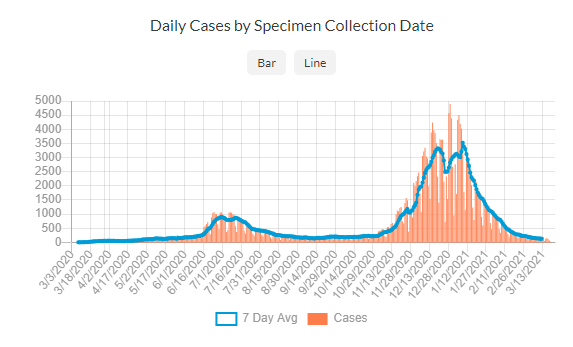
I checked the latest COVID-19 data for Orange County, and it does look much better. Here is data from the OCCOVID site:

This is daily number of new cases for all time. You can clearly see the two spikes in cases back in July last year, and during year-end. Also, the new case count seems to have decreased dramatically. I am not sure if this is due to the vaccines since no one was wearing a mask when I was walking in the park yesterday. Out of about a hundred people that I saw, me and this one other guy was the only people wearing masks. Two weeks ago, most people I saw did have masks on. Is another spike coming as people begin to relax and meet socially again?

Kidney Transplant and Pets

During the screening process, I was asked several times whether I had pets in the house. Other than dog-sitting my sister’s two dogs, I do not have any pets. I used to have a few hamsters but that was a long time ago. I also took care of my ex-wife’s cat a few months post-divorce. That was miserable since I am allergic to cats and had to take Benadryl every day.

I finally looked up this topic online and found this from the CDC. Some websites also suggest transplant patients get rid of their pets since the risk of infection is much higher with pets in the house. Again, the only pets I come into contact with are my sister’s dogs and they’re pretty healthy and clean.

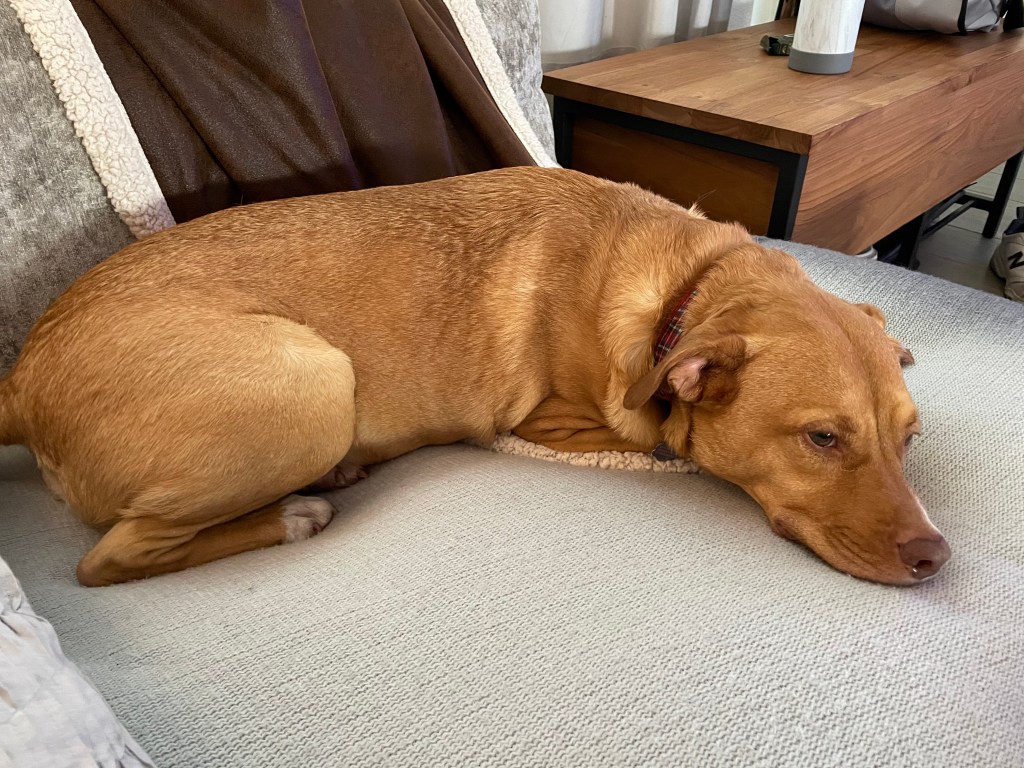
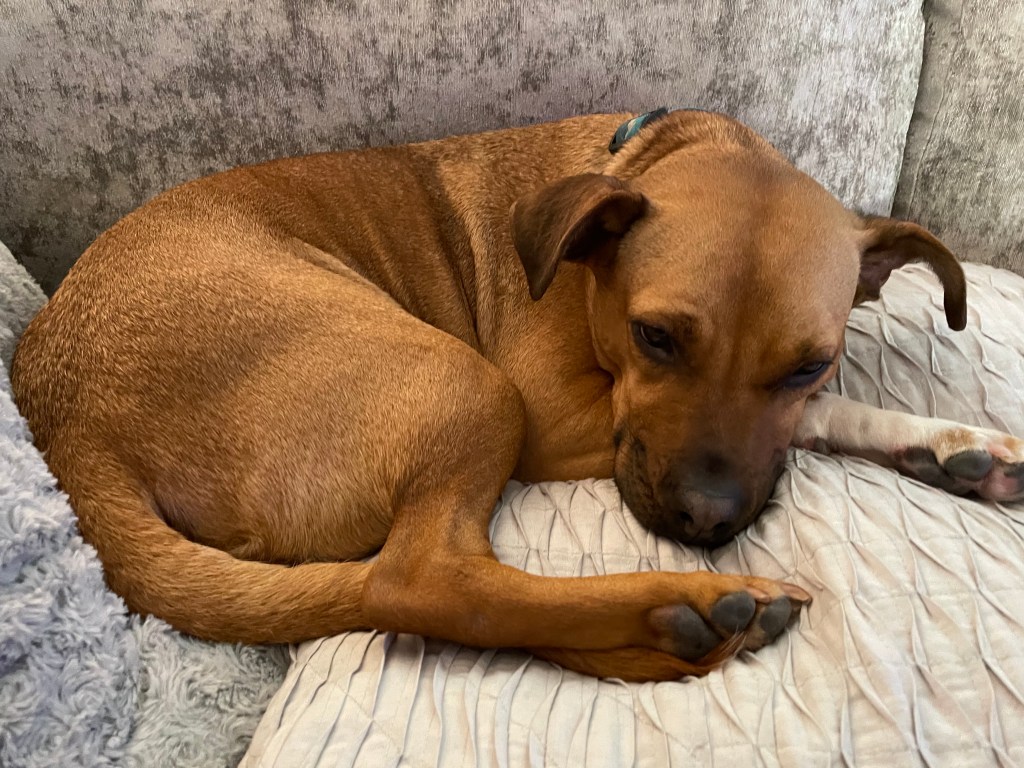
Here are my sister’s two dogs:

CareDx Zoom Call

I just called into a Zoom meeting from CareDx. The topic was Life after Transplant and there were nephrologists from several local transplant centers, including Cedars Sinai and UC Irvine. I was only half listening because my tax guy wanted me to send in documents for 2020 taxes so I was busy finding and sending PDF files on another computer.

At the beginning of the call, the moderator had patient callers text a hello message. One person said their transplant was over 30 years ago. That is awesome. I was thinking that I would be back on dialysis in about 15 years but it appears that transplanted kidneys can last much longer. 30 years would be great because something else would probably kill me by then.

Post-Transplant Quarantine

My church small group is meeting in-person this week. They are going to meet outdoors at Tustin Marketplace and getting take-out food. The last time we did this, I got Panda Express. Chinese food is always an option.

When I was discharged from the hospital, they said to stay away from group of people. However, that was when I was on the initial dose of anti-rejection medications. Those meds have been greatly reduced since then, and my white blood cell count is in the normal range, though I am not 100% sure what that means. I sent a message to UCLA asking them if and when I can meet non-family members, but they decided to punt the discussion to the next appointment. Since that is next Monday, I guess I am staying home this week. I also asked them about food restrictions and whether I can return to work earlier.

Looking at Google Timeline, for February 2021, there are only five dots on the map: home, sister’s house, UCLA (Medical Plaza and Tiverton House), Albertsons, and Chase Bank (to deposit those insurance checks). For March so far, the list is: home, sister’s house, UCLA (Medical Plaza and Tiverton House), UCLA Lab (Laguna Hills), and Albertsons. Pretty depressing.

No Anti-Rejection Medications?

I had a video call earlier this afternoon in lieu of an in-person visit with the UCLA Transplant Center for a follow-up appointment. This time, it was another doctor that I have never met before; they must have a huge staff. He went through my lab results and basically made no changes to my medications. Again, my potassium (and calcium this time as well) was borderline high, so he asked me to watch my diet. Blood sugar was still high as well, but I told him my endocrinologist was managing it.

Right when we were about done with the call, he brought up another topic. He said a news crew just left UCLA. They were there to report on a story that UCLA was piloting a program to stop anti-rejection medications for kidney transplant patients after one year. He brought it up so I did not wonder why I did not have that option. From my understanding, essentially patients with a well matched donated kidney can overload on anti-rejection medications during the first year post-surgery, then not have to take any afterwards. Since I was a very good match to my sister’s kidney, they considered me for the program, but decided against it due to the tumor/cyst/growth that is still in the donated kidney. I guess there is a risk that if the object turns out to be cancerous, it may trigger my immune system, which could damage the donated kidney. They decided to err on the side of caution and did not approve me for the program. He did say that my dosage was pretty low already but wanted me to know about it.

Sigh. Not having to take anti-rejection medications would be awesome since that was the most negative part of getting a kidney transplant. However, I am not going to complain since having a working kidney is so much better than the alternative. I will have to have lots of scans periodically to check on the status of the tumor/cyst/growth, but it is a small inconvenience compared to dialysis.

==========

I could not find any mention of the program online. Maybe it takes a few days to edit and produce the news segment.

Cystoscopy

From the UCLA Transplant Center discharge manual:

Cystoscopy is used cor general observation of the bladder, and to aid in the diagnosis of bladder and urethral disorders. It is also a way to remove stents from the bladder.

I had an appointment today at UCLA Clark Urological Center to have the stent removed. It was placed between the new kidney and bladder to help the ureter connection heal. The appointment was initially scheduled for 1:00 pm but was moved this morning to 2:00 pm, which caused me to sit longer on the freeway driving home.

I left my house at noon and got to UCLA Medical Plaza at 1:30 pm. I checked in and soon a nurse/assistant came out to get me and prep me for the cystoscopy procedure. Basically, I had to remove all clothing from the waist down, put on a gown, then she wiped my groin area with iodine and injected some lidocaine gel into the urethra opening. Then she went to get the doctor. I waited… and waited… and waited… for about 40 minutes with no pants on and trying not to fall asleep. The doctor finally came and it was the same surgeon that did my kidney transplant surgery. He said a few things, grabbed the camera device, inserted it, and grabbed the stent in about 60 seconds. Done. I was then given some wet and dry paper towels to clean off the iodine, while the nurse was still cleaning up the room. She did say, “Don’t mind me.” while I was standing with no pants on. Ha!

The procedure hurt a bit but nothing like the removal of the foley catheter after three days. I paid for parking ($14) and started driving home. I left UCLA at about 2:40 pm, and did not get home until after 5:00 pm. I knew it was going to be bad from years of driving home from work, but this was a lot worse since it was about 15 miles further on the 405 freeway. I had Autopilot on most of the way, so I was free to observe lots of shitty drivers. Since my carpool sticker expired, I stayed out of the HOV lane even though I drive an electric car. Looking at the cars in the lane though, about 50% were single occupant vehicles. In the four years I drove in the carpool lane, I have only seen someone get pulled over once. I guess if the CHP does not enforce the rules, then every asshole driver will cheat and jump into the HOV lane. Judging by the traffic however, I probably would have saved 10-15 minutes on my 2.5 hour drive home. Not worth it.

So now I think I am done with post-transplant procedures. I still have some stitches sticking out of the incision. I forgot to ask the surgeon about it. I am going to clinic once a week now so I will ask the attending doctor next Thursday.

Insurance Confusion

Ugh. Not only does the United States seem to have the most complex health insurance system, nobody seems to understand the nuances. When you have more than one insurance provider, the confusion seems to grow exponentially.

As mentioned before, due to ESRD and kidney transplantation, I have Medicare Part A and Part B. However, I do not have Part D for prescriptions because that’s not part of the ESRD coverage, and I have Blue Shield from work that covers prescriptions. All good so far. Well, post-transplant, Medicare is supposed to cover only the anti-rejection medications, but under Part B for services and supplies, not Part D for drugs or prescriptions. At UCLA, since they deal with this everyday, they billed Medicare Part B for the three anti-rejection medications, and Blue Shield for the rest. After transferring the prescriptions to my regular pharmacy (Albertsons) and mail order (Express Scripts), they both billed the anti-rejection medications to Blue Shield. Two problems: 1) there is no copay for Medicare but there is with Blue Shield, and 2) since our work insurance is self funded, my company ends up paying thousands for the prescriptions when they’re supposed to be paid by Medicare. I called both Albertsons pharmacy and Express Scripts and both said they only bill Medicare Part D and not Part B. Luckily, UCLA pharmacy said they will keep filling my prescriptions as long as the prescribing doctor sends the scripts there. I don’t know if this applies after UCLA hands off care to my regular doctors. The copay is not too bad, only $10 per prescription refill. Since I am paying >$500/month for Medicare, I should probably use it.

Post-transplant, Medicare pays for anti-rejection medications for three years. That was just changed to lifetime coverage. I am 52 so I will get regular Medicare in 13 years. If I am done with dialysis and already had a transplant, why do I need Medicare if my work insurance will pay for the anti-rejection medications? That means I have to keep working or buy my own insurance but surely it’s not efficient to pay a lot for Medicare if it only covers the three drugs. I need to find out more.

More Medication Changes

The doctors are pretty happy with my recovery. During the clinic appointment today, they reduced my dosage of prednisone to just one 5 mg pill every day. That’s probably the lowest and final dosage for me. By lowering the dosage, I also get to stop taking the nyastatin (anti-fungal mouthwash) and pantoprazole (acid-reflux). This is good. Out of the original 17 medications, I think I have stopped taking about six of them.

Progress.

kidney4debra

I saw a banner at the corner of Westwood and Veteran today while driving back from UCLA. It basically said “Looking for kidney donor” and a website address. At first I thought it was pretty cool that someone is mounting a campaign to look for a kidney donor, but after visiting the website, I am a bit conflicted.

At first glance, I thought Debra was a younger patient, perhaps spending years on dialysis, and suffering from a genetic disorder. It turned out Debra was a 66-year old woman, and she had not even started dialysis. Her stage 5 kidney disease is likely from years of undiagnosed hypertension (per website). I do not know her lab numbers, but your eGFR has to be lower than 15 to be placed on the kidney recipient list. If she is stage 5, then she should be eligible. The website mentions that she was evaluated for transplant but does not give any more information regarding status. She also has three adult sons but does not say why none of them are a live donor. She is also blood type AB+, which can basically receive a kidney from any blood type. At UCLA, after three years, 50% of patients with blood type AB have received a transplant, while the number is less than half of that for type O and B patients.

Sure, dialysis sucks but it appears Debra is not yet on dialysis because she does not want to take a hit on her quality of life. She also does not explain why her family cannot or will not donate, and has the shortest wait list time for a deceased donor kidney. I am extremely fortunate that my sister was a match and willing to donate, so I do not want to criticize other kidney failure patients. However, it does seem like she wants to shortcut the process. There are hundreds of thousands of dialysis patients that have experienced this loss of “quality of life” she wants to avoid. Should they get preference on a live donor kidney? Similarly, she seemed to have live a full life. Should teenagers and young-adults that have been on dialysis all their life get a chance to live a little? I guess after being on dialysis and living a “diminished” quality of life for almost four years, I’m less sympathetic to Debra’s plight.

If any reader wants to donate a kidney, please check out this webpage at National Kidney Foundation, or UCLA Living Donor Transplant webpage for more information.

============

There is a link to UCLA’s Living Donor Program questionnaire at her website. Maybe she is listed at UCLA after all. If she has ESRD for seven years (maybe I read that wrong), and was listed at UCLA, she should have had a deceased donor kidney by now.

==========

In the US, we do not allow people to buy/sell organs for transplant. I guess the goal is to level the field so wealthy people do not have an advantage on obtaining an organ for transplant. Everyone is placed on a “single” list, and priority is primarily determined by accrued wait time. However, we do not limit people’s ability to spend money on a PR campaign to look for a live donor. You can put up banners, create websites, take out full-page ads in the New York Times, or even put up video messages in Time Square. Steve Jobs listed himself at multiple transplant hospitals looking for a pancreas transplant. He was able to do this because he has a private jet and can get to multiple hospitals on short notice. Surely some of these options are out-of-reach of your average patient on transplant waitlists.

I’ll stop now…

Permission To Drive

🎉 🎉 🎉

During today’s clinic appointment, I met with one of the transplant surgeons. He actually met with my sister for the pre-op and post-op consultations, and was present in the OR during her surgery. I asked him when I could resume driving, since I am basically trapped at home if I cannot drive. He asked if I was taking any pain medications. I was prescribed oxycodone at discharge, but I have not taken any yet. The incision pain has been very manageable; I have not even taken Tylenol for any post-surgery pain. He then told me to hold out my arms and asked if I experienced any shaking or tremors. I think it is one of the side effects of tacrolimus. Finally, he asked if I could apply pressure to the brake pedal without any pain. I joked that my Tesla could drive itself, but with TACC (traffic aware cruise control), the car does a pretty good job braking and accelerating with traffic. I just need to watch out for traffic lights and stop signs.

Anyway, he said it was okay for me to drive so for the next clinic appointment this Friday, I am going to drive my car instead of asking my dad for a ride. This is a huge step for me. I remember one of the anxiety factors during heart surgery recovery was being unable to drive for 6-8 weeks. I believe I received approve to drive after about six weeks but it was an excruciatingly long wait. For me, being able to drive again is the first step towards a return to normalcy.

Medication Side Effects

Every medication is a trade-off between the beneficial effects and the unwanted side effects. Some medications have very minor side effects, while others have more serious ones. I remember taking amiodarone after heart surgery to control my heart rhythm. After reading up on the side effects, I called my cardiologist trying to get off the medication as soon as possible. The list of side effects include pulmonary toxicity, hepatic injury, visual impairment and loss of vision, peripheral neuropathy, and others.

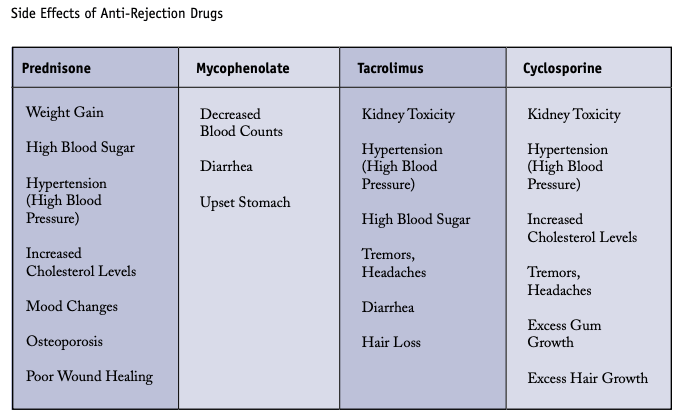
As mention previously, post-transplant surgery, I was given three anti-rejection medications: mycophenolate, prednisone, and tacrolimus. I started with 4 pills of mycophenolate and tacrolimus twice a day plus 4 pills of prednisone in the morning. The latest dosage is now 2 pills of mycophenolate and prednisone plus 4/3 pills (morning/evening) of tacrolimus. With all the side effects from these medications, I was prescribed several more to counted these side effects. Here is a short list:

I have not experienced any side effects yet, except maybe for high blood pressure and high blood sugar. I believe this is the primary reason I was prescribed an insulin pen, and why I am jabbing myself before every meal. As mentioned above, my prescription for mycophenolate and prednisone has been halved already, but the amount of tacrolimus are back to near initial dosage. I really hope they can further reduce the medication dosage so I can go back to pills to control my diabetes instead of relying on insulin shots.

Another Night At Tiverton House

Last night, my parents and I stayed overnight at Tiverton House. Since I get seven nights free post-transplant, I may as well use them. We shared a dual double room. It was a bit crowded but it was only for one night. No way we could have done that for two weeks.

We got basically the same room I had the night before the transplant surgery, except it was on the second floor instead of third. They were still serving breakfast which consisted of a bag of either cereal and bagel/bread, cartons of milk or yogurt, a fruit cup, and some coffee/tea. Since I had to leave for my appointment, I grabbed a bag, took the bagel and cream cheese, and left the rest for later. The schedule was a bit rushed today since I had an ultrasound scheduled in between my labs and the clinic appointment. Everything got done to schedule so I was finished by about 10:30 am. Labs showed marginal improvement and there were very small adjustments to medication dosage.

The ultrasound was a totally different matter. I’ll probably create a separate post about it later.

==========

The social worker assigned to my recovery just reserved a room for me for Thursday night. That is two out of seven nights used.

I saw online that you can donate to Tiverton House since one of their missions is to provide free/affordable housing for patients at the UCLA Medical Center. Since I am getting my rooms for free even though I can afford the room rate or I can drive same-day, I think I will consider5 a donation to help out other patients.