Stretcher Girl > Leg Brace Girl

I saw the girl patient that was brought in on a stretcher walk on Tuesday. It was after dialysis and she was walking out of the dialysis center to a car in the parking lot. She had pretty large leg braces on both legs and was using a walker. I had to use a walker for several weeks after the heart surgery. Anyway, she was walking super slow since she could not bend her knees, and it looked exhausting. Did something else happen? Was that complications from dialysis treatment?

Well, on Thursday, she was wheeled in and out on a stretcher again. I’ve only seen her try to walk that one time. Same thing Saturday: in and out on a stretcher. Maybe she’s not healed enough for walking yet, or whatever condition she has got worse. Ugh, if kidney failure doesn’t kill you, dialysis slowly will. That is why I’m pissed off at UCLA right now. Unless the medical director tells us something surprising, I think they just wasted two years of my life on dialysis.

And f*ck Trump for getting our hopes up with his executive order on kidney transplants and home dialysis last year… then not following up with anything. What was the point of the totally useless executive order? Nothing has changed.

Second Opinion

I spoke to the rounding nephrologist this morning during dialysis. Today it was Dr. Amer Jabara. I believe he currently the medical director for all the inpatient and outpatient dialysis treatment at St. Joseph Hospital. I was originally referred to him by my primary physician but was directed to another nephrologist at his office. I also saw him several times while I was in the hospital for heart surgery and he made the decision to take me off PD and back on hemodialysis.

I gave him a brief update of the drama at UCLA Transplant Center. I’ve been updating the rounding nephrologist each week and they regularly update their notes so I think he knows the story. He said if would be super easy to biopsy the kidney once they take it out of the donor, and even if the tumor/legion/cyst is malignant, the transplant center can remove it prior to transplanting it into the recipient. If it’s benign, the usually do the same. Since my sister is a perfect match, he thinks we should go ahead and pursue the transplant and see what happens.

If what he said was true, and there’s no reason to doubt him, then why did we wait two years? They could have done the transplant two years ago with the tumor/legion/cyst only at 10 mm and removed it from the kidney as part of the procedure. Maybe they’re afraid that it’s malignant and if they don’t remove all of it, the tumor may spread in me after transplant? I think the odds are super low in that case. More questions for our meeting with the transplant medical director. All I know that the two years on dialysis were not good for my health.

UCLA Transplant Video Call

I just received a call from UCLA Transplant Center. They want to set up a video call between myself, my sister, and the transplant medical director. The donor coordinator already called my sister with the news and this is what I got.

The committee met again today and still couldn’t decide. It appears that the risk of biopsy and an additional scan is greater than the risk of the cyst/object being a cancerous tumor. I didn’t know radiology scans were that risky. However, the risk of cancer is not zero so the medical director wanted to discuss everything with us, and get my consent on accepting the “additional” risks of using my sister’s kidney. I think this would be of greater concern to the patient if it was a purely elective surgery but compared to spending another 5 years on dialysis waiting for a deceased donor? Sign me up.

We were thinking that the risks to my sister were the same. If the cyst was not cancerous, then we want the kidney donated to me for transplant. If it was cancerous, then it probably needs to be taken out sooner than later. Two years ago they said if the cyst was benign, they can remove it from the donated kidney before inserting it in me. I guess the “additional” risk is a higher chance of cancer? How does that compare to the mortality rate of more dialysis?

The call is scheduled for next Friday. I’ll try to talk to one of out nephrologists about this before then to see what they think.

==========

Just got another call. The time we just scheduled for the call is no good. It seems there is something on the medical director’s calendar. Don’t they have a shared online calendar like in Microsoft Outlook or something? At work, we try to keep our calendars updated so anyone can see your availability to set up meetings. Surely they have something like that at UCLA Medical Center?

The Broken Economics of Organ Transplants

I just saw this video on YouTube from Wendover Productions:

I didn’t know about the EPTS score. That was never mentioned to me at either transplant centers. I was led to believe that the wait list mainly depended on blood type and geography. The wait list in Southern California for B-type blood is 9-11 years and approximately 4 years in Phoenix, Arizona. If the organ recipient selection is based on this EPTS score, then I’m screwed. I found a calculator online and my number is 64%. I guess that means about 2/3 of the patients on the wait list will live longer than me post-transplant. The website also has a PDF that helps explain the EPTS score.

Interpreting the EPTS Score

The EPTS score, which ranges from 0% to 100%, represents the percentage of kidney candidates in the reference population
with a higher expected post-transplant survival. Lower EPTS scores are associated with higher expected post-transplant
longevity, and vice-versa (Figure 1).

Candidates with EPTS scores less than or equal to 20% will be prioritized by the kidney allocation system to receive
kidney offers from donors with the highest estimated quality (KDPI ≲20%). Candidates with EPTS scores exceeding 20%
will be eligible to receive these offers. They will be prioritized after candidates in the EPTS top 20%.

https://optn.transplant.hrsa.gov/media/1511/guide_to_calculating_interpreting_epts.pdf

I think what it says is that I won’t get the best kidneys available. Those will be offered to patients with EPTS scores <20%. After that, I can’t tell if it’s wait time based or still ranked by EPTS scores. If I put no for diabetes, the number drops to 27%. I guess that’s a huge determining factor on post-transplant survival. Also, I think the patient’s age and years on dialysis affects the score negatively so in long wait time areas, your score gets worse every year, while younger and newer patients get priority. Maybe this is why some people have had three or four kidney transplants by age 20, while older patients have to wait 10+ years for a deceased kidney and one of lower quality.

I don’t know what the right answer is. The video did mention Iran’s experiment with using a market based approach eliminated the wait list. However, it did not mention whether poor people were priced out of the market. How do you determine the ethics of saving a small random number of transplant patients versus saving more lives but biased toward more well-off patients? I guess our society has decided that more people should die so we can have wealth equality.

==========

Ironically, dialysis and kidney transplants are covered by Medicare in the US. That means almost everyone’s treatment and surgery costs are paid by taxpayers anyway. There’s got to be a way to calculate the cost savings between a live donor transplant versus dialysis until death. Based on my dialysis statements, we can use $5,000/month or $60k/year for dialysis on Medicare rates. If a typical patient stays on dialysis for 10 years, that’s $600k. This website quotes a kidney transplant will cost Medicare $100k so we can double that for live donor transplants since there are two surgeries. That’s $400k of savings.

So it appears that Medicare can offer donors $100k for a kidney and still save $300k if the patient would have lived >10 years on dialysis. They can still have their “ethical” wait list but vastly increase organ supply, improve the quality of donated organs (live vs. deceased donor), and save taxpayers money. Maybe the complaint will be that only poor people will be incentivized to donate or some people are not healthy enough to donate, and that will be somehow unfair. Meanwhile, you are saving thousands of additional lives each year and reducing the number of suffering dialysis patients.

Then there’s the China model where government officials harvest organs from political prisoners and sell them on the black market.

r/dialysis Access Problems

Speaking of how dialysis can go badly, I saw this post on the r/dialysis subreddit:

I wrote a few times into this subreddit, but I have to share my problem with you. I started my journey in 2003. and as a kid I got a Catheter into my left side to try to help to my kidneys to work with plasmapheresis, because I have FSGS (this causes that I can’t get a transplant third time, because I had 2x tranplants and both failed in this disease). The catheter scarred my internal vein, so I got a stent. After I went through other diseases, I had a stomach perforation and a pancreas tumor (not cancer, but I don’t know the word), for 6+ months I was in the hospital, I had a permacath in my right side, when the doctors tried to save my life, they destroyed my veins on my arms (I don’t blame them). After they cured me (I was only 29 kg at this time, height 168 cm), they helped me to gain weight and I left the hospital when I was 17 years old and when I turned 18 they could make me a fistula, which worked 5 years, after it clotted the surgeon elevated my vena basilica, but my stent couldn’t handle the high blood flow (the previous fistula had lower flow) and my vein collapsed again and my hand was swollen, like a body builders hand, the skin never healed on that arm so my doctors closed the fistula. Permacath again for a short period, because they found a vein on my right hand and the surgery was successful and now it became its end. It worked 6 years and my surgeon told me there is no other option( no place for graft or anything ), only a Tesio Catheter: http://www.medcompnet.com/products/long_term/bio-flex_tesio.html , but I’m afraid, in my country there is no option for fistula on the leg, if my right vein fails, my life will be over, I mean they can put catheter into my groin, but what kind of life is that…

https://old.reddit.com/r/dialysis/comments/i9ah74/no_other_fistulagraft_options_im_only_31_and_on/

Holy shit. I know I complain a lot on this blog about how crappy my life is but I also admit that there are lots of patients who are worse off. My first catheter worked fine for 20 months. I had to go to the hospital to get it unclogged a few times but that’s just more sitting around. PD didn’t work eventually but I didn’t really have too many issues with the catheter or process, and did not get any infections. It’s been about 9 months now since I’m back on hemodialysis and again, the catheter is working great. My fistula is iffy but works when the needles are inserted correctly. Maybe we’ll find out more with the fistulagram next week.

I couldn’t imagine having all my access options fail. Dialysis sucks but short of a kidney transplant, there is no other solution to stay alive. I’d be freaked out if all the access points failed one after another. I think the original poster above thinks he is going to die and it seems like he’s in his late 20’s. Again, I didn’t start dialysis until I was 49 so at least I lived a semi-normal life until then.

I really think more resources should be spent on coming up with an implantable artificial kidney. Even the iHemo half-solution is better than hemodialysis today. Also, if the government would support PSA’s about live kidney donations as they did for drinking & driving and teen smoking, there would be a lot more live transplants and save a lot of patients from grief and risk of death. And we would save a ton on Medicare costs.

Long Donor Transplant Wait

My nephrologist was the one doing rounds today. I believe they have three nephrologists in the medical practice but one of them is my actual doctor, i.e., the one that I see if I go into their offices. I’ve been seeing her prior to starting dialysis so it’s been more than three years. She speaks Cantonese and Mandarin with an accent but we converse in English.

I gave her an update of the whole UCLA situation. She knows the rest of the story since she has been my nephrologist since I started the transplant process at St. Joseph Hospital back in 2016. She agrees that typically if you have a willing live donor, you should be able to get the transplant within months, not years. However, she did have a patient that had 4 volunteers to donate a kidney but for one reason or another, they were all eventually rejected. The patient ended up getting a deceased donor kidney after seven years on the transplant list. Ugh… that’s terrible. If UCLA rejects my sister, I don’t have any more live donors and can only look forward to 4+ more years of dialysis, waiting for a deceased donor if I stay listed in Southern California.

UCLA Committee Rehearing

My sister got a voicemail from the donor coordinator handling her case. Basically, she presented my sister’s case again to the committee yesterday; they meet every Monday. They modified their decision to include the possibility of getting a different scan for another look the legion. Otherwise they still want the biopsy. The coordinator is trying to get in contact with UCLA’s radiologist to get more clarification on the type of scan. Evidently, multiple scans and diagnoses from MemorialCare doesn’t count for much with them.

My questions is why another biopsy when they rejected our request for one two years ago? If the procedure was performed well before, then they’ll probably be unable to get a sample this time since the object has not changed much. If we go with another scan, is it new technology? Why wasn’t that an option two years ago when they messed up the biopsy? They do hundreds of kidney transplants each year. They must know the toll of spending two additional years on dialysis. Now there’s a chance all that suffering was for no reason at all?!

Very upset.

iHemo Dialysis System

I’m not going to comment on the fad of naming products iXxx after Apple’s iPod/iPhone/iPad/iMac.

This is something that came out of UCSF’s Kidney Project. I made a post at the beginning of the year. Over the years, I’ve made some donations to the project but I’m always disappointed in the lack of progress and funding by the government. Pur government spend a ton of money on all sorts of useless crap but can’t find a few million dollars for artificial kidney research that will save billion? Anyway, I read earlier that the project has made some progress on the actual filtering membrane but not the challenge of making a self-contained unit that drains waste to the bladder. I guess this is a good compromise for now. From what I read, they can implant the filtering device inside the patient’s body, then connect to catheters that will drain toxins and excess fluids using an external pump. This means no needles and no blood outside the body. It’s almost like peritoneal dialysis but with the diffusion filtering done in the implanted unit instead of using your abdominal membrane. Here is an intro video:

UCSF Kidney Project website

It’s not the same as a full implantable artificial kidney but it’s a good first step. It was enough for them to win a $500k KidneyX prize. As far as I know, the UCSF-Vanderbuilt project is the only one of it’s kind. There seems to be no one working on this issue.

==========

I stand corrected. There seems to be a lot of participants in the KidneyX competition. Hopefully some or many will develop into something viable for use to treat kidney failure.

SRTR Reports for August 2020

Looks list another set of reports from SRTR for kidney transplant centers was just published. Here is the report for UCLA. On page 11, there is information on wait list that I posted about several months ago. It appears the deceased transplant rate after three-years is now 19.6%, down from 20.2% but probably not statically significant. It says the wait list for Type B remains unchanged at however long it takes. I wish they would just publish that number: how long did the average patient wait for a deceased donor kidney? It seems like they’re dancing around that number for all 60+ pages but don’t actually tell us. I’ll bet it’s the #1 question asked by all new patients. They probably don’t want to totally discourage people when they say 9-11 years.

I looked up Mayo Clinic Hospital in Phoenix, Arizona, and the equivalent number is 55%. That means more than 1/2 of their Type B patients received a deceased donor kidney after three years vs. about 1/5 for UCLA. Do people not fill out their organ donor cards in California?

Appointment with Vascular Surgeon

I didn’t actually see the surgeon. Today was just an ultrasound of my arm. The tech was really nice and we were done in <15 minutes. She said my fistula looks normal but there were spots where the blood vessel narrows, probably causing higher flow pressures and pissing off the dialysis machine. She will show the results to the surgeon and they will let me know what he wants to do, if anything.

Right now is that awkward period where I don’t know if a donor transplant is coming soon, or never. If UCLA accepted by sister, then I can tell the dialysis center and my nephrologist to use the chest catheter until the transplant happens. But without knowing UCLA’s decision, I have to move on like the transplant is not happening, and I may need the fistula for five years or even longer.

UCLA Punts!

I’m so mad and disappointed right now. As I posted before, UCLA transplant center met yesterday to decide on whether my sister can become a donor, after being told to wait for three years. Instead of making a decision, they chickened out and asked for another biopsy of her kidney. Two years ago, UCLA performed a biopsy for the same reason, and failed to obtain a sample. At the time, when we asked them to do it again, they declined saying the “tumor” was too small and deep in the kidney. Now, two years later with basically no changes, they want to do another biopsy? Why do I get the feeling they’re asking for extra procedures to collect more money from insurance?

Both times my sister had a radiologist read the CT scans and send their results to UCLA. Both times it was determined to be a benign growth but UCLA didn’t accept the findings. I understand the need for a biopsy the first time. However, after failing to obtain a sample, they asked my sister to wait two years. What were they expecting? If it was cancerous, then it would have grown like crazy and probably killed my sister. If it was benign, the no growth was expected. Did they think the “tumor” would disappear on its own? It’s clear that the cyst was benign but now they change their mind? It’s not an academic exercise. I had to sit through two additional years of dialysis, risking rejection by UCLA as a recipient due to health changes. Does patient suffering play any part in their decision making? Do they want to be 100.0% sure of success before performing the transplant. So confused.

I think the last text from my sister said the donor committee is consulting with the recipient surgeons. I hope somebody steps up and makes a decision. This kicking the can down the road nonsense sucks.

==========

My sister came by our house so I talked to her in person. The donor coordinator said the surgeon that performed the biopsy two years ago was not at the committee meeting. My sister spoke with him at that time. He said if we wait two years, a benign cyst will grow about 1 mm per year, and that’s what happened. My sister’s cyst grew from 10 mm to about 12 mm. If it was cancerous, it would grow a lot more. He also said if it only grew 1 mm per year, he would be satisfied that it was benign. I think the committee that met yesterday just went through a checklist and came up with the same answer: biopsy. Surely the medical records have her failed biopsy documented so I don’t know why they would suggest the same thing. Right now, the donor coordinator is trying to reach the original surgeon, and also consult with the recipient surgery team. The answer can’t be “same” after two years of enduring dialysis.

We wait. If the answer is still negative, then we may have to switch transplant centers a third time. Maybe Cedars Sinai, USC Keck, or UCI Medical Center.

Health and Quality of Life

I was writing this at the bottom of the previous post but thought it was different enough for a separate post.

I definitely feel that my health and quality of life is a lot worse since the heart bypass surgery last November. Right after surgery, I thought that I could get through the 8-12 week recovery period, and pick up life where I left off, even with the pending kidney transplant. Well, in mid-March with the COVID-19 pandemic, all that has changed forever.

Personally, I think my problem started with my experiment with peritoneal dialysis. In hindsight, I made the wrong choice back in April of last year. I decided to go with PD instead of getting a fistula and continuing with in-center hemodialysis. I don’t think it affected the need for bypass surgery since that was caused by years of bad eating and no exercise. However, since PD failed to work for the last two months of treatment, my blood really wasn’t getting cleaned. The blood toxicity probably caused some other health issues or at least made existing problems much worse. My urine output went from close to 2 liters a day down to zero, which is causing havoc with my fluid balance now. I also feel that my energy levels are a lot lower than before, plus the numbness in my feet due to peripheral neuropathy is a lot more intense now too.

At first, I thought working from home for a few weeks is cool, since I was just getting used to driving 40 miles to and from work again. However, as the pandemic got worse, and even healthy co-workers started staying at home, I felt like I was back in recovery: stuck at home with nowhere to go. Before, it was because I was physically unable to move around. Now, it’s the fear of getting COVID-19 and getting really sick or dying. Unlike heart surgery recovery, where you can feel the physical improvements and there’s an end-date, this COVID-19 mess won’t end unless there is a widely available vaccine. This could be soon or next year or never. I can’t imaging life if we never come up with an effective vaccine and millions of people like me are stuck at home for the rest of their lives.

Right now it’s hard to imaging the future. I go to dialysis three times a week, and sometimes I go to the mall parking lot to charge my electric car. I also go and get take-out lunch a few days a week but the rest of the time, I’m effectively locked up at home. That’s why I went to pick up dim sum this past weekend. It seemed like a low risk opportunity to get out of the house for an hour. Since the local Supercharger is much more available these days with less people driving, I should go out for more aimless drives rather than sit at home.

Sigh. In the end, the near future is dependent on the vaccine and if I can get a live donor kidney transplant from my sister. If the transplant happens, then the need for dialysis goes away (hopefully for many years). However, I still will be high risk due to all the post-transplant medications. If UCLA rejects my sister again, then I have to decide on whether to transfer my time to the Mayo Clinic in Phoenix, or stay as it for the next 5-6 years waiting for a deceased donor kidney. When I first started dialysis, I though it was temporary, and would last only a few weeks or months. When I switched to PD, I thought I was done with hemodialysis and would stay on PD until the transplant happened. Now that I’m back on hemodialysis and with my fistula not working well, I don’t know what to think anymore.

You never want to live in the past, but life was pretty good ~10 years ago. I just turned 40, started a new job, none of these serious health issues were apparent, plus traveling a lot and “dating”” a girl in Beijing. A short 10 years later, it’s all turned to shit.

All this time, I kept wondering what God’s role was in all this. Admittedly, I had stopped going to church when the last one I attended self-imploded. I spend a few years looking for a church, then ending up at the one I’m attending currently four years ago. For the first two years, I was pretty gung-ho. The church is more charismatic on spirituality than my previous churches, and I got all caught up believing that God will cure me miraculously. I think it even affected some of my dialysis decisions. “Why make long term dialysis plans when God’s going to cure me any minute now?!” However, when weeks, months, and years went by with no supernatural signs and wonders, I started to doubt and sleep in on Sundays (skipping church service). I still don’t know what to think about spirituality and healing in my life. I send group texts to my cell group letting them know about hospital appointments and transplant news. In return, they all reply with promises to pray. Together with my parents’ church and my old church in the South Bay, there’s probably a lot of prayer going on. Does that even matter to God? Should it?

This post has become way longer than I originally thought. The pain in my foot seems to have subsided somewhat. Maybe it’s one of those rare cases where the Tylenol does help. It’s past midnight; I’d better try to get some sleep before dialysis or I’m going to pass out on the chair again.

Good night. Hope there is good news from UCLA soon.
Transplant Update

I just got a text from my sister saying that UCLA transplant center has received all the files and the image CD, and the donor committee will meet on Monday, August 3rd. It’s strange that the quality of the next 10-15 years of my life will depend on a few people meeting in a conference room in Westwood.

Life was already pretty depressing before but now it’s even worse with COVID-19. Not just because everything is shut down, but the uncertainty of symptoms if infected is actually pretty scary. Most people are asymptomatic or show mild symptoms, but you see news stories of normally healthy people die just days after being infected. If you can’t assess risk, then the smart thing to do is to be more cautious. I actually think there will be more of an infection risk post-transplant surgery due to all the drugs but I got to do it… these dialysis sessions is killing me slowly.

Fistula Update 7/23/2020

Another failed attempt today. The same tech that usually sticks me is out again so one of the tech with the most seniority tried today. He was sometimes successful when we first started using the fistula but has been in a different pod for the past 3 months. He tried the arterial needle twice, was able to get some blood, but no flow. He used a short 16-gauge needle each time, and it hurt pretty bad the second time. Anyway, he gave up after two tries and we went with the catheter again. I held the gauze for about 10 minutes, let go, then promptly bled all over the chair. He rushed back, put a new gauze on the opening, and I held it for 15 minutes which stopped the bleeding.

I’m barely tolerating the dialysis sessions. I’m at four hours on the machine at 350 mL/min flow rate. Now I have to deal with the erratic needle sticking each session as well. Sigh… and still now word from UCLA on accepting my sister as a kidney donor.

CD-R

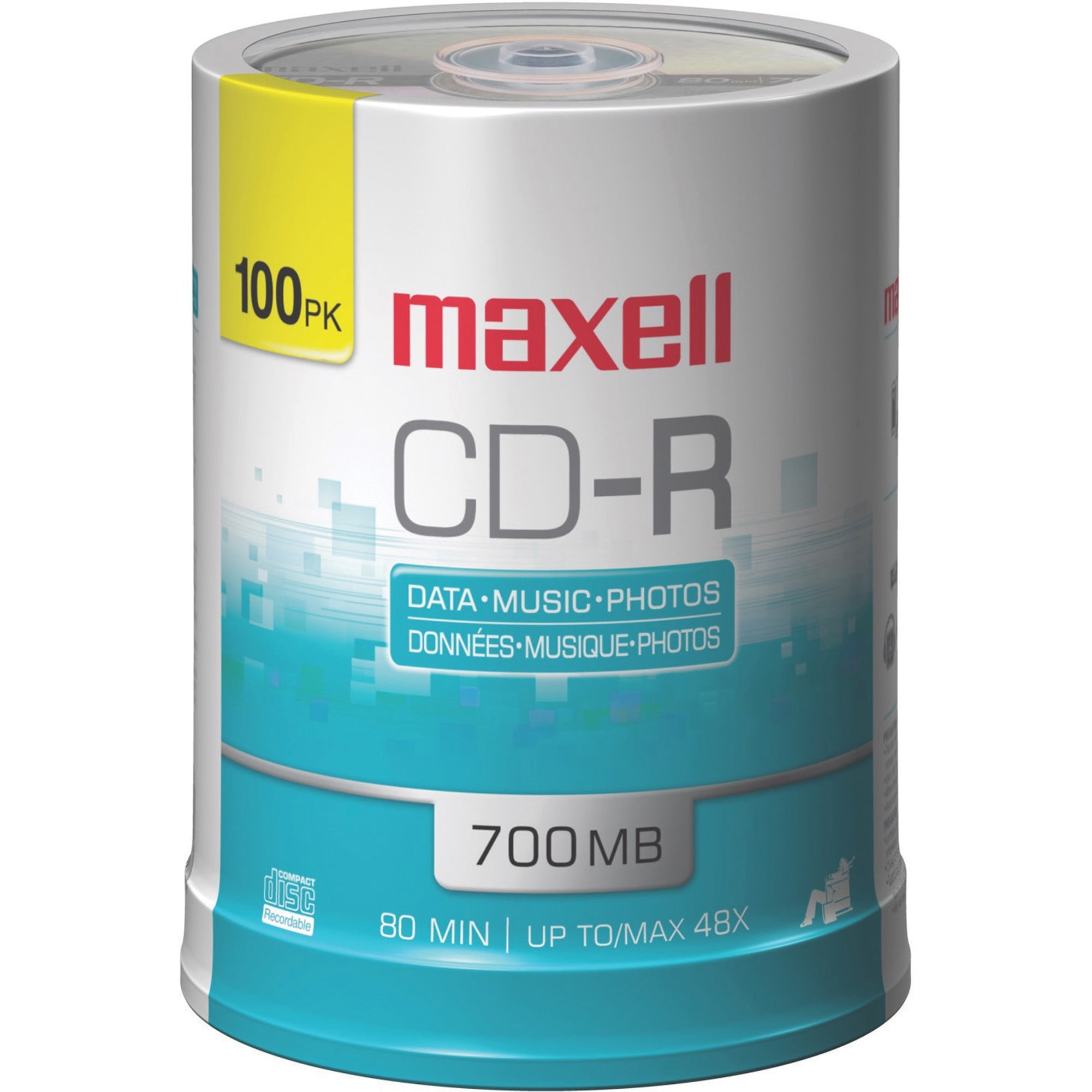
To continue the transplant donor process, my sister needed to send in the image CD she received from her CT scan. Wanting to keep a copy in case the original was misplaced, she asked me to burn a copy. CD-R’s were super popular a decade ago but today, not so much. If you wanted to store a lot of data offline, a DVD-R holds 4.7 GB vs. about 700 MB for a CD-R. For music, hardly anyone buys CD’s anymore; most music is from a streaming service like Spotify or Apple Music.

I have a few of these 100 pack spindles at home

I only had about 5 blank CD-R’s left from before but was able to make a copy of the image CD easily. There is a tool called Ashampoo Burning Studio that’s free and easy to use. Many years ago, when hard drive capacity was in the 1 GB range, I burned a lot of my video downloads to DVD-R to free up hard drive space. Now that I have a 6 TB drive on a network-attached storage (NAS) device, I’m copying files back from DVD’s back to the server for faster access. Maybe it’s all going on the cloud next.

Donor #2 Update

My sister just called me. She went in for a CT scan today to check on her kidneys. She was ready to donate about two years ago but UCLA rejected her because the CT scan showed a shadow, and a biopsy attempt failed to get a sample. After two years, the shadow on the scan has not changed much. The radiologist diagnosed the shadow as a benign cyst, not a legion or tumor, and said no further follow-up is necessary. All this was sent to UCLA this afternoon.

Hopefully, UCLA will accept my sister as a donor. After all, she is a perfect organ donor match to me so that should reduce the amount of immunosuppressive drugs needed after transplant surgery. Fingers crossed!

Foreign Kidney Transplant

My parents’ friend called and said one of their relatives had a kidney transplant in Taiwan. Basically you can contact the hospital and they will source a kidney for you and perform the transplant. Of course as a foreigner, you will have to pay everything out-of-pocket. My sister estimated that surgery for donor and patient probably costs ~$400k in the US and I’m guessing ~$250k for the actual kidney.

The interesting part is that I was born in Taiwan, and like my post about Canadian health insurance, I think I can qualify for Taiwanese health insurance if I live there for six months. If I do so, I will need to pay for dialysis out-of-pocket during that period since I can’t slip back to the US every other day for Medicare coverage.

Medicare will also be an issue since my parents’ friend is over 65, I don’t think they will lose coverage. However, since I qualified for Medicare through ESRD (kidney disease), if I get a transplant outside the US, I will neither need dialysis nor another transplant, which means no Medicare. In the US, Medicare will pay for 3-years of post-transplant medication. If I go with the foreign route, I will need to keep or find a job for medical insurance to pay for immunosupressive drugs.

My sister is schedule for a CT scan next Friday. Let’s hope for the best. Next option is to transfer my wait list to Mayo Clinic in Phoenix, Arizona. I don’t want to think about the Taiwan option, yet.

Continued Blogging

I was looking forward to not blogging anymore. Since this is mainly about living with dialysis (and heart surgery), once I receive a kidney transplant, I could stop blogging about it. It looks like I will still have stuff to blog about since there’s no transplant anymore.

Since November, I’ve blogged a lot. It was weird not thinking about blogging this entire week.

Donor Rejected (Again)

See, I’m not paranoid.

My friend/donor just called me. UCLA told him he didn’t pass his latest test for kidney stones so they’re temporarily rejecting him as a donor. This is after three years of following up with the transplant center to get this far. They did say he can test again later and if his oxalate levels drops, all he needs is a heart stress test.

Arg! I’ll take kidney stones over fucking dialysis three times a week. I am beyond disappointed.

UCLA Transplant Labs

Like they said last week, UCLA send two sample vials to my dialysis clinic. The mailer box was on my dialysis chair this morning when I walked in. The nurse took samples from my catheter so no needle prick needed.

This is probable the fifth or sixth time I’ve provided a blood sample to UCLA. Here’s hoping that a transplant will become a reality soon.