Another Failed Libre 3 Sensor (updated)

After posting about a Libre 3 sensor falling off five days ago, another one partially fell off today. So out of three sensors, two failed to stay on my arm. I put them in the same places as the old Libre 2 sensors and those have stayed on well after three quick failures. I just replaced the sensor and will have to ask Abbott to send another replacement. Since the sensor is smaller, there is less adhesive to keep the sensor on my arm. The crazy things is that I have not even received the first replacement sensor and the second one already failed.

==========

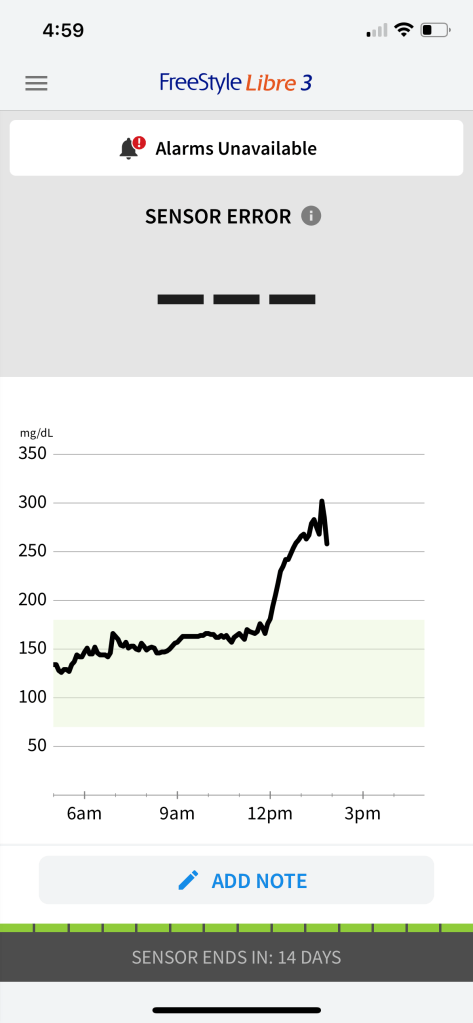
When you activate a new sensor, you must scan it with your phone, much like the old Libre 2 sensor. It takes an hour to activate, and it has been a hour since I put in a new sensor after the previous one unstuck itself. Well, the new sensor is giving an error right away.

As I was typing, the sensor returned a value of 326, which is a crazy number. I have not had much food today, so I do not know why the number is so high. Then the screen quickly flashed and now it is showing an error again, and the reading I briefly saw disappeared.
==========

I just sent in another replacement request. I do not know if the response system is automated, or if a human is reviewing and approving each request. They must get a lot of these requests seeing how I have two failures in only three sensors.

I think I should use the third-party sensor sticker I bought for the Libre 2. They are very large and stick very well, but hard to remove without leaving lots of stick residue.

==========

Updated: November 20, 2023 @7:25 am

I got a call from Abbott this morning. It came with a strange caller ID, so I let it go to voicemail. When I called back, I connected pretty quickly, which is not typical of these automated call systems. The CSR basically asked me questions that I already answered on the service request form, and they are sending out another replacement sensor. I am not sure why they called since no added information was provided. There was also a survey at the end with very poor response times, so I was not always sure what question I was responding to. It asked for additional comments, but the system cut me off while I was still speaking so maybe that was just customer service theater. Regardless, I am getting a replacement sensor, and I am using adhesive patches again to hold down the sensors.
Libre 3 Sucks Too

I am only on my second Libre 3 sensor after switching from the older Libre 2 series. I probably used no more than thirty of the Libre 2 sensors and had three failures. Abbott did replace them, but a 10% failure rate is not good.

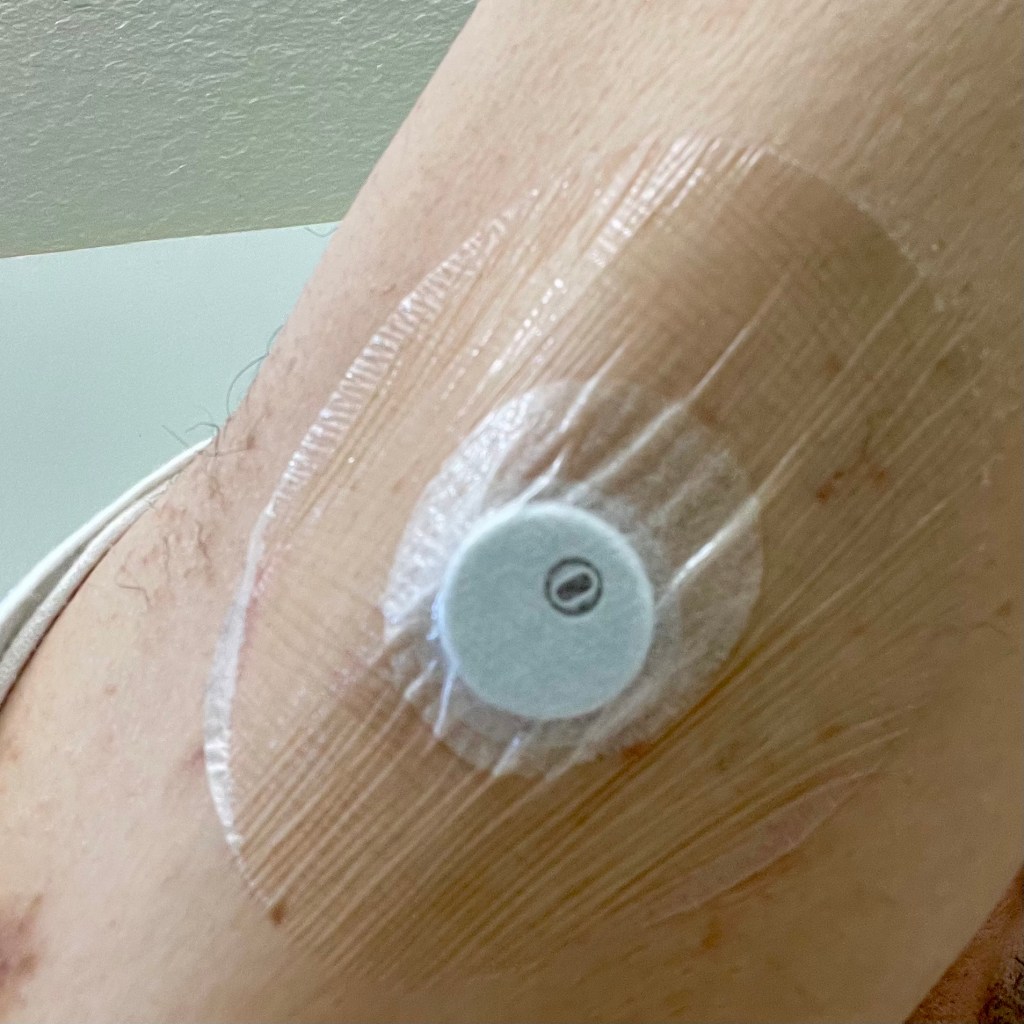
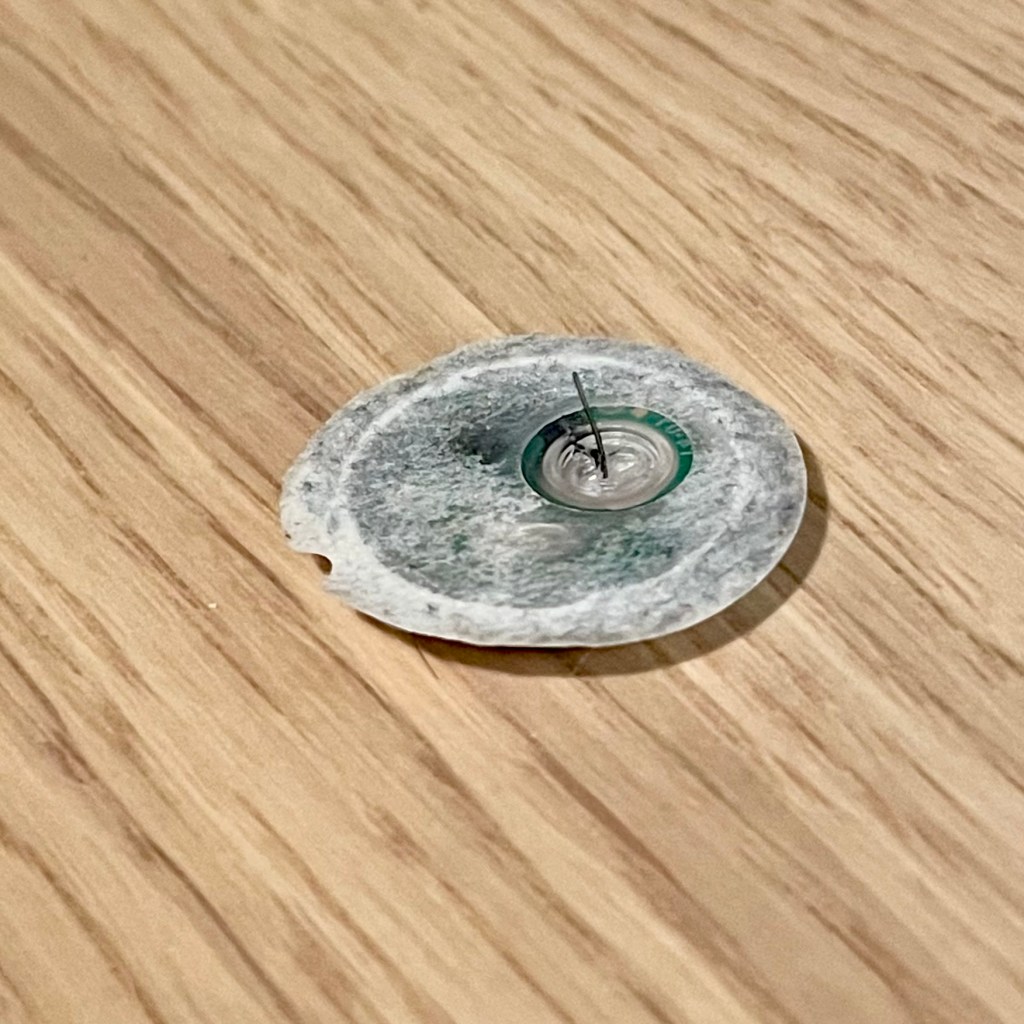
About an hour ago, the app stopped reading the sensor. This happens quite often, and Abbott suggests that the user turns the phone’s Bluetooth off then on. After trying several times, I noticed that the sensor had fallen off. It was on the back of my right upper arm and stayed for seven days (fourteen-day life) before falling off. I took many showers after switching to Libre 3, and the first sensor lasted fourteen days without any issues. I wiped the area of my arm with alcohol wipes before applying the sensor, so I do not know why it is so dirty looking. You can see the plastic needle that goes into my arm. Abbott will likely ask me to send the sensor back to them. Gross.

I went online again to the patient support page and filled out a form. When I did this with Libre 2 sensors that fell off or stopped working, Abbott sent me a replacement. I hope I do get a replacement sensor since my pharmacy only gave me six sensors for three months of usage. That works out to 84 days but there are 91 days in a quarter. I still have some Libre 2 sensors, but I am used to not having to scan the scanner with my phone.

Freestyle Libre 3 CGM

During my last appointment with the endocrinologist, she prescribed me the Freestyle Libre 3 continuous glucose monitor (CGM). I have been using the Freestyle Libre 2 for about a year and have just received a three-month supply of sensors. So right now, I have five of each sensor type at home.

There appears to be two major differences between the two products. First, the CGM sensor is much smaller for the Libre 3. You can see the difference in the packaging.

The white container on the left contained a Libre 3 sensor and the gray package held the Libre 2. Additionally, the Libre 3 does not require the user to scan the sensor, either with a dedicated reader or your phone. My success rate in reading the old sensor was only about fifty-fifty. Now I just open the iPhone app and data will be transferred automatically. The app looks and feels identical to the Libre 2 app, but you cannot adjust the parameters of the readings graph. People have complained online that it is too zoomed out, and users cannot see small but significant changes in blood sugar when eating food or shooting insulin.

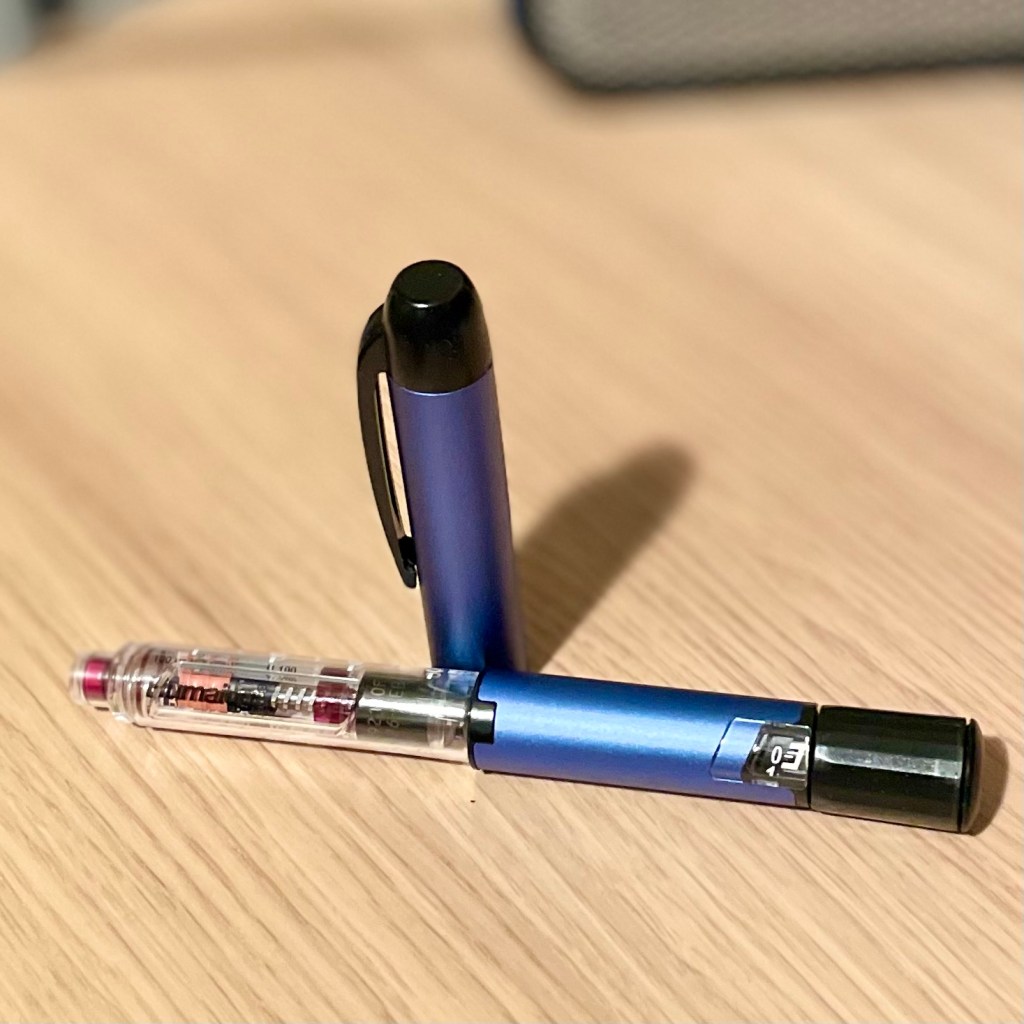
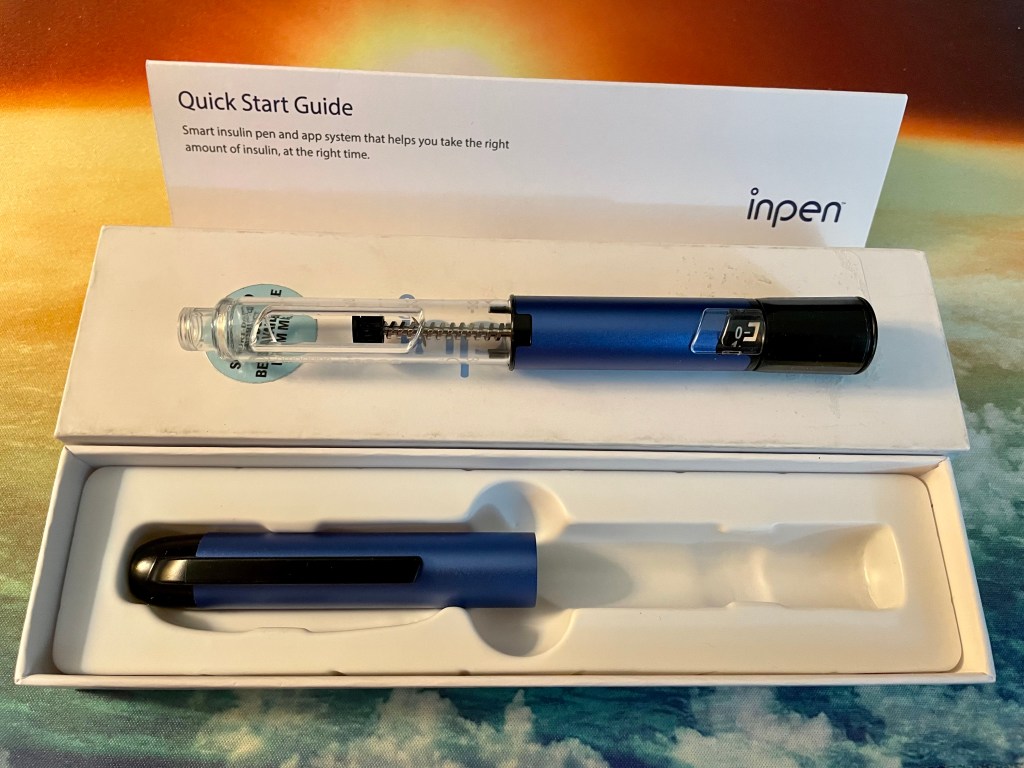
I also got the endocrinologist to enter my insulin prescription into my inpen. In case you forgot, inpen is a Bluetooth connected insulin pen that uses refill cartridges. The manufacturer, Medtronic, calls it a smart insulin pen. However, all I can see is a pen that sends the last dosage to your phone; the intelligence is all in the app. Before shooting up, you use the app to calculate how much insulin you need. If you use the inpen, it automatically records the dose. For a dose from a manual pen, you can log shots in the app as well.

I think the app is good, and it does connect to some CGMs, just not the Libre 2/3 app. On the other hand, the pen seems to be more gimmicky than useful. It is not difficult to log manual insulin shots into the app myself. The inpen can deliver half-units of insulin, but due to the design, often I end up deliverying one half-unit less insulin since the rotating knob is loose and moves left/right slightly when depressed. I still have a lot of the regular Humalog pens left and mix the useage of the two pens.

Ozempic Shortage

If you live in the United States, you probably have seen this commercial:

Ozempic is used to lower blood glucose levels for type II diabetic patients. Evidently, the active ingredient is also used in obesity medication. Not surprisingly, one of the side effects of Ozempic is weight loss.

As I mentioned in a previous post about my endocrinologist appointment, my A1C was high at 8.1. The doctor modified my insulin dosages and prescribed a “smart” insulin pen. She also said she wanted to start me on Ozempic, but there is a shortage because non-diabetic people are using it to lose weight. WTF? Even my neighbor talked about the drug saying it is great for losing a few pounds without any side-effects. I was being polite, but I call bullshit on the “totally safe” comment. Just pay attention to the ad above as the narrator lists out the side-effects.

What a fucked-up world. You got a bunch of narcissistic assholes using an anti-diabetic drug to lose a few pounds, while patients that need the medication cannot get it. My doctor said we should wait for Ozempic since she did not want to modify all my medications to include it, then have it be unavailable at the pharmacy. Unless you have a medical obesity problem, just watch your diet, and do regular exercise to lose weight.

Endocrinologist and InPen

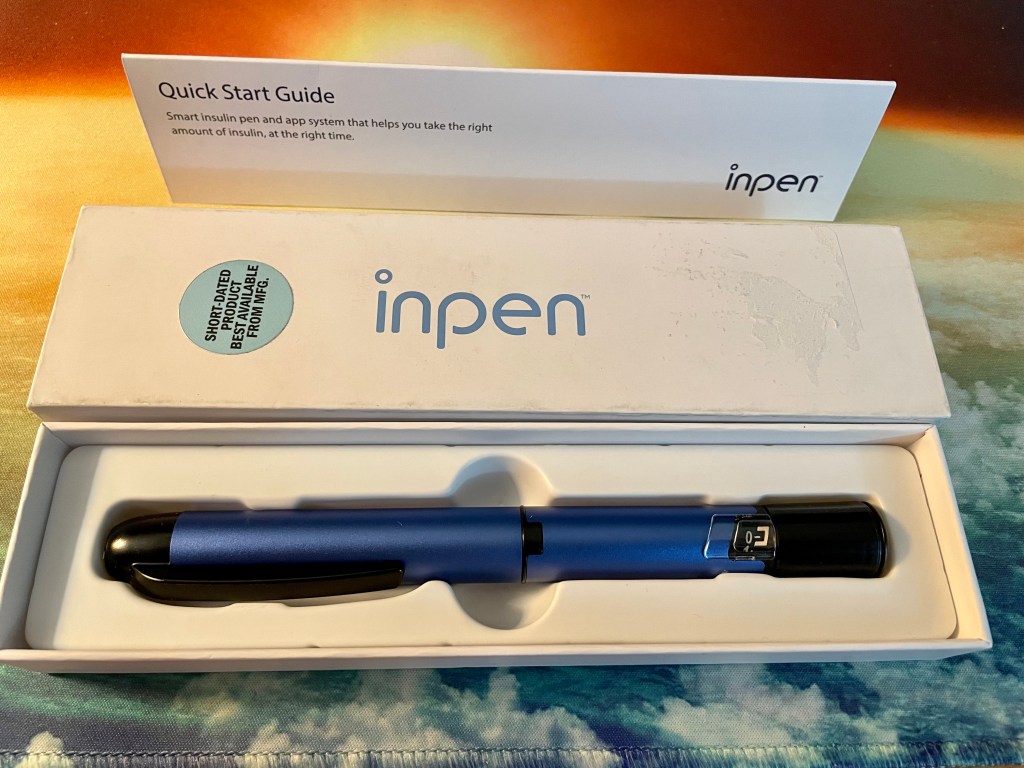
I had an appointment with my endocrinologist. I was a bit worried since she is fairly stern, and my A1C result sucked. I was supposed to see her last year but due to getting COVID and general procrastination, I did not see her until last week. Overall, the appointment went okay, partially because it was remote. However, she did adjust my insulin schedule, and prescribed an intelligent insulin pen called InPen. It is made by Medtronic and connects via Bluetooth to a mobile app. You are supposed to input your blood glucose reading and it will tell you how many units to inject. It does connect to a few continuous glucose monitors, but not the Libre 2 I am using.

I picked up the pen from my local pharmacy, but I am still waiting for the insulin cartridges to come. I still have several boxes of the old insulin pen so I will keep using those.

The pen casing feels like very light aluminum, and I like the deep blue color. Since Medicare paid 100%, I do not know how much the pen costs. I was able to connect it to the iOS app on my iPhone 12, and it is already notifying me to shoot up.

As for the endocrinologist, I have a follow-up meeting in one month and also in four months.

Broken Mini Fridge (updated)

I purchased a mini fridge from Amazon last July because I was too lazy to go downstairs and get my insulin from the fridge every morning. I believe the fridge was only $50 (AstroAI 6L) and it worked well since I bought it. Usually, all I have in there are two insulin pens, but have occasionally put either protein shakes or cans of soda as well.

Today, someone from Edison came to replace my electric meter. They said it was not communicating with them anymore. It was replaced free-of-charge, but the power went off for about two minutes. When the power was switched on, everything was okay but the mini fridge. It started making a clicking sound, the display was flashing, and the fridge was no longer cooling the interior. There is a three-year warranty on the mini fridge. I just sent in a webform reporting the issue. I hope they just send me a replacement and I will not need to send back the fridge.

==========

This March, as part of the FSA buying binge, I bought a portable insulin cooler. It can plug in to a USB power source and keep a few insulin pens cool indefinitely. I used it once to test it out, and it has been sitting on a shelf. Since my mini fridge broke, I thought it was a good time to use the portable cooler. However, there was no response when I plugged in the USB-C plug. I know there is power since the plug can charge my iPad. It is connected to a 65W power plug so it can probably power my MacBook too. Anyway, now I have to deal with another busted cooler, and this one cost me $200.

==========

Updated: June 19, 2023 1:09 pm

Both my issues were resolved. The mini fridge was broken. AstroAI sent me a replacement fridge. The video I sent shows the old fridge clicking and flashing the temperature display. However, the company has since upgraded the mini fridge, so I got v2 instead. The fridge works fine but they removed the temperature display/controls, and the new door latch is crap. I cannot open nor shut the door one handed since the latch is super tight. Most reviews on Amazon complained about the new door design. As for the insulin cooler, it did not like any of my USB-C power adapters and the USB port on my power strip. The company asked me to try the included cable and adapter. With a different power source, the cooler lid works fine. It turned out that the included adapter was also broken, but other adapters and power banks worked fine. The cooler company send me a few replacement adapters and everything is all good.

Yet Another Busted Libre 2 Sensor

This is the third one that has failed before their end-of-life. The previous one just stopped working for no apparent reason and I just received the replacement yesterday. Last night, the sensor I just put on a few hours earlier became unstuck and stopped working. These are $100 sensors, and they only last a few hours to a few days.

I am going to contact customer support again. I hope they don’t reject my request for another replacement.

Bad Insulin Pen

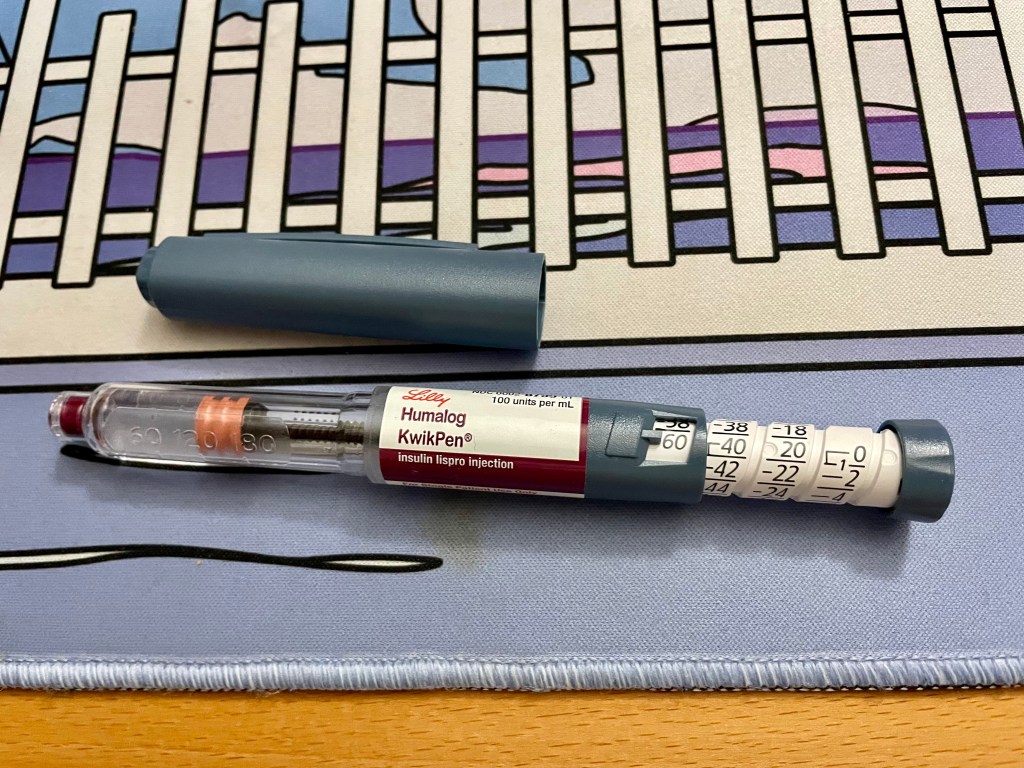
I had another Humalog insulin pen go bad on me yesterday. The dosage selector would stop working so I cannot use the remaining insulin still left in the pen. This is the third or fourth pen from Eli Lilly that has failed before all the insulin is used up.

You can see I still have nearly half the insulin left in the pen. The dosage knob also shows there are at least 60+ units remaining. A box of five pens costs about $2,000 so each pen is $400. Since I am unable to move the knob and plunger on the above pen, I had to throw it away with $150-$200 of insulin still left inside.

In comparison, I also use a long-lasting insulin from another company. The pen is a bit longer but feels more solid, and I have never had an issue with insulin injection using that pen.

Freestyle Libre 2 Sensor Kit Refill

After dealing with Edgepark for an entire year, I was able to get sensor refills from my Express Scripts, the online pharmacy used by my work health insurance. I believe I had to go to Edgepark in the first place because my Medicare coverage only includes Part A and Part B. My endocrinologist likely sent the original order to Edgepark since Medicare Part B does cover medical devices, just not drug prescriptions. Anyway, I had to pay a large copay on my first order, and subsequent orders would also require sizeable copays.

Since I also needed insulin and glucose test strips (backup) refills, my endocrinologist sent everything to Express Scripts, including the sensor kit refill. Since my work insurance covers prescriptions, the kits were covered 100%. In addition, several other items that used to have $60 copays were 100% covered.

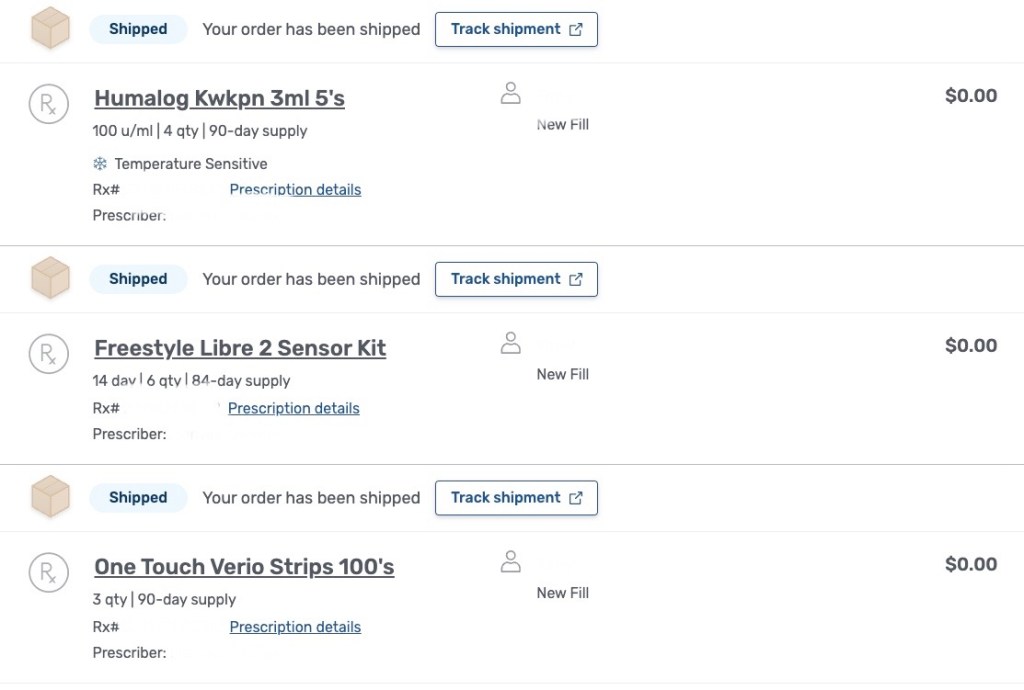
Only the long-lasting insulin refill had a $60 copay. I checked the invoice for this order and here is what my work paid:

  • Freestyle Libre 2 Sensor Kit (6 qty): $346.77
  • One Touch Verio Strips 100’s (3 qty): $207.36
  • Toujeo Solostar Pen 1.5ml 3s (3 qty): $1,102.44
  • Humalog Kwkpn 3ml 5’s (4 qty): $1,909.44

That is over $3,500 for just insulin and glucose testing for three months. For an entire year, this is over $14k and I have not included my other medications. I think I will have to move to Canada after I retire, at least until I qualify for Medicare again.

==========

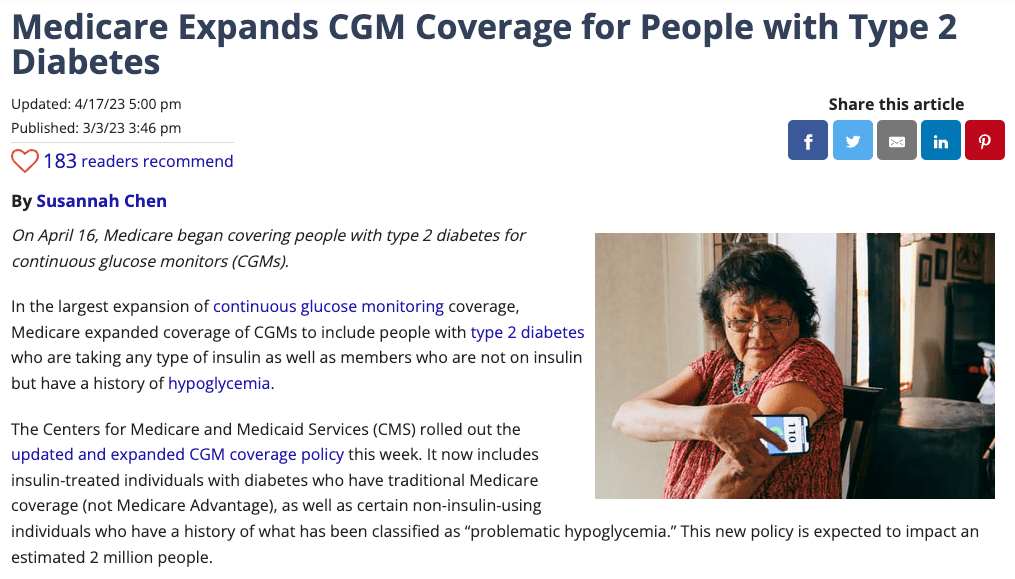
Hmm, maybe Medicare coverage rules have changed recently?

https://diatribe.org/medicare-expands-cgm-continuous-glucose-monitor-coverage-type-2-diabetes

If type 2 diabetes was not covered before, how was I getting the first two orders partially paid for? Was I being classified as a post-transplant patient instead?

Nephrologist Visit 20230428

I had my quarterly nephrologist visit today. It went well and I only had one prescription change to increase my Losartan dosage to 100 mL. I did my labs last week and the results were similar to previous tests. Here are some of the items that are still out-of-range:

  • Creatinine: 1.50 mg/dL
  • eGFR: 55
  • Potassium: 5.4 mmol/L
  • Urea nitrogen (BUN): 31 mg/dL
  • Hematocrit: 51.0%
  • Vitamin D: 27 ng/mL

All the other stuff were within Quest Diagnostic’s normal range.

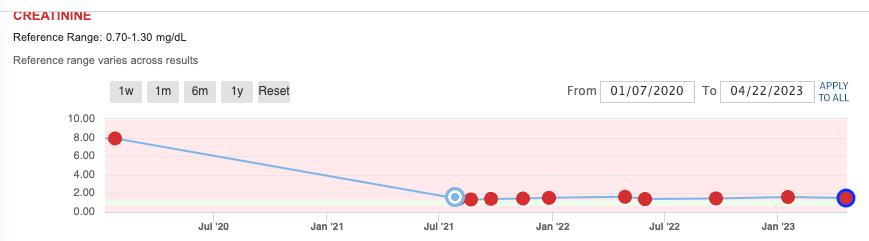
The most important test result is probably for creatinine. This is a major indicator of kidney failure. Normal range is below 1.30 mg/dL for males. Post-transplant, my results have been from 1.40 to 1.60. Both the UCLA transplant team and my local nephrologist are good with this result. They are more worried if the number changes quickly for the worse. My blood pressure has been higher lately hence the increased Losartan dosage.

My nephrologist is also giving me a referral for a sleep study. I have been a snorer for as long as I can remember, and my sister said I sometimes stop breathing when I sleep. I have been very tired post-transplant so maybe my undiagnosed sleep apnea and anti-rejection medication is preventing me from sleeping well at night.

==========

I also got a reply from my endocrinologist. I have not seen her in about a year and all my prescriptions are running out. Previously, her office sent my continuous glucose monitor (CGM) to Edgepark because the reader and sensor were considered durable medical equipment (DME). I hate Edgepark. It has been a huge struggle to get anything priced and delivered. I managed to get a reader and fourteen sensor discs from them over the past twelve months. Since my prescription ran out, they were unwilling or unable to get a refill and instead cancelled my order. Sigh.

In my endocrinologist’s reply, she said she sent refills for my insulin and regular glucose test strip to my online pharmacy. She also sent a CGM sensor refill order to the pharmacy instead of Edgepark. I hope that gets processed.

I think the DME part of the prescription was the dedicated Libre 2 reader. Ironically, there was a warning sent out as the reader’s Lithium battery may overheat and catch on fire. Now I am using the Libre app on my iPhone to read the sensor, which means that I did not need the dedicated reader in the first place. Stupid.

January 2023 Test Results

I originally scheduled an appointment with my nephrologist for January 6th. I totally forgot about this over the Christmas and New Year’s holiday and had to postpone the appointment to January 19th so I can get the blood draw for lab tests done. Even with the additional two weeks, I still procrastinated and barely got the lab draw before my new appointment time. Even though there was a two-day gap, most of my test results did not show up in time for the appointment.

Anyway, the results showed up today in the myQuest app. Here is a summary of important items:

Creatinine was high at 1.61. The normal range is up to 1.30. However, I have never been at 1.30 post-transplant, and results are usually a bit high. I also think I was a bit dehydrated on lab draw day so my doctor asked me to hydrate, and we will wait for the next set of results.

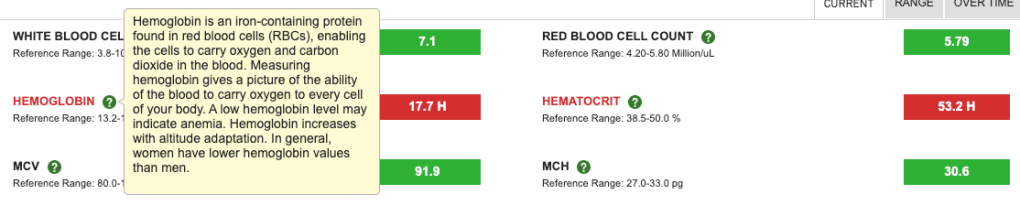
Hemoglobin is still high along with the correlated Hematocrit value. It is not any higher than prior tests so my doctor probably will not do anything different. I am unsure if these results were available during my appointment.

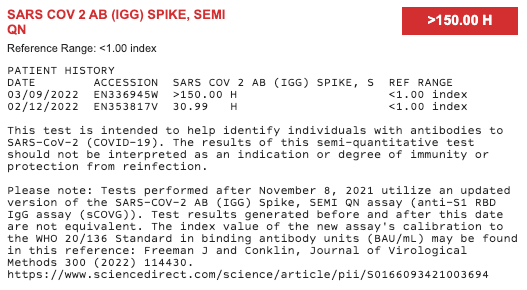
This test shows I have COVID antibodies. Of course, with so many different shots and getting COVID in June, this result is mostly useless. Antigens from getting COVID six months ago is likely gone by now, so these antibodies are either reaction from the bivalent vaccine booster, or the last Evusheld injection. From past vaccine experience, I have only minimal reactions, so the test results are not likely from the vaccine booster. We know the Evusheld antibodies will trigger the test result but are not really effective versus the latest BQ variants. The end results is regardless of the test results, I am likely not protected from the new COVID variants.

There was one more flagged test result for low Vitamin D. I have been taking one gel capsule daily. My doctor will likely increase that to two. These are over-the-counter stuff from Costco anyway.

==========

I forgot to mention that my Tacrolimus reading is low-ish at 5.5. I cannot remember what UCLA recommended, but five to nine sounds correct. My prior test result at UCLA was 10.5 so they reduced the prescription. We will see if my local nephrologist will raise it again.

==========

One more. I spoke with the Natera researcher at UCLA transplant center. I asked about test result feedback since I rarely hear from them, other than quarterly blood test lab draws. He told me according to their research criteria, there is no sign of organ rejection so far. 🎉

No COVID Protection

I saw a post on Reddit about transplant patients being told to stop taking Evusheld. I just got my shots on December 1st. I did some more research and found even worse news.

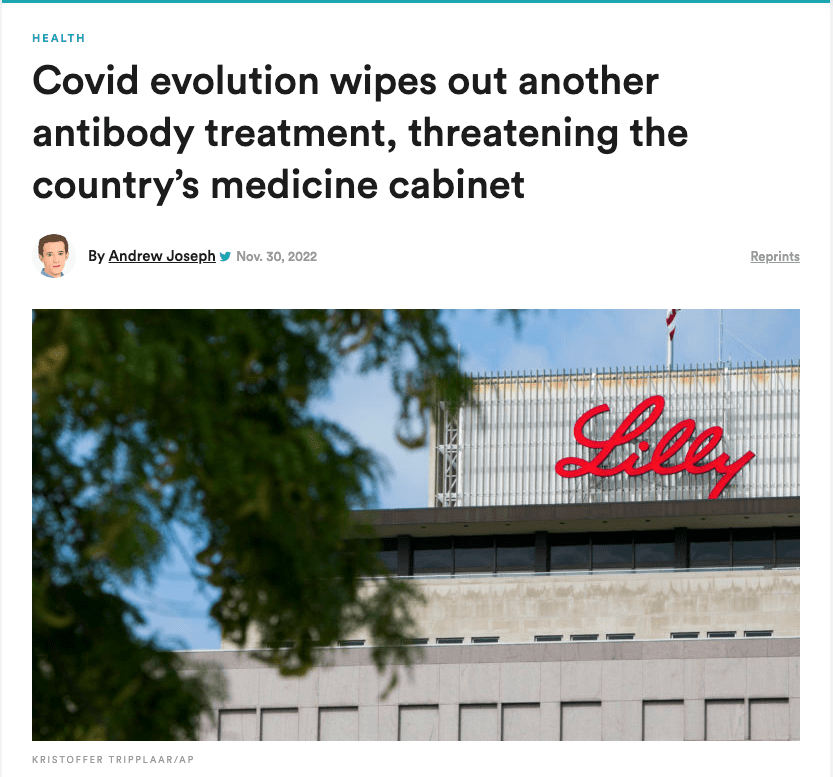
The Food and Drug Administration on Wednesday ended its emergency authorization for the only remaining Covid-19 antibody therapy cleared for use, saying variants that render it ineffective are now dominant in the United States.

The news about bebtelovimab makes official what has been anticipated for several weeks, as the Omicron sublineages BQ.1 and BQ.1.1 have been growing in prevalence. Still, it comes as a blow to both providers and patients who are at risk for more severe outcomes. The rapid evolution of the SARS-CoV-2 virus had already knocked out several other monoclonal antibodies for the treatment of Covid.

Eli Lilly, the maker of bebtelovimab, has stopped the commercial distribution of the treatment, the FDA said. Various companies are working on updated antibody therapies, but none appears close to being authorized.

https://www.statnews.com/2022/11/30/covid-evolution-wipes-out-another-antibody-treatment-threatening-the-countrys-medicine-cabinet/

The article goes on to state that Evusheld is also not effective against the new “BQ” variants: BQ.1 and XBB. BQ.1 is a subvariant of BA.5, which I got on the way back from Paris back in June. XBB is a combination of two BA.2 variants. BA.5 and BA.2 caused the recent bump in cases over the summer and is causing havoc in China now. I guess the two new mutations can evade injected antibodies.

This totally sucks for me. Due to anti-rejection medication, my response to COVID vaccines have been minimal, even though I just received my fifth shot, a bivariant booster. I also got both Evusheld and bebtelovimab this year, but evidently, they are not effective against BQ.1 and XBB. It is likely I will start working mostly from home again until there is updated medication available. 😱

==========

In hindsight, I probably should not have attended our company’s party yesterday. It felt like there were 10,000 people in attendance.

Evusheld Shots II

My nephrologist scheduled me for another round of Evusheld shots last week. This time there were no issues since it has been five months since I had COVID.

I received the shots at the cancer infusion center. This time it was a female nurse. I know they are all very professional, but I felt I had to pull down my pants more than the previous time. The shot locations definitely feel a bit lower down. They kept me for about 45 minutes after the shots to see if there were any adverse reactions. Other than a sore butt, everything was fine. This plus the bivalent vaccine booster from threes ago should help prevent against another COVID infection.

UCLA Lab Results November 2022

After all the difficulty with trying to get my labs done at UCLA, the results came back very quickly. Here are results as compared to my lab results from Quest at the end of September:

TestQuest (Sept 2022)UCLA (Nov 2022)
Creatinine1.46 mg/dL1.49 mg/dL
EGFR57 mL/min/1.73m^255 mL/min/1.73m^2
Urea Nitrogen (BUN)3430
Potassium4.7 mmol/L5.3 mmol/L
Phosphate3.3 mg/dL3.7 mg/dL
Calcium (two tests)10.1 mg/dL or 10.9 mg/dL10.1 mg/dL
PTH207 pg/mL
Hemoglobin17.6 g/dL17.2 g/dL
Hematocrit51.4%52.6

UCLA appears not to have tested my PTH levels. My tacrolimus levels were 10.5, which I believe is slightly higher than the desired range. At my local nephrologist, the value was slightly low. Strange.

The values from the two labs are different but they show the same out-of-range items. Even though creatinine was high for both, the readings are not that different from past tests.

==========

Huh. I guess I did not publish the post above so I will just continue. I had the actual appointment on 11/9 and it took only ten minutes. The only change was reducing the Tacrolimus from 7 mg to 6 mg since the UCLA lab result was high. The transplant nephrologist also asked me to get my annual ultrasound, and to get both the bivalent vaccine booster and then Evusheld. I will have to contact my local nephrologist and have her set up appointments with local providers.

Poor Insulin Pen Design

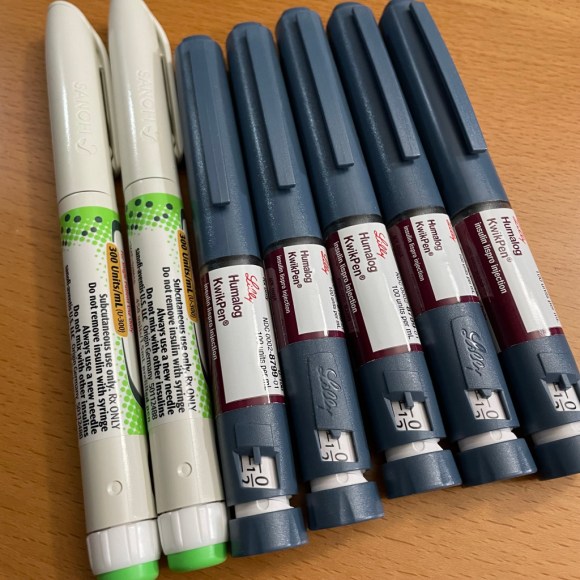
I have two different insulin prescriptions. The white pen is Toujeo, a long-lasting version that I inject in the morning. The other is Humalog, a fast-acting insulin that I inject before each meal. They are made by different companies and come in different delivery packages.

I have always liked the white pens better. It feels like a higher quality build and has a much more defined “clicks” when you inject the insulin. I am not sure if each drug company, in this case Sanofi‐Aventis and Eli Lilly, design and manufacture their own pens (not the insulin), or if they purchase them from a third party. In any case, I wish they would standardize the form factor. At least the pen needles are standardized so I do not have to buy two differnt needles.

Back to the quality issue, a second Humalog pen failed on me this week. In both cases, the dose selection wheel is either broken or disengaged so you cannot inject the remaining insulin left in the pen. Also in both cases, about one-quarter of the insulin originally in the pen must be discarded. Such a waste since insulin costs so much here in the US.

Edgepark Confusion

Remember I said that Edgepark rejected my order for more Libre 2 continuous glucose monitor (CGM) sensors? Well, they shipped me the refill order for seven sensors last week. In the box, there was a line for seven sensors at $222.74 each totaling $1,559.18. However, under “customer responsibility” it showed $0. This is confusing since I was told many times that I would need to pay a 20% co-pay since Medicare only paid 80%. I also went online to check my Medicare account, and this has not been billed. I paid $192.48 for the reader and seven sensors previously.

Even more confusing, Edgepark sent me a check for $91.94. There was no explanation other than calling it an “overpayment” refund. Overpayment on what? If I look at Edgepark’s website for my order history, each item ordered says “Co-pay/deductible applied” with no dollar details. This must be the worst customer website ever. There is almost zero information available on each order. I guess I will have to call them to figure out if the recent order is $0 for me, and why I was sent a refund check.

BTW, I have not opened any of the new sensor boxes since I am wary that Edgepark screwed up and will bill me $1,500+. I am still using the old finger-prick test strips for now.

==========

There is a menu option that says, “Balance & Payments.” If I click that, all I get is this page: no balance due but there is an error so I really do not know the answer.

FreeStyle Libre 2 Cost

I have stopped using the Libre 2 continuous glucose monitor. The supplier needs another prescription from my endocrinologist before they send me more sensors. In the meantime, there is still a lot of claim and billing activity. I finally checked the Medicare site and saw the following claims:

DateClaimMedicarePaidCo-pay
6/7/2022$937.59$493.23$390.63$98.65
7/7/2022$445.48$234.60$183.93$46.92
8/7/2022$668.22$234.60$183.93$46.92

The first claim includes the monitor/receiver plus two sensors. In the Medicare claim, there are two separate lines. The monitor was billed at $492.11 and the Medicare approved amount was $258.63. My co-pay was $51.73. I am still upset that no one mentioned there was an iOS app so I did not really need the monitor. Anyway, I received seven sensors total so the last claim must be for three sensors. Interesting that Medicare did not adjust the approved amount.

If you look at the billed cost, each sensor is about $223. They only last for fourteen days so it works out to $16/day. That seems like a crazy high amount. If you make minimum wage in California, that is about 90 minutes of work after tax. For just the co-pay, it comes out to $3.35 per day, which is much more reasonable. Remember, this is just for the sensor to measure your blood sugar and does not include any doctor visits or medication.

Zero Communications

I recently switched from using test strips to a continuous glucose monitor to measure my blood sugar. The first order included a reader and seven sensors. I am on my last sensor, which is expiring in two days. The manufacturer, Abbott, is very stingy with the sensor life. You cannot read from the sensor if you are one second past the expiration time of 14 days. Knowing this, I placed a refill order two weeks ago with Edgepark, a durable medical equipment (DME) supplier. They are the worst.

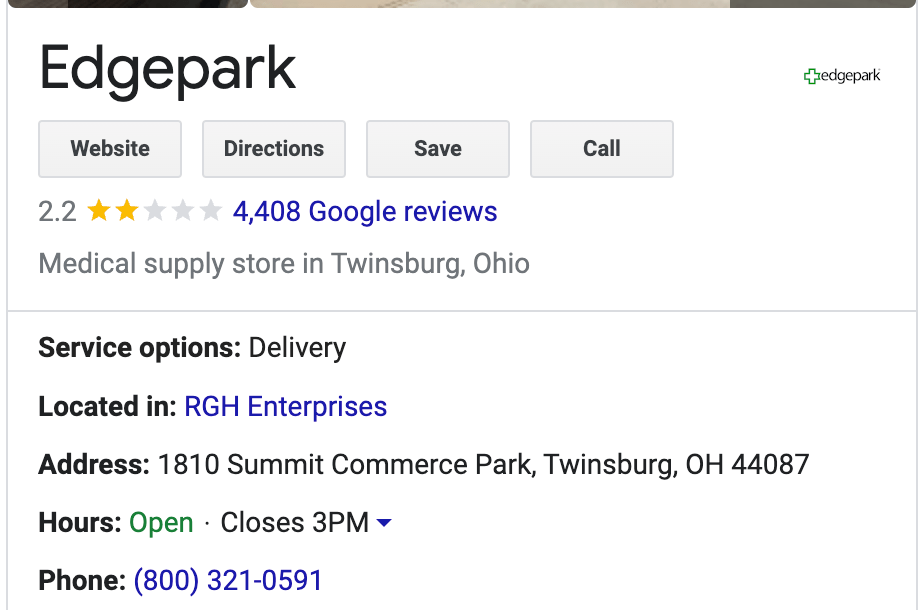
I know online reviews are not that reliable but 2.2 stars!? My experience so far has been about two stars as well. When i called to sign up and get my first order filled, the CSR was rude. It is always confusing when you have two medical insurance providers, but the CSR was impatient and gave me lots of attitude. On my refill order, I entered it online, but Edgewater still wanted me to call them. The call took only a few minutes, and I did not provide any additional information that was not already in my account. I also asked twice if my order was complete and both times the CSR (different one) said it was shipping soon. So, after two weeks, I did not receive anything. I looked at my account online and my order was cancelled. Sigh. I called them again and they said that I need to see my endocrinologist again for a refill. That is all fine, but I did not receive any notification from Edgepark nor my doctor’s office. Luckily, this is just a glucose meter. What if it was my anti-rejection medication? Terrible.

I guess I need to see my endocrinologist soon. In the meantime, I am back to pricking my fingers and using the old test strips.

Nephrologist Visit – September 2022

I finally saw my nephrologist today after five months. I was supposed to see her every two months. The appointment was scheduled for early July, after our Europe trip. However, due to COVID, I had to cancel all my appointments and I am catching up now.

There was not much change. We went over my labs and talked about how after two and a half years, there is still a lot of confusion about COVID prevention and treatment. She has patients from many different transplant centers, and each has different guidelines on vaccinations and preventative antibodies treatments. In my case, we are going to wait a few months, check my antibodies levels, and get either the bivalent vaccine or Evusheld again.

Here are some important test results:

Creatinine1.46 mg/dL
EGFR57 mL/min/1.73m2
Urea Nitrogen (BUN)34
Potassium4.7 mmol/L
Phosphate3.3 mg/dL
Calcium (two different tests)10.1 mg/dL or 10.9 mg/dL
PTH207 pg/mL
Hemoglobin17.6 g/dL
Hematocrit51.4%

Bold items are out of range. Most of them have been borderline high since the transplant so my nephrologist was not worried. She is holding off on having me take Sensipar for the high calcium, but she did increase my Losartan dosage from 25 mg to 50 mg to deal with the high hemoglobin. My blood pressure is a bit higher too so more Losartan will help.

Next step is to schedule an appointment with UCLA transplant center since I have not talked to them since February. They were okay with six to twelve months between appointments so no I should be okay.