Thus nausea sucks. I’ve thrown up a few days in a row now. I basically just eat breakfast plus a tiny snack for lunch. During dinner time, I can’t hold down much food and would end up drinking a Nepro protein shake.
I just went downstairs to eat a small bowl of cereal at 2:30 am since my stomach was hurting from hunger. I think I have to order out more since I can tolerate a few restaurants’ food more than my mom’s home cooking.
I’ve walked by our local Jersey Mike’s restaurant many times since it’s right next to a local Vietnamese pho place. My dad usually goes to a Subway that’s really nearby but the sandwiches are not that great, and Subway subs have a very particular smell that’s not too appetizing. A few days ago, I ordered a club sub online from Jersey Mike’s. Here is the nutritional information from their website.
First, having numbers to two decimal places seems ridiculous. Can they really measure 0.01 mg of anything? Second, wow that a lot of sodium. The website actually lists nutritional information for each ingredient in the sandwich. There is about 500 mg of sodium in each of the ham and turkey used in the sandwich. For total fat, there was a lot in both the mayo and the olive oil blend. The sandwich tasted great though.
I did make a mistake in the order. Jersey Mike’s specialty appears to be Italian subs which explains the olive oil blend and oregano. If I order a club sub/sandwich next time, I think I will skip those ingredients. They taste kinda weird on a club sandwich. I’ll probably go with a mini sandwich too. There’s still too much sodium (1,574 mg) but it’s better than the regular sandwich.
I added a few more sandwiches that looks great and rounded the nutritional information. The sodium levels are crazy high on all choices so I don’t know if I can eat there that much (or at all). Sigh…
I haven’t done one of these posts since early March so here is an update.
ESRD: no real changes except one of my potential kidney donors was permanently rejected by UCLA Transplant Center
Dialysis access: fistula is working sometimes; they’ve started using 16-gauge needles so we can run the machine at 350 mL/min but it’s still hit and miss on good needle insertions
Cardiac rehab: on hold since COVID-19 pandemic; the center is partially open but I’m not going until my arrhythmia issues are resolved; also UCLA has placed me back on the active transplant list so I really don’t have a reason to continue the program
Atrial flutter: this is new; experiencing tachycardia and potential a-fib; went through cardioversion and now need a cardiac ablation surgery
Peripheral neuropathy: can’t really tell anymore so it probably wasn’t the amiodarone and all that acupuncture didn’t help either; I did over-massage one area which probably caused a large blood blister to form recently
Back pain and pressure in chest: the adjustable bed has been a lifesaver; pain is mostly gone but pressure and difficulty breathing is a bit worse when sleeping on back or left side
Minimal urine production: no improvement; actually, probably even less daily urine production if that’s possible
Insomnia: still can’t sleep but now mainly due to chest pressure and coughing; mostly gave up and making up sleep with multiple naps during the day but really messing with work schedule
Dental issues: on hold since COVID-19; cracked upper front teeth biting some ice cubes so more careful with hard foods; waiting for the dentist office to fully open
Endocrinologist: appointment postponed until later due to COVID-19; stopped all diabetic medicine for now after talking to primary care doctor
Lump in left leg: no change
Constipation: mostly okay with some diarrhea due to new arrhythmia medicine; stopped taking Senokot daily
So still pretty poor health. With the new heart rate problem, I can barely walk any distances without breathing hard. Surprisingly, I was okay on the treadmill until the blister stopped that too. I did have to go to urgent care to get the blister drained and also saw a podiatrist later who said it’s healing fine.
The biggest disappointment is probably the permanent rejection of my kidney donor. The possibility of a quick transplant carried me mentally post-heart surgery but I’m back at looking at indefinite dialysis. I’m afraid that when a kidney is finally available, either from a new live donor or deceased donor, I will be too sick for the operation. A young nephew in Canada has volunteered to be tested which is totally generous and unexpected. Just need to figure out how to coordinate the process and any insurance payments.
I had trouble keeping down some chicken katsu curry my mom made using an air fryer. It’s the same issue: I would chew a few bites and suddenly want to throw up. There are only a few things I can eat from her cooking, otherwise I have to order out from local restaurants.
After looking up a few choices, I signed up and ordered six meals from Freshly. Instead of shipping you ingredients and having you cook your own means like Blue Apron, Freshly entrees are fully cooked and just need to be microwaved. That increases the chance that the meal will suck but I don’t feel like spending an hour cooking one serving.
Here’s my first order. It was $60 for six meals with shipping but I found a $15 off coupon (good for first four weekly orders) so it’s only $45. It’s a bit more expensive than the food kit companies but the food comes already cooked. Hopefully the food is edible. My other choices include order dinner each night from Urban Plates nearby for ~$14 including tax but that will probably get old soon.
Grilled Cage Free Chicken (I got roasted potatoes instead of mac & cheese)
I didn’t finish the Brussels Sprouts not the bread so take a bit off the total nutritional values. It was okay overall. My sister had her air conditioner on full blast and it cooled and hardened the chicken pretty fast. I ended up eating only half the chicken too and fed the rest to their two dogs. I guess it was pretty nutritious since I only ate about half the food.
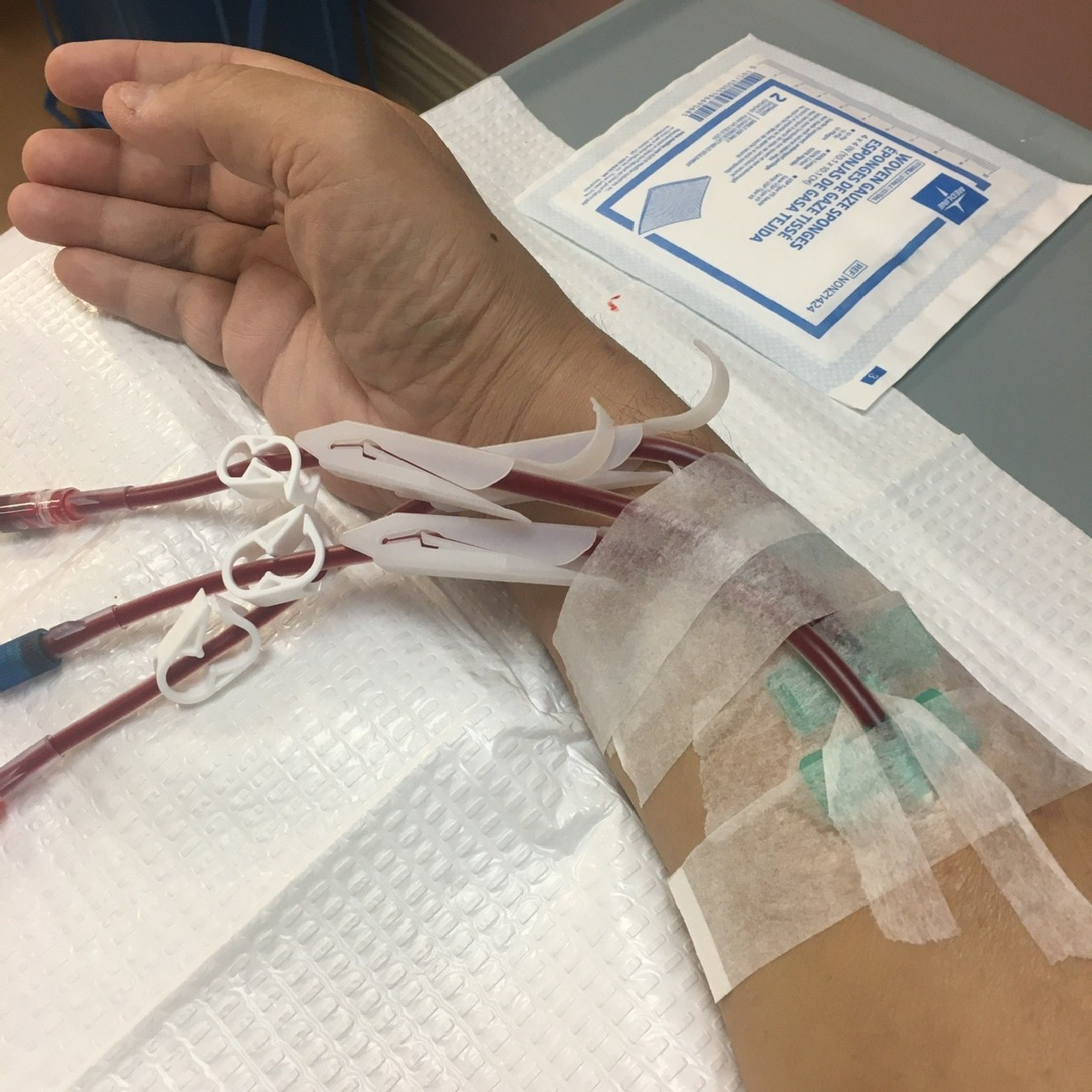
Having had my first chest catheter for 20 months, I understand the dangers and disadvantages compared to a fistula. I was really careful about not showering and keeping the exit site dry. However, there was never any pain while there is constant pain with the fistula. On Tuesday, they went with a larger 16 gauge needle. The second attempt didn’t work so the tech stuck a third needle higher up on the arm.
3 needles
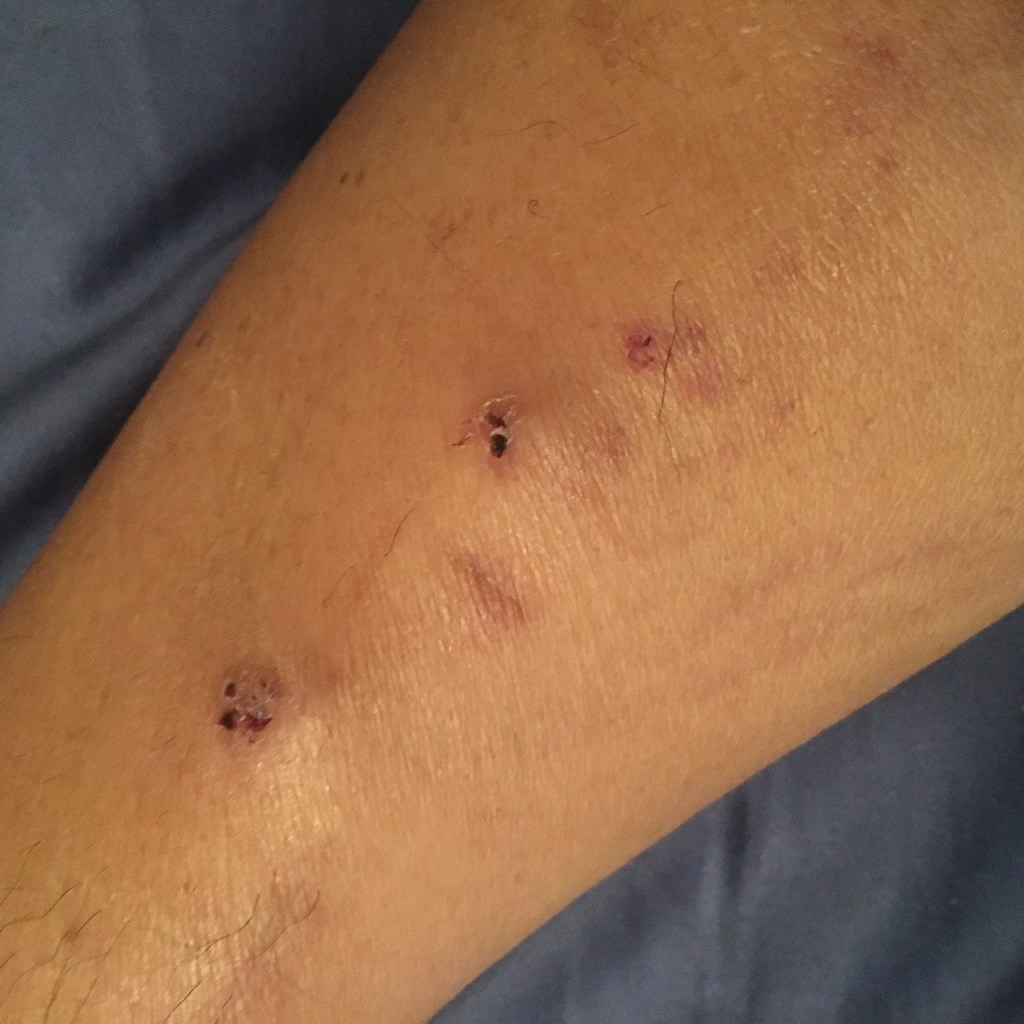
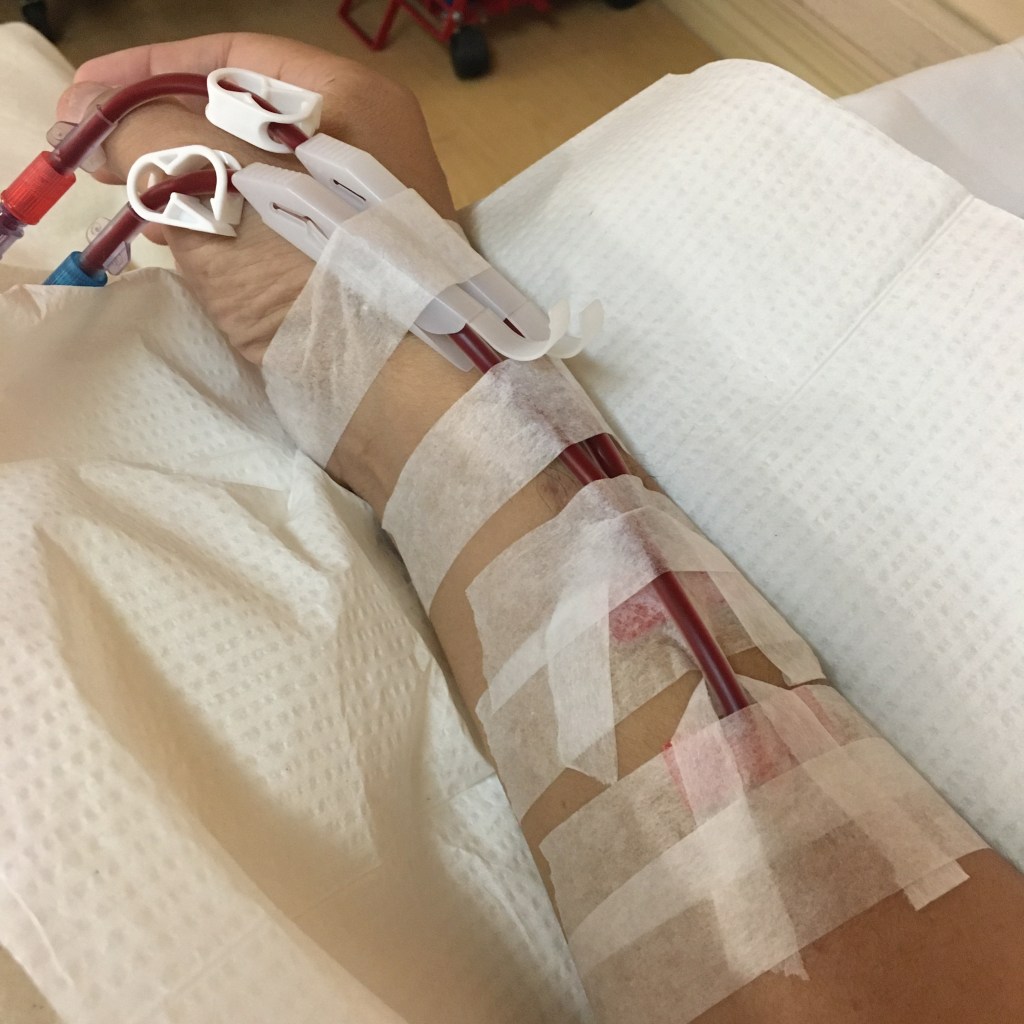
At least they were able to run the machine at 350 mL/min, the same speed as my chest catheter. On Thursday, he was unable to get a good placement for the arterial needle and it hurt a lot when he tried to push some blood through. He also thought he infiltrated the vein so he pulled out the needle and I basically bled everywhere. Sigh. This is what my arm looks like after 4 months.
The scabs/scars are pretty much permanent. Since my donor was permanently rejected, I guess I’ll need to use the fistula longer than I first thought.
I spoke with a specialist cardiologist yesterday and he said I needed a cardiac ablation. The good news is that I have atrial flutter instead of fibrillation so it’s easier to fix. The bad news is that it’s another surgical procedure. The surgeon is also going to do it at a different hospital so it’s farther away.
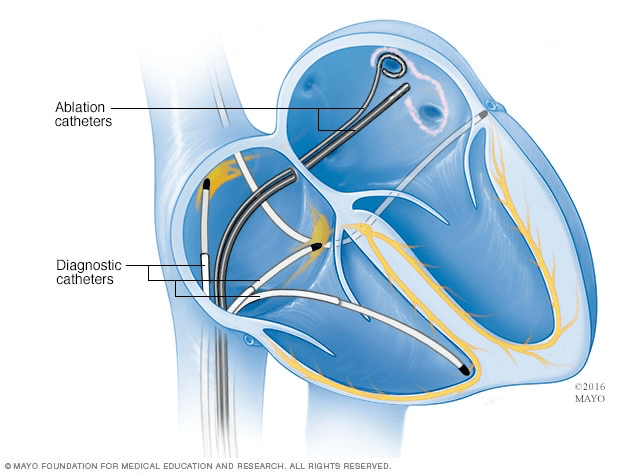
For the procedure, an incision is made in the groin area and a couple of catheters are inserted. If a short circuit us found, the surgeon will use heat to scar the tissue in that area. He said it will take about an hour and a half but I will need to stay in the hospital overnight. Ugh, I hate hospital beds.
Hopefully this will fix my arrhythmia problem. I’m tired of running out of breath after taking a few steps.
So not much has changed over the past five days. My heart rate is still fast at ~120 bpm with the occasional a-fib, and the blister is still filling up with fluid daily. I don’t know if the urgent care doctor was supposed to remove the layer of skin but it seems to seal up each time I change the bandage and there’s usually some fluid in the blister. The only sterile syringe I have are for injecting insulin so the needle is extremely thin and the syringe only holds ~30 mL. I can drain 150-200 mL each time I change the bandage. I then spray some disinfectant (made for blisters and ulcers) and apply the antibiotic cream over the blister. I think it’s been infection free since I’m only getting mostly clear fluid, kind of like when my leg was leaking. It may be from the edema in my ankles that I can’t seem to get rid of even though the dialysis center keeps lowering my dry weight.
I have an in-person appointment with the specialist cardiologist Wednesday. Hopefully he can come up with something before recommending the full ablation procedure. I’m tired of the hospital and full anesthesia outaings.
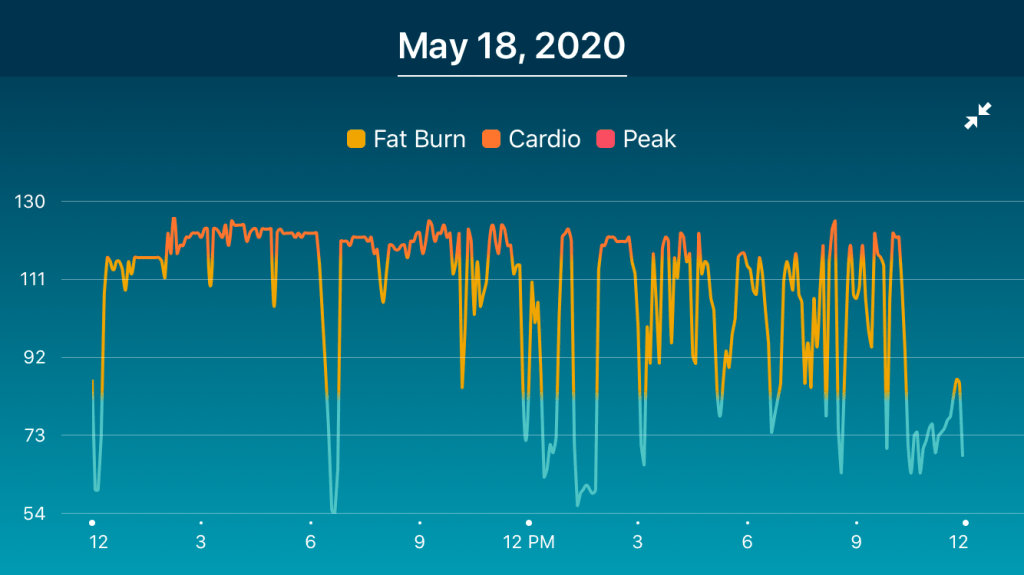
After all the excitement this weekend and the past few days, my heart rate is back to ~120 bpm again. I though taking a beta blocker again (Metoprolol) was helping but I guess it didn’t last. Here is the craziness from Monday:
Heart rate was probably up at ~125 the entire day; my Fitbit has problems picking up tachycardia consistently. When I took the Metoprolol at night, it seemed to help. Well, that lasted for about 12 hours:
My heart rate was a bit inconsistent but during dialysis, it would return to “normal” after a few minutes. After dialysis however, the rate got stuck at ~120 bpm again and continued until this morning. For all of last week, I thought things were under control after my cardioversion procedure. Now, I have to see a cardiology specialist about a heart ablation procedure, and change a foot bandage every 12 hours. I’m also up early because the neuropathy in my feet are worse than ever before and I can’t even go walk it off with the huge bandage on my left foot.
Since my podiatrist never returned my message (while my cardiologist replied and called me), I called his office today. After holding for 15 minutes, the receptionist said the earliest appointment was in two weeks. Fearing my blister will blow up by then, I ended up making a reservation at the urgent care center near my house. I’m here now waiting for a doctor to see me.
BTW, my appointment was at 3:27 pm. It’s now 4:13 pm and I’m still waiting. The medical profession is terrible at time management.
========++
While I’m waiting in the exam room, my podiatrist decides to reply to my message. He said his office will call me to set up appointment this week or next week. Now what do I tell the urgent care doctor? Nevermind? At least the podiatrist said it was concerning but not terrible. Good. I don’t like terrible.
==========
So close to an hour after my appointment time, a doctor finally comes in. He was Asian and really nice. He looked at my blister and said that we would need to drain it. At about the exact same time, my podiatrist messages me back and said the urgent care doctor should drain and bandage the blister. At first, the doctor had me lay down on the exam table but I sat up after to watch him use a syringe to extract the fluid. There was a lot. He did say that it was mostly clear, so no pus and no infections. Then he went and wrapped my foot with three or four types of bandages. I was prescribed an antibiotic ointment and some lotion since my skin was so dry. It’s now 6:20 am on Wednesday so I need to wait another 12 hours to change the bandage.
My podiatrist did set up an appointment to see me but not until next Thursday. I think I’m supposed to change the bandage every 12 hours myself.
Not me. I just found out a long-time coworker was just placed on the list for a heart transplant. Yikes! That seems like an order of magnitude worse than my sucky situation. At least I can survive 10+ days without dialysis. I doubt one has more than 3 minutes if your heart gives out.
I was getting a bit depressed lately with my arrhythmia and now a blood blister but this gives me much needed perspective. I’m looking around the dialysis clinic now and even with all my medical issues, I’m probably one of the healthier ones here.
I guess they found out about my salary levels. Instead of paying the base rate of $144.60/month, I think Medicare is charging me $462.70/month, or about 3x the base rate. I paid $723.00 in March for 5 months but got a huge second billing of $2,978.60 a week ago.
Since dialysis is super expensive, my high premiums are still worth it. I think I still have a few denied claims to work through from the beginning of the year, then I have to get some of my co-pay reimbursed by Medicare.
In saw this on the Web and it lists several possible symptoms of high blood potassium:
tiredness or weakness
a feeling of numbness or tingling
nausea or vomiting
trouble breathing
chest pain
palpitations or irregular heartbeats
So I have almost all of those symptoms but even if we use the higher potassium test results, I am probably still in the mild hyperkalemia range. Not sure if that will cause the tachycardia I’m experiencing. Maybe I can pose that question to my cardiologist tomorrow.
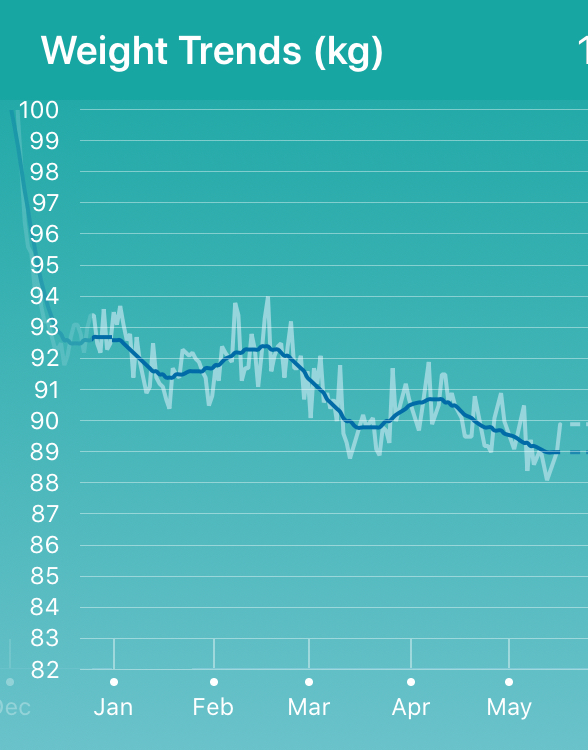
Since I can’t sleep due to my tachycardia and the mysterious blood blister, I may as well post some more stuff. My nephrologist just lowered my dry weight again to 88.5 kg. Even with the lower target, I noticed I am still getting a lot of edema in my ankles when I sit too long. Since I’m still having problems eating, I should be losing weight. Maybe I’m retaining fluids which is masking the weight loss.
Here is my weight trend in kg for 2020. After they drained all the excess fluids from the surgery, I was about 93 kg. Over the past four months, that has dropped to ~89 kg. My goal is still ~81 kg which will bring my BMI to 25%, which is in the “normal” zone. Not sure how long it will take or if I can get there at all since my stomach is hungry all the time now.
Every time I see a new doctor or go in for a medical procedure, I’m asked. “Are you diabetic?” I always answer yes, but it’s under control. Most type 2 diabetes is caused by food/sugar intake, so if you’ve changed your diet and all your labs are good, are you “cured” or is diabetes a life-long chronic disease?
It’s kind of hard to read but here is my blood sugar readings for the past few months. My glucose meter sends the readings to my iPhone for storage and analysis. Most of the readings are from when I wake up and are below 100 mg/dL. Some of the higher readings are from cardiac rehab, which is usually after I eat breakfast. ADA (American Diabetes Association) says fasting blood sugar should be 80-130 mg/dL for diabetics and <180 mg/dL for 1-2 hours after meals.
Here are some Hemoglobin A1C results:
Test Date
Hemoglobin A1C
4/16/2020
6.2%
3/20/2020
5.9%
1/16/2020
5.0%
4/13/2019
6.3%
1/10/2019
6.0%
10/11/2018
6.2%
5/12/2018
5.4%
4/12/2018
6.1%
The big gap is from when I was on peritoneal dialysis. I think the clinic ran labs for A1C but the results are not in the St. Joseph patient portal. The 5.0% reading from January is probably due to not eating very much post-surgery. From the ADA website, “the goal for most adults with diabetes is an A1C that is less than 7%.”
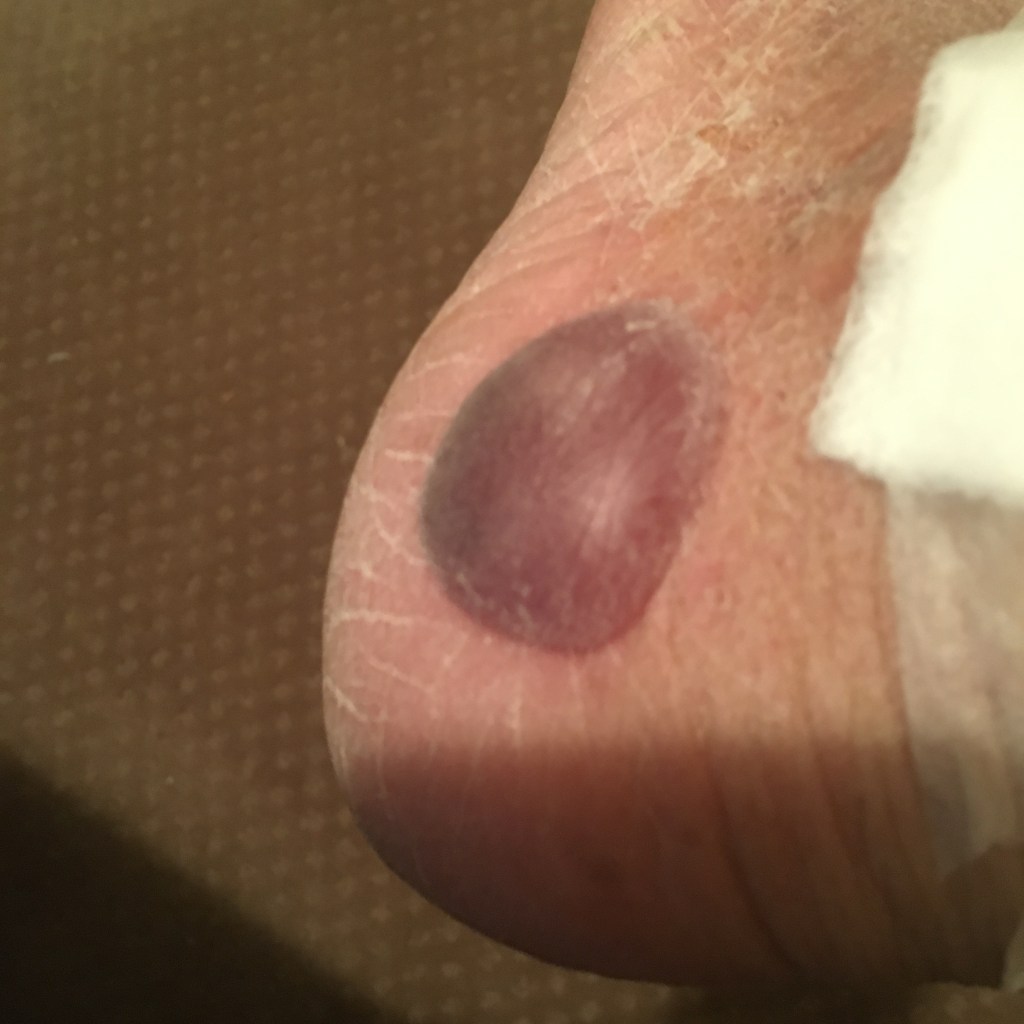
Ugh. As if I do not have enough health issues to deal with, I just found a large blood blister on my foot below the ankle. I’m not sure how it got there. I’ve been wearing the same shoes for months without any problems.
I just noticed it a few hours ago but I’m pretty sure it wasn’t there last night since I was using a massage wand on my left foot due to some neuropathy pain. Maybe it was from the ~20 minutes on the treadmill. I also found a slight abrasion on the ankle bone hence the bandage. Maybe I banged my foot against something that caused the abrasion and bruised the blister area.
I know diabetics are susceptible to blisters and ulcers on their feet. My blood sugar has been under pretty good control for months now. I measure my blood sugar most mornings and all have been below 100 mg/dL, and my A1C test results have been good. I guess I’ll have to contact my podiatrist Monday as well to see what he wants to do about the blister. The last one I got on my toe, due to some foreign objects in my shoe, went away after a few weeks. This one is much bigger and I’m afraid I’ll pop it by accident.
One of the causes of tachycardia and arrhythmia is high blood potassium or hyperkalemia. I thought this may be causing my increased heart rate. However, my potassium levels from monthly labs have been pretty normal.
Test Date
Potassium
Notes
5/14/2020
4.9 mmol/L
dialysis
5/11/2020
5.7 mmol/L
St. Joseph Hospital
4/16/2020
4.9 mmol/L
dialysis
3/12/2020
5.0 mmol/L
dialysis
2/13/2020
5.0 mmol/L
dialysis
1/25/2020
5.9 mmol/L
Quest (pre-surgery)
1/16/2020
4.8 mmol/L
dialysis
Interestingly, the two times my potassium levels tested high were not from the monthly labs from dialysis. From the WebMD site linked above,
Normal blood levels of potassium are critical for maintaining normal heart electrical rhythm. Both low blood potassium levels (hypokalemia) and high blood potassium levels (hyperkalemia) can lead to abnormal heart rhythms.
The most important clinical effect of hyperkalemia is related to electrical rhythm of the heart. While mild hyperkalemia probably has a limited effect on the heart, moderate hyperkalemia can produce EKG changes (EKG is a reading of the electrical activity of the heart muscles), and severe hyperkalemia can cause suppression of electrical activity of the heart and can cause the heart to stop beating.
The last time my heart rate went crazy, I thought I drank a lot of suanmeitang, which is a Chinese sour plum drink. There’s no nutrition label on the source but it seems sour plums have very high potassium levels. If the potassium results from the dialysis labs are inaccurate, i.e., too low, then the extra potassium may push me into hyperkalemia.
Right after walking on the treadmill yesterday, I ate a bowl of French Vanilla ice cream. The nutrition label said for a serving size of 2/3 cup, there was 173 mg of potassium, or ~4% of DV. I probably had a bit more than one serving but is ~250 mg of potassium enough to trigger arrhythmia? I guess if my potassium levels are already too high.
If my arrhythmia is triggered by a spike in blood potassium levels, will it drop when the extra potassium is metabolized? Or is my heart stuck on the high pulse rate?
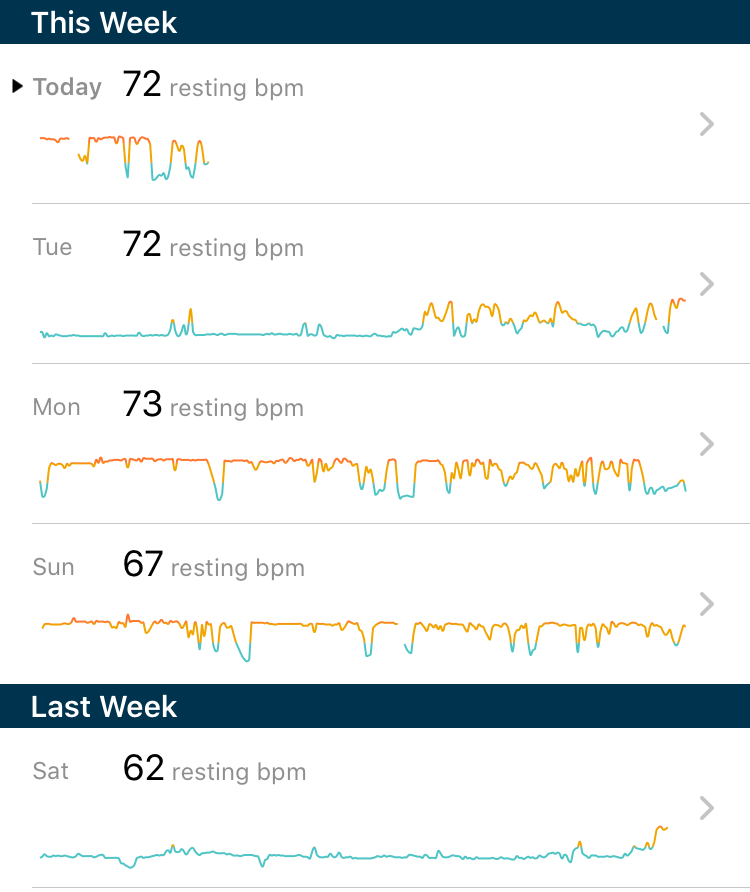
Since the cardioversion procedure last Monday, my heart rate has been pretty steady. However, I did notice it starting to creep up during the past few days. Initially it was below 60 but more recently, my heart rate has been between 65-70 bpm. However, at about 10:30 pm tonight, my heart rate jumped to ~120 bpm again and has not decreased for the past 7 hours.
From the Fitbit app, my heart rate is pretty steady until Friday, and the resting bpm has increased as well. My cardiologist was hoping that the procedure Monday will last a few years but it only worked for less than a week. She didn’t explain the cause of my a-fib, just that it’s common post-heart surgery and for dialysis patients. I guess I have to contact her office again on Monday.
Right before my heart rate increased, I walked on the treadmill for about 22 minutes. That’s probably the slight increase in the history before the big spike up at the end of Saturday. The pace was only 2.0 mph so I felt fine afterwards. Fitbit said my heart rate while walking on the treadmill was 80 bpm.
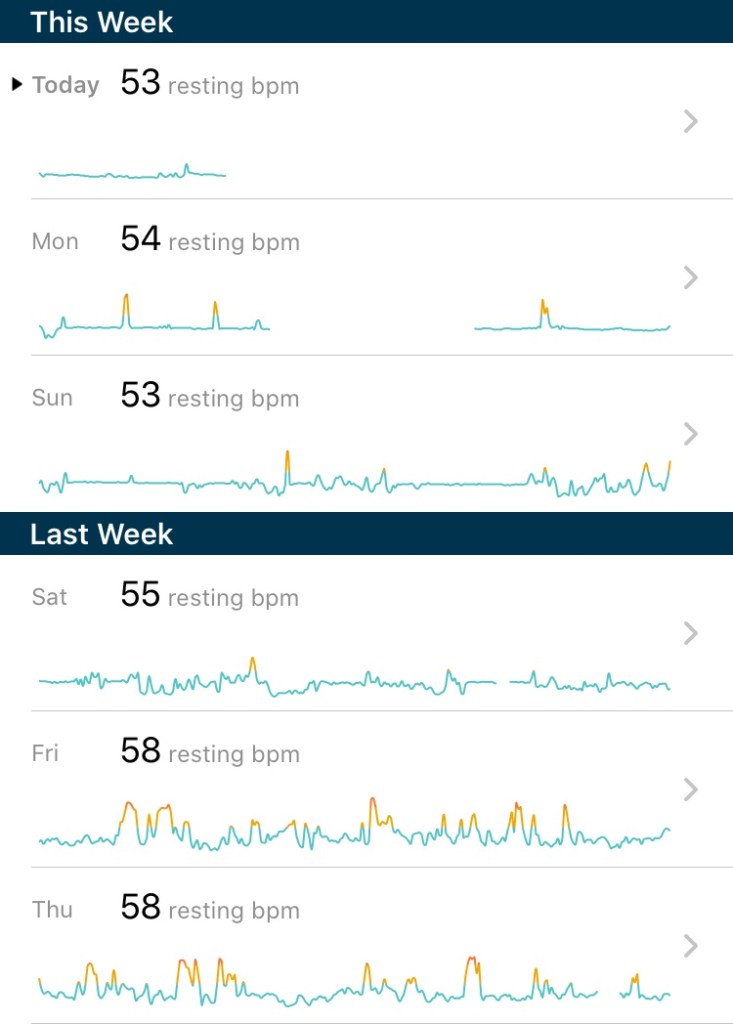
My heartrate has been pretty steady at 53-60 bpm post procedure. Surprisingly, my blood pressure is a lot lower too. I didn’t take any hypertension medications this morning and my sitting blood pressure is “normal”; the last reading was 123/73/55. A month ago, I was into the 180s with three medications. Weird.
The big gap yesterday (Monday) was the actual procedure. I left the Fitbit at home. The spoke last night was my attempt at walking. The line is pretty flat.