Medical System Issues

I am not sure what the right title should be for this post, but I ran into several issues today, and they are likely related to the overly complex medical delivery and insurance system we have here in the United States.

Since my nephrologist increased my dosage of tacrolimus, I needed a new prescription so I do not run out. I had them send it to my regular pharmacy which does not accept Medicare Part B, but have filled a previous prescription for tacrolimus for $10. This time however, the pharmacy said my work insurance would only pay a portion, and my co-pay would be ~$140. She looked into they system and could not figure out why it was only $10 last time, but a lot more today. I told them to hold on to the meds until I called my insurance.

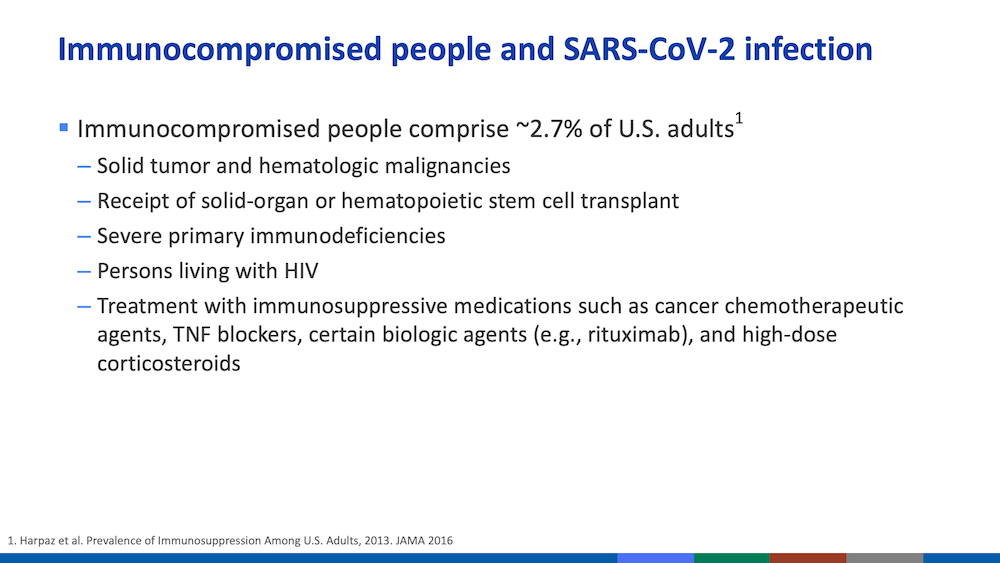
While I was at the pharmacy, I asked them about a second vaccination. They said they were not allowed to offer another shot to anyone that is already vaccinated due to FDA rules. Now that all our vaccination data is in a database, it is easy to check everyone’s vaccination status. The pharmacist basically said the only way is to lie about your vaccination status but I do not know what happens whey they try to enter my data (again) into the vaccination database. I was told to wait for the FDA to make a determination but that will takes months since there does not seem to be any urgency for the 2.7% or ~10 million Americans that are immunocompromised.

==========

I just called my work insurance and no one was available to answer the call, so I left a voicemail. I also called UCLA pharmacy about accepting prescriptions from outside the UCLA Health system, and they said it was no problem. I guess I have to cancel my order at my local pharmacy and have my nephrologist resend the prescription script to UCLA pharmacy.

==========

Sigh. Just as I clicked Publish for this post, a “get vaccinated” commercial came up on the TV set.
Additional Vaccine Doses

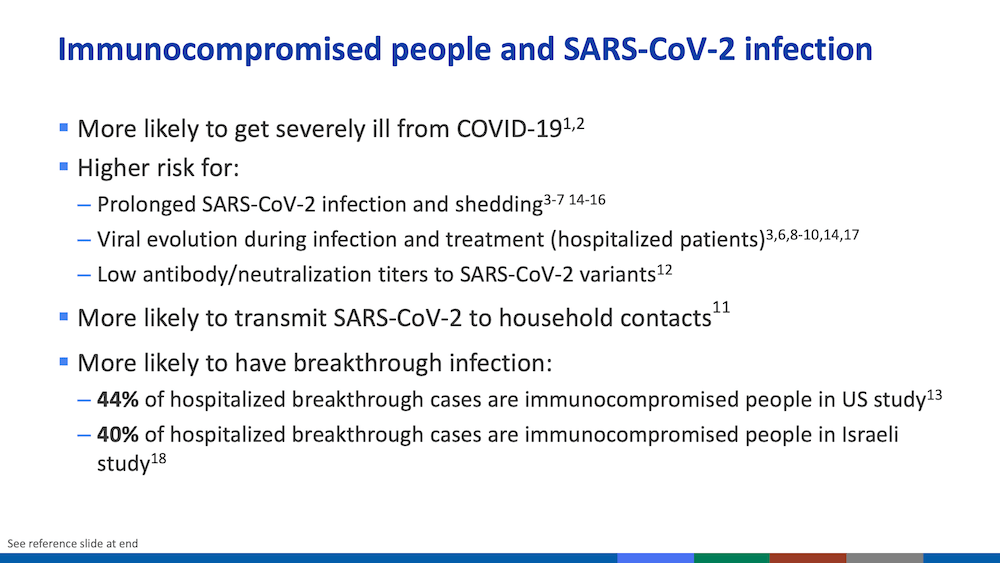
I saw a link on Reddit to a CDC presentation regarding additional vaccine doses for immunocompromised people (IP) (PDF). It outlines steps needed to have the CDC recommend additional doses, but we are still very far away from that. It appears that we are still in the reviewing data process, and still required FDA approval under the Emergency Use Authorization for the vaccines.

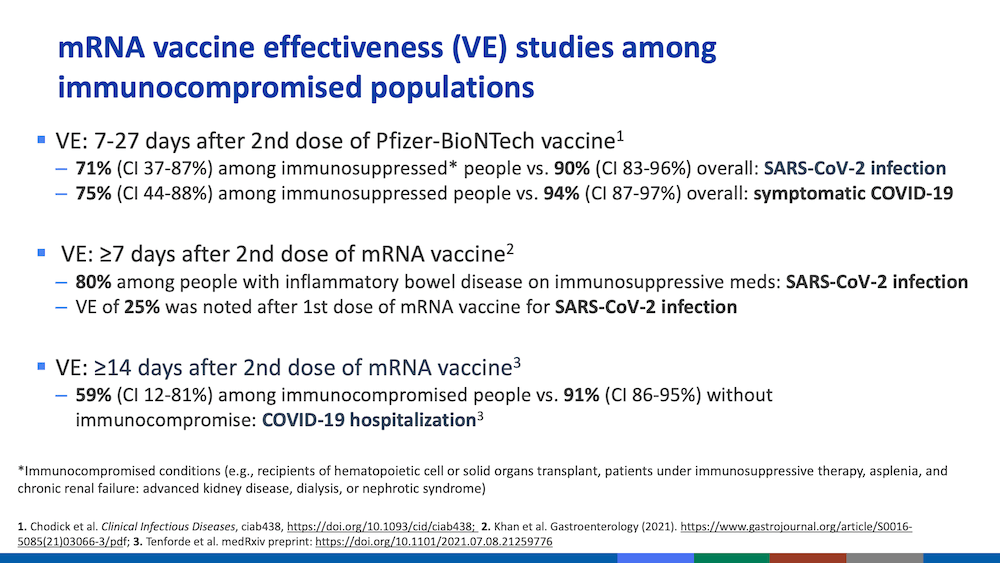
There were four slides under the section “What do we know now?”

I am #2 on the list, but do not know what portion of the ~2.7% are organ transplant recipients.
Even though IP are ~2.7% of the population, they/we account for 40-44% of hospitalized breakthrough cases. Again, they do not disclose what % of breakthrough cases are from IP. It is likely lower than the 40-44% since infected IP are “more likely to get seriously ill from COVID-19.”
This one is a bit confusing because I think they are combining data from several categories. It does appear that vaccine effectiveness (VE) is lower in IP than in the general population: 75% vs. 90% for infections, 71% vs. 94% for symptomatic cases, and 59% vs. 91% for hospitalization. Some of the non-mRNA vaccines (Sinovac, Sinopharm) are around this level of VE anyway so maybe it’s not that bad?
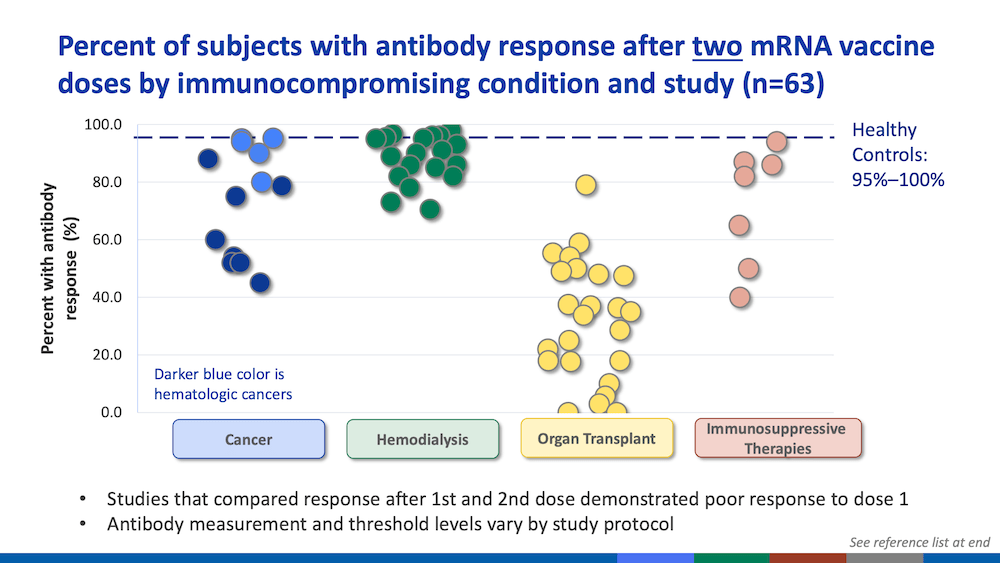
This is a small sample size (n=63), but it seems that organ transplant recipients have the worse antibody response out of all the IP categories. I was on hemodialysis for several years, and was categorized as a high-risk for infection at the beginning of the pandemic. However, it is probably due to cardiovascular and respiratory issues rather than the immune system. So the response to the vaccine should be fairly normal, but once infected, symptoms will likely be more serious.

Again, since the data is not segregated by type of immunocompromised people, it is hard to estimate the increase in infection risk, even subjectively. My reading is that if there is a response to the vaccine, it is about 2/3 the effectiveness vs. non-IP. However, this may be lower for organ transplant recipients since the anti-rejection medications are specifically designed to mute any immune response.

In my case, I am slightly hopeful since my first vaccine shot was about 18 hours before surgery. I do not know if that is sufficient time for the immune system to develop any protection. Post-surgery, I was on a higher dosage of anti-rejection medications compared to today, but I do not know objectively whether it was a larger then normal dose. The transplant center did start to lower my dosage after about two weeks so there may be a slight chance that the second vaccine shot was somewhat effective, even though I did not experience any response side effects.

I am thinking about this daily because I am invited to my boss’s party next weekend. It is indoors but with a lot of open doors plus patios and balconies. In the past, the room was somewhat crowded. If I go, I am going to wear a KN95 mask, but it will be difficult to maintain a six foot separation from everyone else. It is difficult to manage risk where there is essentially no data. I am bringing my sister as my +1 guest. She is excited to go but she understands if I decide to skip the event.

Prescription Refill Confusion

Like medical insurance, having a dedicated pharmacy is good; having more than one is confusing. Right now, I am getting my medications from three different pharmacies. There is a reason for this madness. My “regular” pharmacy is a Sav-On inside the local Albertsons. I used to get most of my medications there since it was close by and very responsive. They also have an iOS app that is very minimal, but good for viewing prescriptions and ordering refills. Since COVID hit, I can order my refills and have them mail my medications to me directly from the app. When a prescription is set for long term (no dosage changes), I can switch to the mail order pharmacy preferred by my work insurance. There I can get a three-month supply for the price of one co-pay, saving some money and hassle of monthly reorders. Finally, I still have some prescriptions at UCLA Pharmacy. After transplant, they re-prescribed all my medications, including existing ones so most of the active prescriptions are still from UCLA doctors. Additionally, even though I am getting most refills at the mail order pharmacy, only UCLA takes Medicare Part B for anti-rejection medications, forcing me to get my tacrolimus refills there. The prednisone is common and cheap enough that I am not worried about insurance mix-ups, but the tacrolimus is somewhat expensive, and do not want to order it with my work insurance just to have them reject it later because I still have Medicare. Confusing, right?

This almost became a huge problem last weekend. Since I take so many tacrolimus pills daily (six), it is hard to tell how many days of supply I have left just by looking at the pill bottle. Anyway, I started filling my weekly pill dispenser and ran out of tacrolimus. I was told to never miss a dose of the anti-rejection medication so of course I was worried. I tried to refill online, but it did not allow me to select the mail option at UCLA. I ended up leaving a voice message and then called them in person Tuesday to ask them to mail out. Luckily, I received the package Friday afternoon, having only three pills left.

Earlier this afternoon, I just put in some more refills. One was for the Lokelma, which was previously filled at my local pharmacy. The mail order savings is not that great, only $30 over three months, and since there were no refills, the pharmacy needs to contact UCLA for authorization. Likewise, I was running low on prednisone. Since I wanted a three month refill and there was none left on the prescription, I had to log in to UCLA’s online system and request a refill from the transplant doctors, and to send to the mail order pharmacy. It is like each prescription has its own special handing rules to get filled and paid by insurance. I probably need to create a file in Excel or something to keep track.

More Insulin v2.0

My endocrinologist got back to me today. I sent her my blood sugar readings for the past two weeks a few days ago. Based on the numbers, she decided to increase my insulin dosage again. The daily shot of Toujeo has gone up from 13 units to 18 units, and she added one unit to the baseline Humalog dosage from 5 units to 6 units. Even though my blood sugar is trending lower, it is still not consistently below the magic 130 number.

If you compare this to the previous post, the data points do appear lower, but not enough. I copied the old chart below for easier comparison:

I was hoping the blood sugar situation would improve over time, but it appears I may need insulin for the rest of my life. It does not look like my anti-rejection medications will be reduced further, so any blood sugar effects will remain. Also, maybe my type II diabetes has gotten worse during the past five years, but it was masked by the effect of dialysis on blood sugar levels. Now that I have a working kidney, old problems are becoming more noticeable again.

==========

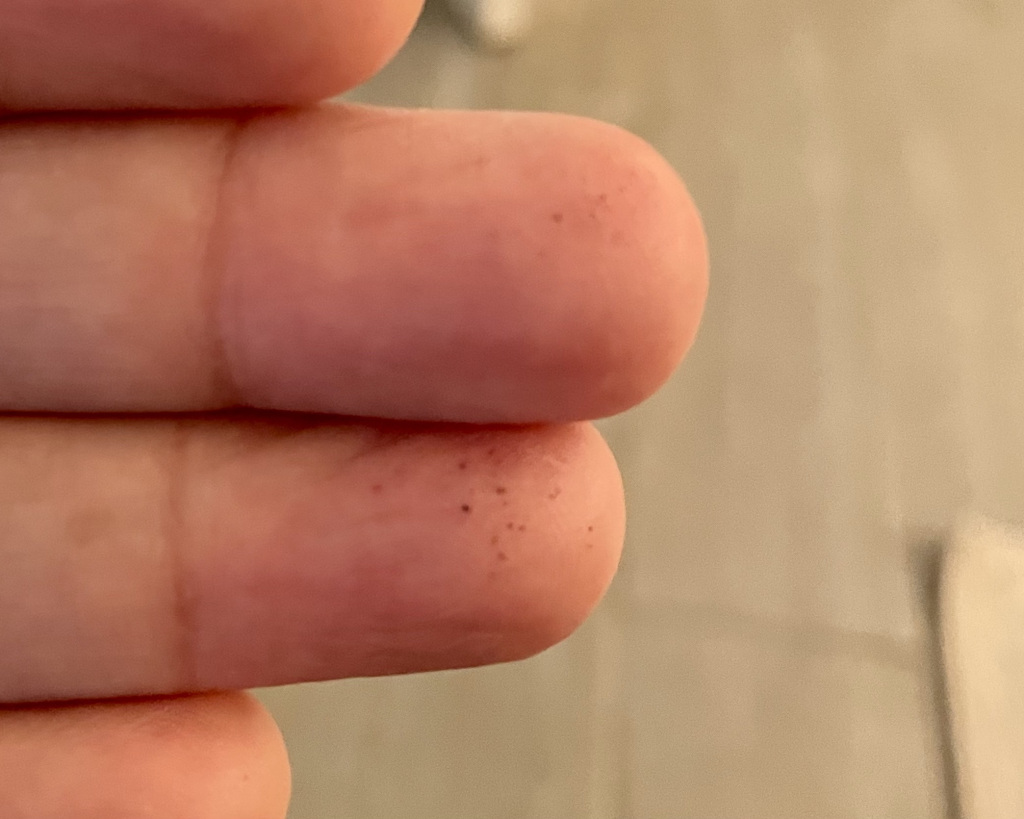
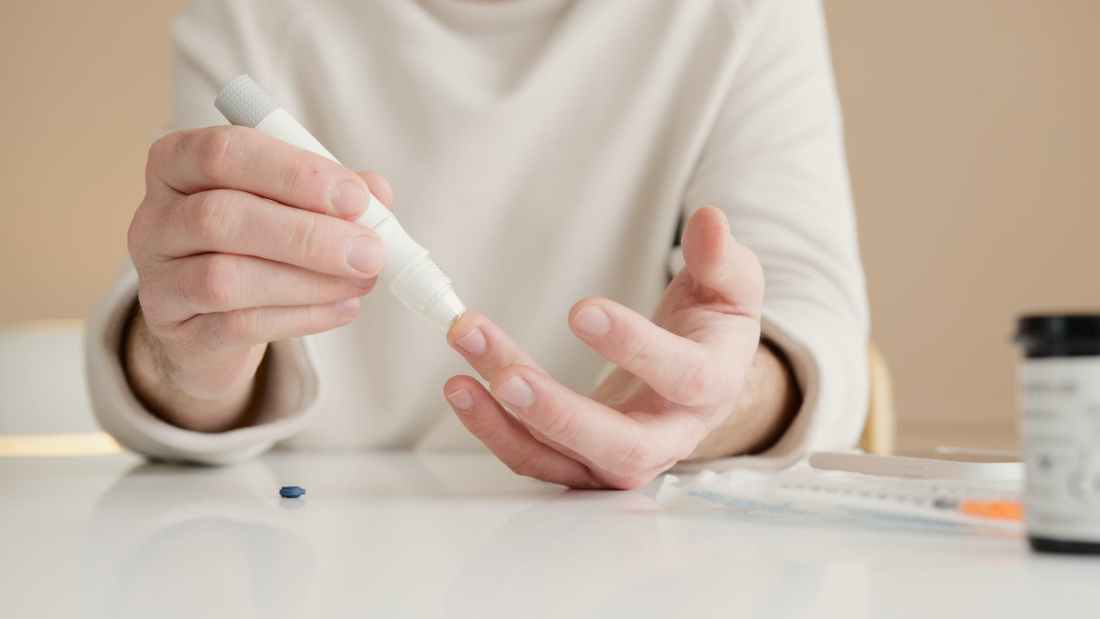
Another frustrating part of diabetes is the number of lancet finger-pricks needed for blood sugar tests. I do three or four tests daily, and since I am right-handed, almost all the blood is coming from my left hard fingers. It is hard to take a photo with the iPhone due to the focusing distance, but you can see a lot of tiny block dots on my ring finger:

The way around this is either not test, or getting a continuous glucose monitoring (CGM) solution. Two of my cousins are using the FreeStyle Libre system, and they really like it. It does contain a sensor will a spike that you have to insert in your arm for the duration. When I was taking blood sugar readings once a day, it was not worth it. Now that I need to monitor it up to four times a day, maybe it is time to reconsider.

Nice PR video. It is painfully obvious Abbott wants to avoid showing patients the huge ass needle on the back of the sensor patch. Maybe you will not feel it after getting used to it, but I would think the needle will hurt for some time. Not as big as dialysis needles, but not tiny like glucose meter lancets or insulin needles.

OG Nephrologist

I just saw my “local” nephrologist. She is not really OG since she is the third or fourth nephrologist I have seen outside a hospital. When I was initially asked to see a nephrologist due to deteriorating kidney function, I found someone close to all my other doctors. I think she was an Indian woman and I saw her for quite awhile. At some point, she left the practice and I was assigned to the main nephrologist, but he was an ass. As soon as they hired a replacement, I was transferred to him, a Korean man. That went on for awhile, but my kidney function kept decreasing. He also left the practice to move to San Diego, so I got a referral from my primary care doctor, and ended up at the current medical practice. I was supposed to see the primary nephrologist, but was scheduled for another doctor who was more available, and she has been my nephrologist for five or six years now.

The was my first appointment with her since my transplant. UCLA was supposed to send a package with all my notes, medications, and test results. Of course, she has not received anything. I was low-key expecting this since UCLA has probably thousands of active patients, and you are monitored by a team of doctors instead of just one. Good think I had all my records on MyChart on my phone. Long story short, she did not change anything in terms medication or care, but she did have lots of questions for UCLA. The big surprise to her was how fast UCLA stopped my prescription for mycophenolate (Cellcept). She said many patients are on that medication for life, yet it was discontinued for me only after a month. She also said that patients typically get more anti-infection medication for longer periods, while I was only one one, atovaquone.

Even though my nephrologist has worked with UCLA before, I believe she refers most of her patients to St. Joseph Hospital for transplant. I also started there, went through orientation and tests, and met the transplant surgeon. Unfortunately, their transplant social worker was terrible, and rejected by sister as a donor for basically no reason. When I retold the story to my nephrologist and dialysis social worker, they both wanted more information so they could refer the transplant social worker to the licensing board for review. We did not follow through however, and just transferred my case to UCLA. It does sound like the St. Joseph transplant surgeon is much more risk adverse, and keeps transplant recipients on high doses of anti-rejection medications for many years. UCLA seems like the opposite. Hopefully I chose correctly.

Stopping Sensipar®

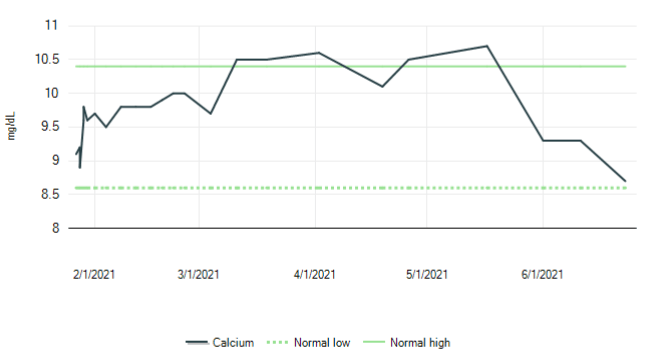
This has been bothering me since yesterday. I was prescribed Sensipar, or cinacalcet hydrochloride about a month ago due to high calcium test results. I ran out of the medication right before yesterday’s appointment at UCLA, so I ordered a three-month refill with my online pharmacy. Here is the latest historical test result trend for calcium:

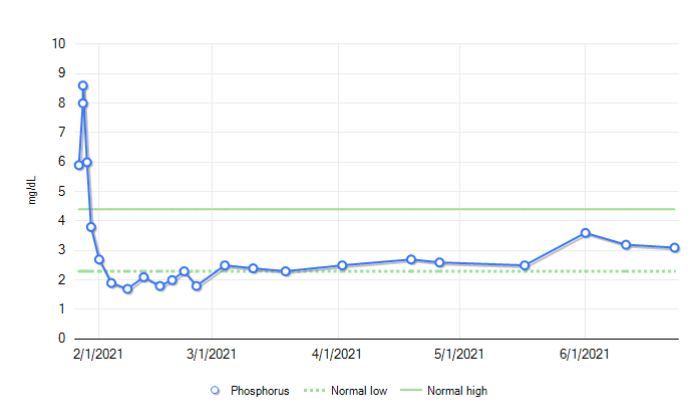
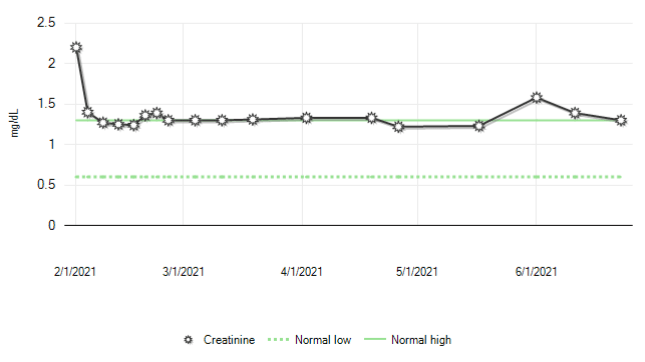
Everything was normal until mid-March, then above normal for the next three months. The only comment I received was to consume less dairy, while at the same time, I needed dairy to keep up my phosphorus levels. Often, I feel like I am an unwilling participant in a game where I need to achieve certain outputs by adjusting a few inputs that are connected via a black box. I my case, the inputs are food, exercise, and medication. The black box is the biological process inside my body, and the output is test results. The frustration is that the black box algorithms do not seem consistent over time. Sometimes test results change significantly without any obvious reasons, like the sudden increase/decrease in my creatinine. Here is my phosphorus result history:

It was too low post-transplant so I was prescribed a potassium/phosphorus supplement. Once the results were consistently above the low limit, I was told to stop taking the supplement. Since then, my phosphorus levels have continued to increase, with a huge jump in early June. That seems to have leveled off in the past few weeks. I do not remember any diet changes over the past month so I do not know what to do different if the numbers start changing rapidly again.

Final Post-Transplant Appointment

Well, kind of. I had an in-clinic appointment this morning to discuss my transplant at UCLA, and they did agree to turn me over to my regular nephrologist. They tried to do this several times, but there was always a test outside of normal range. I guess all the test results looked good enough for them to finally release me, but I do have a follow-up appointment with UCLA in four months.

I was a long morning. My appointment was at 9:30 am, which meant I had to be there by 7:30 am to draw labs. Both Waze and Tesla navigation said about 90 minutes, so I left the house at 5:30 am, did not arrive until 7:20 am. The clinic was pretty deserted so I was called almost immediately by the phlebotomist, but that left me with a full two hour wait until the clinic appointment. I ended up at the main hospital cafeteria, ate some breakfast, and basically sat around for 90 minutes. Back at the clinic, the appointment was pretty quick. The lab results turned out fine: my creatinine levels dropped down back to 1.30, or within normal range. My calcium levels were a bit too low this time, so the doctor told me to stop taking Sensipar*. Of course, I just placed a refilled with my online pharmacy for a three-month supply, arriving in two days. They are keeping me on the Lokelma since it appears to help with my high potassium. The hemoglobin levels have fallen to normal range so we did not go over any of the issues I posted about here.

UCLA nephrologist unsure what happened to cause the sudden rise. He said sometimes a test result will come back all weird so they will test a few more times to verify.

I asked the doctor about the kidney ultrasounds again. He repeated that the findings were pretty normal. My old kidneys have atrophied slightly, which was typical, and there are some benign cysts but nothing to worry about. For the new kidney, the arterial flow is a bit high, which usually indicates some blockage (renal artery stenosis). However, since the kidney is working well, they there is no concern.

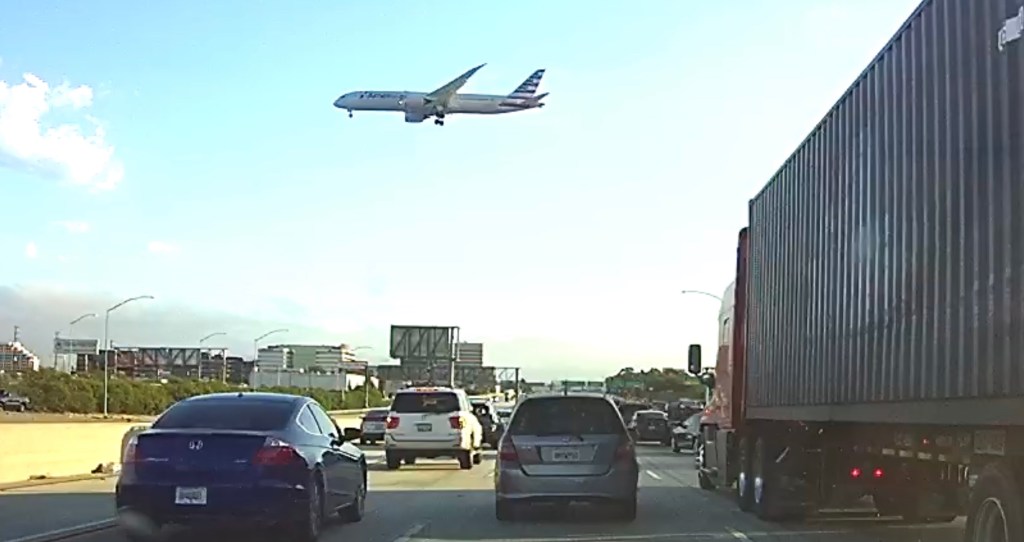
I got back to my car at around 10:00 am, and the drive home took about an hour and was pretty uneventful. Traffic northbound on the 405 was still very bad, even at 10:30 am. On the way to UCLA, an American Airlines Boeing 777 flew over the freeway right in front of me near LAX. It looked really huge in real life, but the fisheye lens on my carcam made it look small.

==========

*The Sensipar prescription refill cost me a $10 copay, but my work insurance (or my company since we are self-funded) had to pay ~$2,000. If you divide that out assuming a 40 hour work week, it is about $4/hour for the medication. For minimum wage workers, that is >50% of their gross salary. I am all for free markets, but some of these drug prices are ridiculous.

Lokelma™

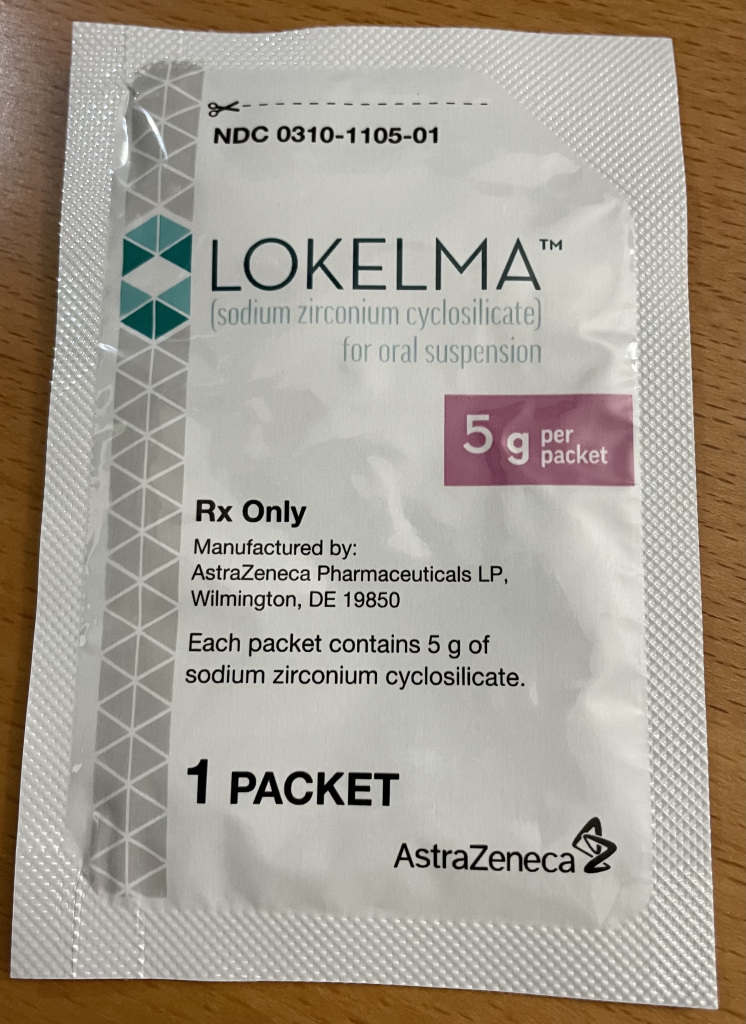
I picked up my prescription for Lokelma today. It is a new medication UCLA prescribed to lower my potassium in case they want to prescribe Losartan. Interestingly, I used to take Olmesartan, which like Losartan, is an angiotensin receptor blocker (ARB). ARBs are usually prescribed for high blood pressure, but UCLA wants to use it to treat my high hemoglobin.

I was expecting another pill to take, but Lokelma turned out to be something you drink. Instruction says to mix with 45 mL (oddly precise) of water and drink it. Not sure why AstraZeneca did not make a fast dissolving pill, and went with a powdered drink instead. I took a dosage about 15 minutes ago. There was really no taste, even though the water turned milky white.

From the website, the only side effect seems to be edema due to high sodium content. Unfortunately, each 5 g dose has about 400 mg of sodium. That is about 15-20% of a normal person’s daily sodium intake.

Mail Order Insulin Delivered

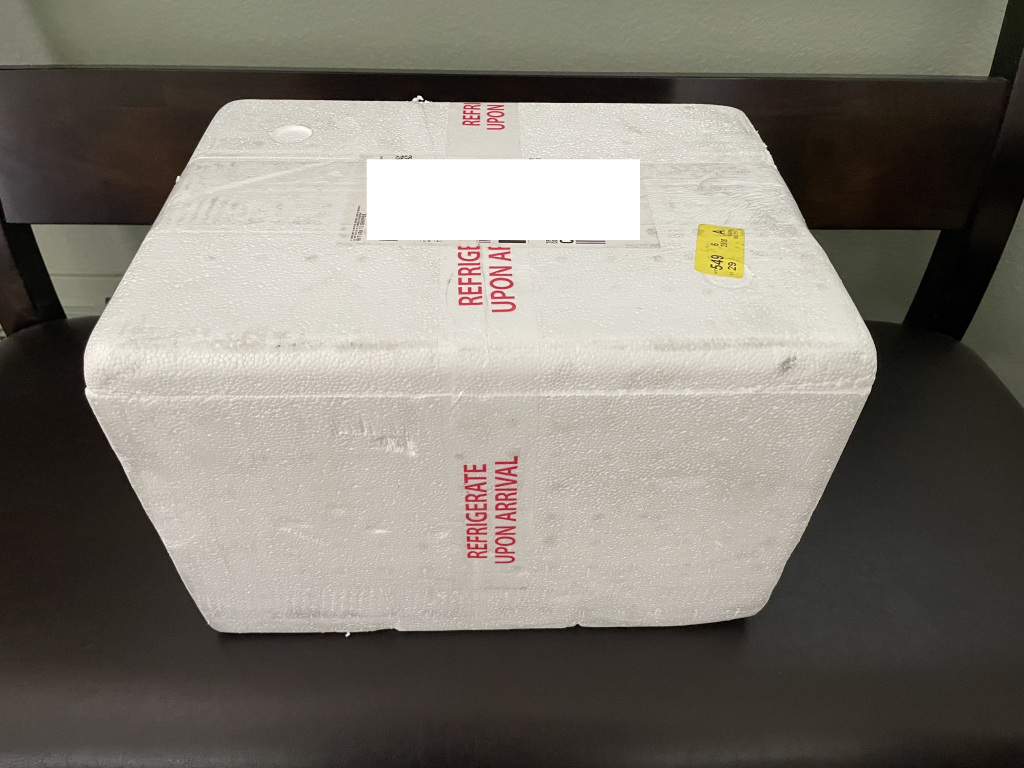
The insulin that my endocrinologist ordered arrived via FedEx today. I was surprised at how big the box cooler was. I guess it was similar to receiving and order from Freshly or other refrigerated goods. Per my FedEx app, the package was 15″ x 11″ x 10″ and weighed seven pounds. All that for a few insulin pens. Also, who paid for FedEx overnight shipping?

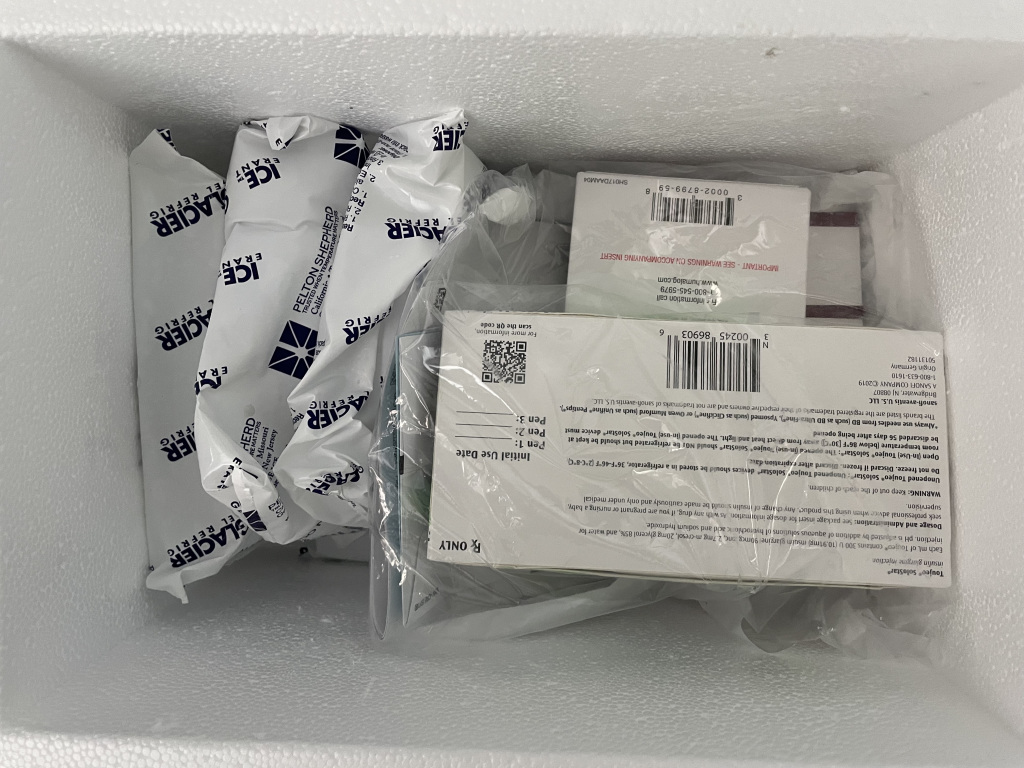
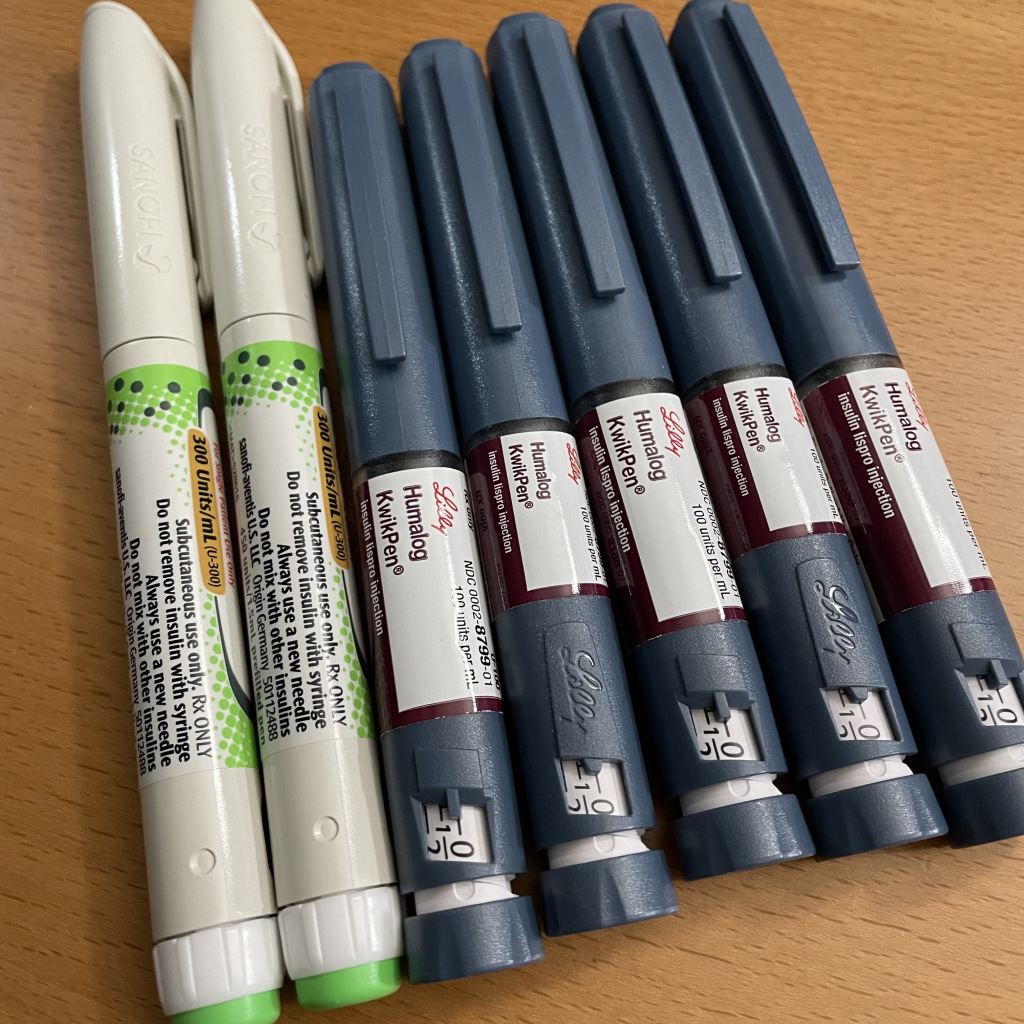
The package was a styrofoam cooler like you find at gas stations or dollar stores. It felt pretty sturdy, and the lid fit very tightly. When you open the cooler, there were six reusable icepacks, and a plastic bag with three boxes of insulin pens. Like I guessed previously, I received only one box of Toujeo with three pens, and two boxes of Humalog with five pens in each box.

Again, I do not know why they sent me only two boxes of Humalog. Their website did say I was out of refills, which is strange since the endocrinologist sent new prescriptions out last week.

I think I will keep the styrofoam box/cooler and stick it in the frunk (front trunk) of my car to carry stuff, or throw icepacks in it if I want to carry refrigerated or frozen groceries in the future.

==========

Thinking about this pharmacy model some more, it does seem very wasteful. What if I ordered one box of insulin pens each week (multiple prescriptions)? Will they send me multiple large heavy boxes? I think the answer is yes. Last time I refilled normal prescription pills with the online pharmacy, I messed up and clicked check-out (one button check-out no less) rather than add to cart. It means I placed three orders of one medication each, instead of one order of three medications. The cost to me was the same, but the pharmacy sent three padded envelopes via FedEx. That seems like a programming error. They should at least group medication for the same person on the same day. I am not sure what the solution is however. If the insurance will let me get three month’s worth of medication each time for one co-pay, i will gladly go to my local pharmacy. Right now, I end up paying three times the co-pay asa well as having to go there three times.

==========

Here are all the old empty insulin pens. I looked into recycling them but every website says to just dispose in regular trash.

Kidney Complications

So for over a month I thought everything was going well with the kidney except for a few borderline test results. However, my creatinine spiked two weeks ago so I had another video appointment with UCLA today. This meeting took much longer since the nephrologist was once again evaluating whether to release me to my regular nephrologist.

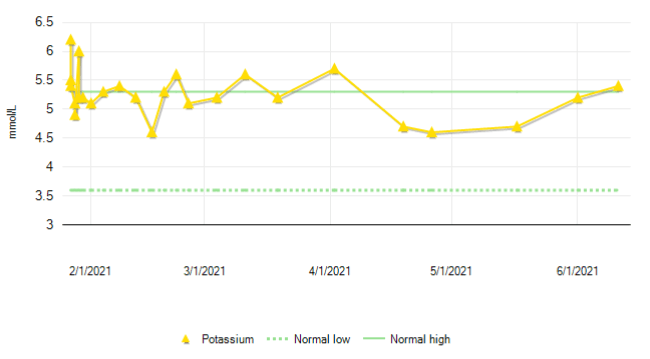
The issue this time is high hemoglobin combined with high potassium. My potassium has been borderline high since transplant, and this time, the result was 5.4 mmol/L:

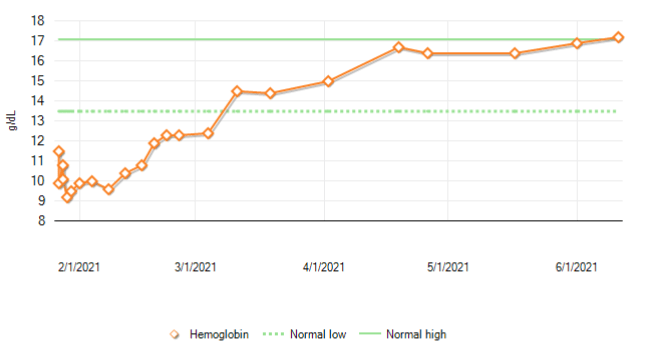
The hemoglobin results post-surgery were super low since I had anemia while on dialysis, but it has steadily increased until it is now borderline high. High hemoglobin can lead to blood clots that may end up in the lungs causing pulmonary embolism, or the brain causing a stroke. Great!

Persistent high hemoglobin after a kidney transplant indicates post-transplant erythrocytosis (PTE). It is defined as having hemoglobin results above 17.0 g/dL and hematocrit >51% for six months. My numbers are 17.2 and 53.5%, but for just the last test. Nevertheless, UCLA wants me onsite next week to talk about options. They were going to prescribe me Losartan to lower the hemoglobin, but that can raise potassium, which was too high already. Instead, UCLA prescribed Lokelma to try and lower my potassium first. If they can lower my potassium and my hemoglobin stays high, they will also prescribe Losartan. Otherwise there is a procedure to physically remove the hemoglobin from my bloodstream. Obviously, I want to avoid that scenario.

==========

Back to the creatinine problem, this time the numbers were a bit lower at 1.39. It is still above normal range, but much better than 1.58. I did the same blood test a few days ago for St. Joseph Heritage, and the number was 1.50. Combined with the inconclusive kidney ultrasounds, the UCLA nephrologist was not concerned about any rejections.

Mail Order Insulin

When my endocrinologist increase my insulin dosage, I asked her to send new prescriptions to Express Scripts, a mail order pharmacy that my company’s insurance uses. The main benefit is that I can get three month’s of medicine per order, instead of just one month from my local pharmacy. The disadvantage is that stuff sometimes just show up without any warning, and you do not have the option to return it. At the local pharmacy, if anything is wrong, I can refuse the order, and they either restock it, or send it back to the drug company. Not so for mail order since the mail order pharmacy cannot be responsible for tampering risk once the drugs leave their site.

For example, my endocrinologist ordered both Trujeo and Humalog for me last Thursday. I immediately got an email from Express Scripts saying they are working on the order. For the next few days, it was radio silence. When I checked their website, it said both prescriptions were in progress, but with no additional information (ETA, cost, etc). Just now, the status for both said shipped. I guess I am used to the Amazon model where I get lots of email notifying me of my order status. Fortunately, the medications are covered by my insurance so I am not stuck with huge co-pays. Still, the Humalog will cost me $60.

It is also surprising how much non-generic medications cost. Nowadays, most prescription receipts include pricing so you can see how much your insurance plan paid. In this case, the Humalog, I am only receiving a 67 days supply. Even so, my insurance paid $900. When I first refilled the medication, I took it to my local pharmacy, and they charged me $30 for one month supply, which worked out to be five pens. Does this mean I get 10 pens for $60? If so, then there is no advantage for me to go with Express Scripts. The Toujeo was different. It only cost insurance $353 for a 90 supply, and my co-pay is $0.

Due to an overzealous doctor at UCLA, most of my prescriptions were converted to Express Scripts. The only difference is for Tacroliums as most pharmacies do not take Medicare Part-B for drugs. My worked insurance paid for it once, but I am sending the prescription to UCLA’s pharmacy to be safe. It takes a bit of effort to manage 10 prescriptions at three different pharmacies though.

Endocrinologist 6/10/2021

I just came back from an appointment with my endocrinologist. I was kinda dreading this appointment since my blood sugar has been hard to control since the transplant surgery. However, the meeting went pretty well, but I did have my insulin dosages increased. The morning Toujeo was increased to 13 units in the morning, and I am back on a sliding scale for the Humalog, though the scale is different than what UCLA originally prescribed. The base dosage was increased from 4 to 5 units, and I need to add more if my blood sugar is above 150.

The fructosamine test from Tuesday also came back. The endocrinologist said that my result of 401 is comparable to an A1C number of ~8.0. That is way too high and she said it also may affect my new kidney. Going forward, I need to send blood sugar readings to her every 1-2 weeks. Interestingly, they took my blood sugar meter during the appointment to dump the data. They must have a computer that can read all brand/model of meters.

Post-Transplant Insomnia

It is getting worse. For about several months after the transplant, I was sleeping pretty well, especially compared to pre-transplant. However, I am having more and more difficulty falling asleep, and staying asleep. Right now it is 3:40 am, and I have not been able to sleep yet. It has been like this for three nights in a row. For nights that I have been able to fall asleep, I would get up around 2:00 am, then stay up the rest of the night. During weekdays, I end up taking several short naps in between work calls just to remain semi-functional.

I am hoping it is my body adjusting to medication, although that has not changed for almost two months. The only big change is the addition of Sensipar for calcium and PTH levels. I do not know if the insomnia is a side effect of that drug, or in combination with an existing medication.

I have not mentioned this for a long time, but the general numbness in my feet from peripheral neuropathy is definitely worse. It is sometimes difficult to notice changes over time, but I am 100% sure the buzzing is much more intense, and I can barely move my feet and toes below my ankles. Since the primary cause is diabetes, maybe the higher blood sugar post-transplant is aggravating the condition? It is still bearable but contributes to my insomnia as it is hard to ignore when trying to fall asleep.

More Medication Side Effects

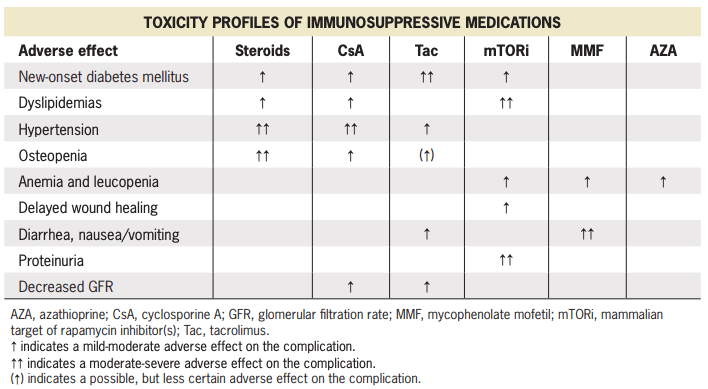
Post transplant, I looked up the side effects of all the medications I was prescribed. The focus was on the three anti-rejection medications since they had the most negative effects. Here is another one I found from the National Kidney Foundation:

https://www.kidney.org/sites/default/files/02-50-4079_ABB_ManagingTransRecipBk_PC.pdf

Once again, I was prescribed the following medication categories: Steroids, Tac, and MMF. The MMF stopped after a few weeks, but I am still taking prednisone and tacrolimus. Looking at this list, the adverse effects with the most total ↑’s are diabetes, hypertension, and osteopenia. I know I have the first two conditions, although the hypertension is a lot better controlled recently. I had to look up osteopenia and it is basically bone mass loss. I am not sure if I have or developed this condition, but I do not remember doing a bone density test ever.

Back to my current issues with blood sugar, I am hoping that the tacrolimus is partially responsible for the difficulty I am having. Maybe if UCLA ever decreases or removes my tacrolimus dosage, or I get more used to it, my blood sugar will drop enough to stop the insulin shots. Finally, the last line in the chart above has decreased GFR attributable to tacrolimus as well. Perhaps that is causing the spike in my creatinine numbers? But if so, why now?

Endocrinologist Appointment

Of all my doctor appointments, this is the one that worries me the most. With UCLA transplant center, most of my test results are in the normal range. Even my blood pressure readings have improved quite a bit. Some electrolyte readings are slightly high, but the transplant center does not seemed too concerned. The one area that is still a problem in my blood sugar readings. It is super sensitive to what I eat, and I have a vague correlation on how food affects blood sugar. I know it is related to carbohydrates and sugar, but there is a lot of variability and often the test readings surprise me, both positive and negative.

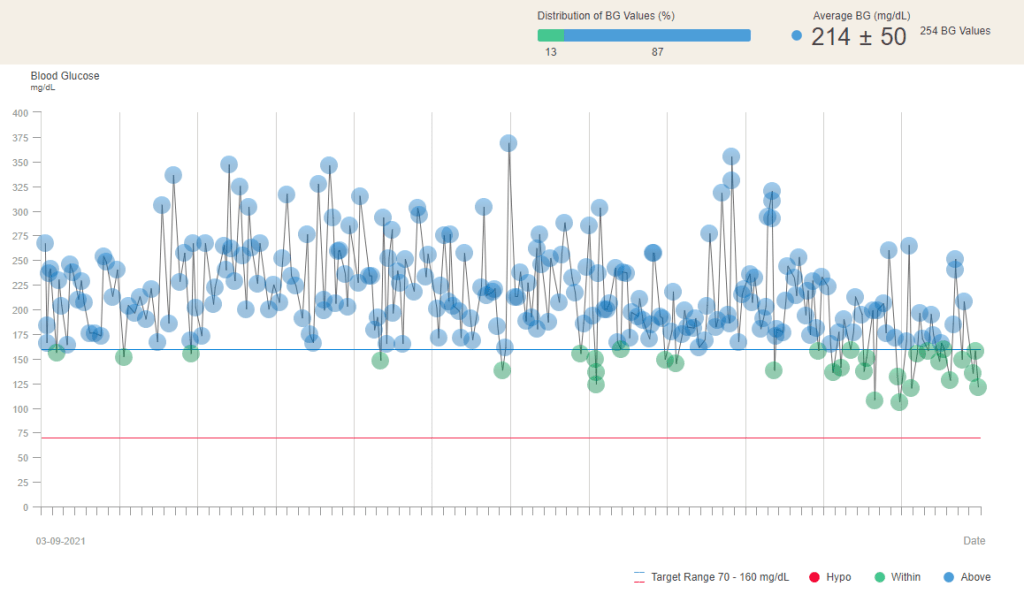
Here is a chart from data I uploaded to my meter’s website:

Data is from previous 12 weeks. There are a few outliers; I was too lazy to go back and delete obvious erroneous readings. If you squint, there does seem to be a very slight downward trend, especially during the last two weeks. There are definitely more green dots on the right side of the graph than the left. However, the numbers are still to high on average. If I shorten the time range, the average does drop somewhat.

Time RangeAverage Blood Sugar (mg/dL)
12 weeks214 ± 50
8 weeks207 ± 50
4 weeks195 ± 50
2 weeks173 ± 39

There is no real difference between one or two weeks. The problem is that I have been skipping some meals, but still injecting the prescribed amount of insulin. If the morning reading is high, I may just drink my cup of decaf coffee and not eat anything else. That would definitely drop my noon blood pressure reading. I am supposed to only inject the Humalog if I am eating carbs in the next 15 minutes so I am running a (slight) risk for hypoglycemia. Again, had that once before and definitely do not want a repeat performance.

Back to the top of my post. I sent my updated prescription list (10 medications) plus blood sugar readings for all of May. Hopefully she can shed some light on why my blood sugar is so hard to control.

Final x4 Appointment

Just when I thought I was out, they pull me back in!

Michael Corleone, The Godfather: Part III

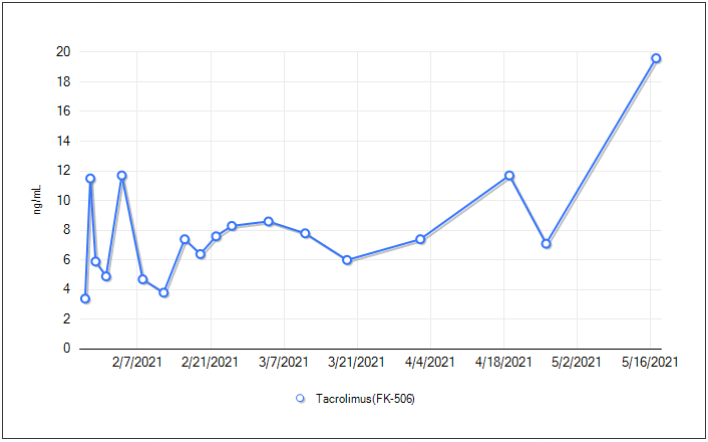
Not a mafia boss, but that how I feel after the “final” UCLA post-transplant appointment. Not sure if I mentioned it previously, but they initially scheduled an in-person appointment, but changed it to a video call later. That meant I had to schedule a lab appointment in Laguna Hills. Since it was kind of last minute, my lab appointment was at 11:30 am. Not wanting to miss my tacrolimus and prednisone pills in the morning, I took them at 8:00 am as scheduled. As a result, my tacrolimus test result was through the roof, and ended up being invalid. There is no “normal” range given, but I read that from 7 to 11 is a good result.

Tacrolimus test results from 1/28/2021

Since the result was useless diagnostically, the nephrologist wanted me to schedule another appointment with them. I guess they want me case to be perfect before releasing me back to my regular nephrologist. That was not all however. The reason they asked for this past appointment was due to a high calcium test result. Well, it was even higher this time, though still small. They also added a new test for PTH or parathyroid hormone. My numbers while on dialysis was crazy high, like 400+, when normal is 10-51. This time, my result was 85, but I have nothing to compare to since this was the only result for this test. To counter this and high calcium, I was prescribed Sensipar. Instead of reducing medication, I picked up another one.

Finally, just to rule out some issue with my kidneys, UCLA ordered a kidney ultrasound. It was strange since I just got an ultrasound less than a month ago, but this time it was for my old kidneys. Sometimes recipients get cysts or kidney stones in the old kidneys, and one of the symptoms is high PTH. This time, instead of going to UCLA for the ultrasound, they were able to make an appointment for me at a site in Palos Verdes. Much closer drive, except it will be Friday afternoon when I am done. Probably the worst time to drive from South Bay to Irvine. Along with my no show podiatrist rescheduling, there were a lot of phone calls and coordination to schedule this latest batch of medical appointments.

No Immunity?

I saw an article on NPR today about COVID-19 vaccine and transplant recipients. Basically, the doctors are saying that even if you are vaccinated, you should assume that you have no immunity.

Right now, Haidar says, the best advice he can give his patients is to get vaccinated — but keep living cautiously, adhering to the same masking and physical distancing precautions they’ve been following throughout the pandemic.

And just assume you’re not protected, he advises. “I know it sounds lame, but this is all that can be offered now.”

NPR Website

At least he’s right that it is super lame. The article also says experts do not recommend getting an antibody test since it may not measure the right things. WTF? Then what was the basis of the Johns Hopkin study? How did any of the vaccine manufacturers come up with their efficiency numbers? You game me two vaccine shots and you do not know if it did anything at all?

I did ask one of the UCLA nephrologists about this back in late March. Basically she said the same thing. You probably have some immunity, but it will not be as strong as “normal” people, and no, do not get an antibody test. Initially, I thought I would be able to physically go back to work a few days a week, and maybe travel a bit since the last time I travelled was back in 2015. Now it looks like I have to keep hiding out indefinitely since I live in the land of anti-mask and anti-vaccine morons.

==========

The article did mention that a lot of the immunity issues come from anti-metabolites. I was taking mycophenolate right after surgery, but that tapered off quickly. It is likely that there was still decent levels of the medication in my body when I received the second vaccine shot, but I have been off that medication for several months n0w. Maybe a third/booster vaccine shot will work.

Tacrolimus vs. Mycophenolate

Final Final Appointment

I thought my in-person appointment at UCLA was the final one with the transplant team, but they told me to come back again this coming Monday. The doctor said they wanted to check my kidney ultrasound taken yesterday, plus they also reduced my tacrolimus dosage and wanted to see if lab results are stable after a week.

Speaking of lab results, the numbers all look pretty good so the medical team felt I am ready to go back to my regular doctors in Orange County.

TestResultNormal Range
Potassium4.73.6 – 5.3
Glucose13966 – 99
Creatinine1.330.6 – 1.3
Calcium10.18.6 – 10.4
Phosphorus2.72.3 – 4.4
Tacrolimus11.7N/A
Test results from UCLA Medical Center 4/19/2021

My creatinine levels are just over the high limit, but the doctor said it was still normal and stable so no worries. Glucose is still high but much better. Since my local endocrinologist is managing my insulin, they did not have any comments. The Tacrolimus levels jumped a lot from last test so they reduced it by 25% to three pills each time.

The transplant center also asked me to make an appointment with my regular nephrologist so I think next week’s appointment is the final one. I may have to go back every three months for a kidney ultrasound until they are satisfied that the lesion in my sister’s kidney is benign.

Maximum Insulin Setting

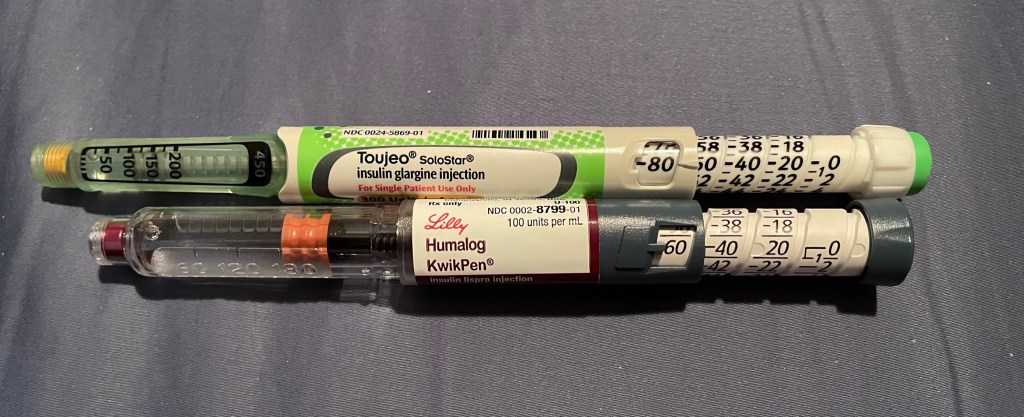
When my endocrinologist increased my insulin dosage, I thought it was a lot. I went from 8 units of Toujeo to 11 units in the morning, and from 8 units of HumaLOG to 12 units. This morning, as I was injecting myself, I wanted to see how high the dosage dials can go.

Well, it looks like Toujeo can shoot up to 80 units per injection, and HumaLOG can do 60 units. The pens do not hold that much insulin so if you need 60 to 80 units of insulin, the pens will run out pretty quickly. I am still using my first Toujeo pen since it was only prescribed a month ago. For HumaLOG, I am already on my third insulin pen.

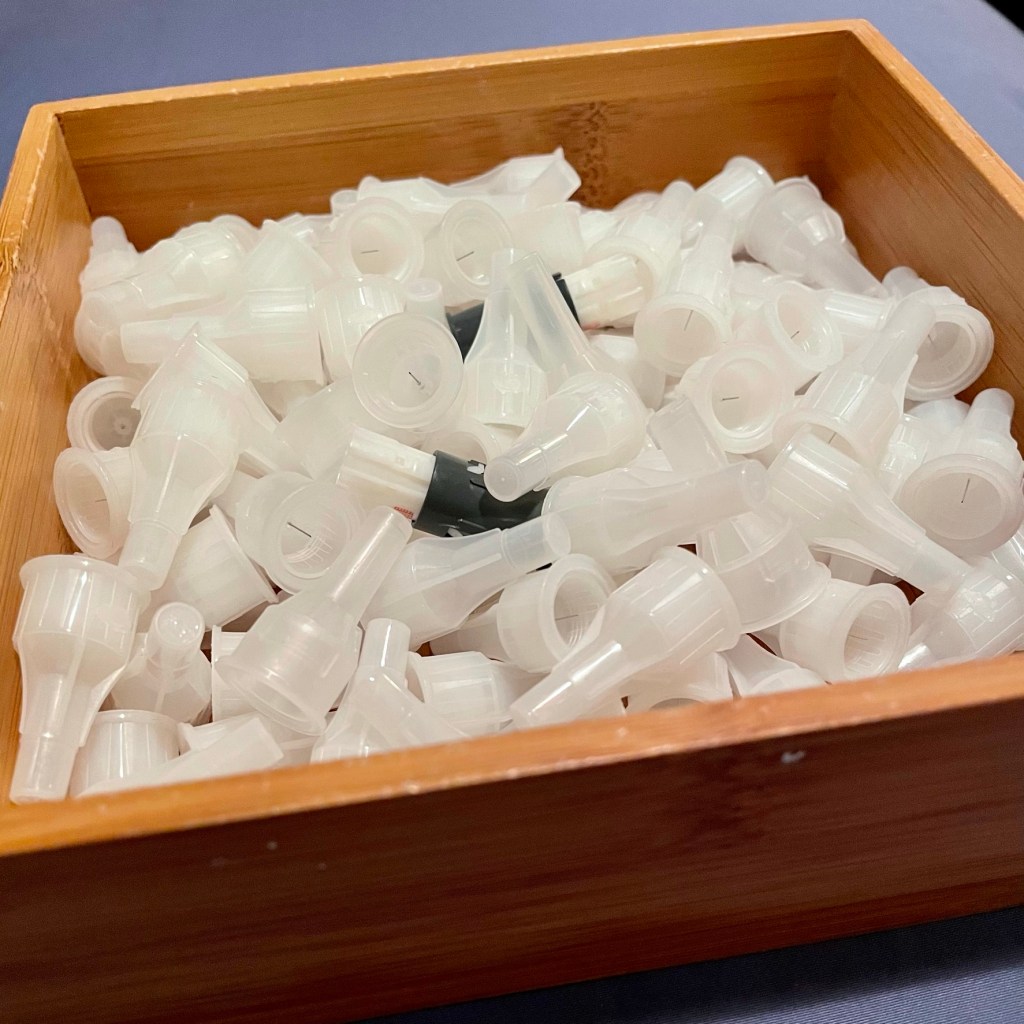
Along with the pens, you have to buy needles separately. They are single use only, and are disposed after each injection. I also had to purchase a red sharp bin to safely dispose of used needles.

Insulin pen needles. I use four needles each day.

More Insulin

Ever since my endocrinologist switched my Humalog prescription from a sliding scale to fixed amounts, my blood sugar readings have been high. In addition, she added a second long-lasting insulin prescription for Toujeo.

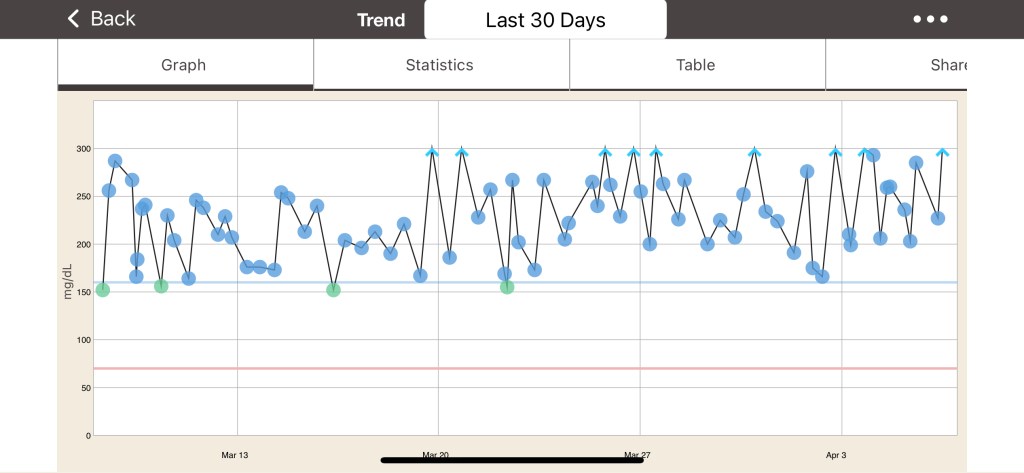
Initially, I was told to inject 8 units of Toujeo in the morning, and inject 4/2/2 units of Humalog before each meal. Toujeo is a long-lasting insulin that is supposed to last the entire day, and Humalog is quick-acting, taken right before meals. The goal is to have blood sugar readings between 80 to 130. From the graph below, I have not hit that goal during the past 30 days.

I sent the readings to my endocrinologist this past weekend along with medication changes since I last spoke with her. Since she was out-of-town, a different doctor covering her patients replied and changed my prescription to 11 units for Toujeo, and 4/4/4 for Humalog. Hopefully, that will improve my blood sugar readings. I have been trying to eat a low carbohydrate diet, but it has not been working out too well. I hope some of this is a side effect of anti-rejection medications. My prednisone dosage is already pretty low, but I am still taking a decent dose of tacrolimus.

Overall, I have to jab myself four times a day. The needles for the insulin pens are really thin. Usually I do not feel much while injecting, but sometimes I hit a nerve or something and then it hurts really bad. I also test my blood sugar four times a day so lots of pinpricks on my fingertips.