UNOS Wait List

UNOS is the United Network for Organ Sharing and they maintain the wait list for transplants across the United States. The date you are placed on the wait list determines when you get a deceased donor organ transplant. The date is supposed to transfer with you when you switch transplant centers. I happened to look at an update letter from UCLA and noticed their date was in July 2017. I went back to my files and found a letter from St. Joseph Hospital that said I was listed with UNOS in September 2016.

I quickly emailed my transplant coordinator at UCLA and she returned my email within the hour. There are many dates involved but she printed out my records and it has my UNOS qualified date in September 2016. She said the other dates are for administrative bookkeeping but the important date is the UNOS date and it matches what I have from St. Joseph. Whew… I thought I lost 10 months in the transfer. So instead of 2.5 years, I have about 3.5 years accrued on the deceased donor wait list. If I ever transfer to the Mayo Clinic in Arizona, that may be enough to get a transplant right away.

On the UNOS website, there are lots of statistics on transplants. It says UCLA completed 408 kidney transplants last year, with 139 live donor transplants. For St. Joseph Hospital, the numbers are 15 and 3. Nationwide, there were 23,401 kidney transplants last year, while there are 94.668 people on the wait list. That means the average wait time is ~4 years but it varies by location and blood type. If you look at % transplanted by blood type, type B is consistently the lowest. For years listed between 2011-2014, after two years, only 11.1% of blood type B candidates received a transplant. Compare that to type O at 12.2%, type A at 17.6%, and type AB at 29.7%. You would expect type O to be the lowest since they can only receive kidney from type O donors, whereas type AB can receive a kidney from anyone. My guess is that most Asians are type B and Asians just don’t sign up to be organ donors, either from tradition, laziness, or ignorance. That 6.5% difference between type A and type B works out to several extra years on the wait list for type B transplant candidates.
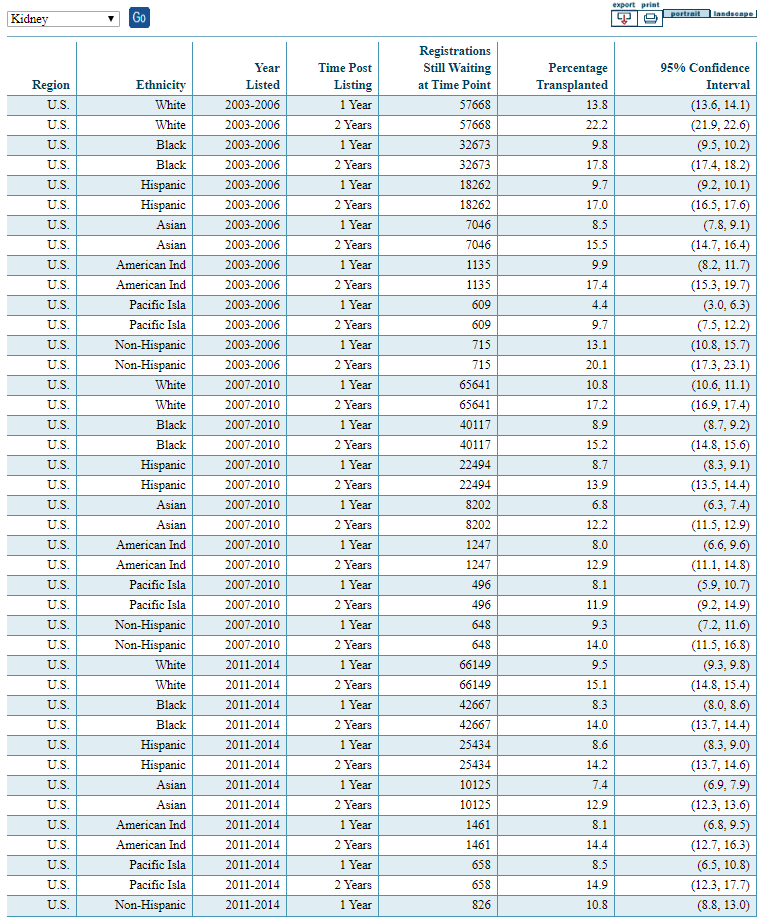
Of course, I am Asian and blood type B positive. Longest groups on the wait list!

Asleep At The Wheel

Yesterday after dialysis, my parents and I went to lunch since they were already in the area. Usually we get Asian food but my parents wanted to eat at Johnie’s Jr. Burgers or “the place you get the breakfast burrito.” Food was pretty inexpensive; three of us ate lunch for ~$25.

After lunch, I decided to drive home before heading to the acupuncture appointment. It was a short 6.5 miles home but I guess I was so tired from dialysis that I don’t remember most of the drive. I think I even fell asleep waiting for the garage door to open when I did get home. I’ve only been driving a few weeks post-surgery and have been wide awake for every trip so this was a bit scary.

I tried taking a nap but I had to fill out some forms for the acupuncture appointment. I think the 25 minutes of just laying there with some needles inserted was like a nap. I was fine driving home, mostly on the same roads as before. I did crash after dinner, sleeping from 8:00 pm to about 11:00 pm. It’s now about 1:00 am and I need to try and fall back asleep.

Food Choices, Claim Jumper Edition

Each year, there is a Christmas/holidays gathering with people from a previous company I worked at. It was a tradition while I was working there and we decided to continue meeting even after most of us have left the original company. This will be the 20th “party” since I left the company in 2000, and about 8-10 people still show up year after year.

Usually we meet at the TGI Fridays in Costa Mesa but it’s closed this year on the planned date so we’re meeting instead at Claim Jumper. I thought the restaurant chain went out of business but there are still a bunch left. I’ve only eaten at Claim Jumper a few times; the only thing I remember is the huge portion sizes and the ridiculous chocolate cake for dessert. The cake is still available for $12.99.

I haven’t seen a cardiac nutritionist post-bypass surgery yet (cardiac rehab starts Thursday so I will get a chance later) but everything I read said to go with a low fat and low sodium diet. Depending on where you look, low sodium could mean <3,000 mg/day, or even <2,300 mg/day. Here is the nutritional information for Claim Jumper’s menu. I was thinking of getting a chicken pot pie but that is 2,120 calories and 3,550 mg of sodium. Another favorite is Fish & Chips and that has 5,358 mg of sodium! Enough for two to three days. Even their salads have a lot of sodium; must be part of the dressing used. I guess it’s kinda obvious but if you want to eat healthy, don’t go to Claim Jumper.

Busy Thursday

Here is my Thursday schedule so far:

7:00 amLower arterial exam ordered by podiatrist
9:00 amHemodialysis
2:00 pmOrientation for cardiac rehabilitation program
6:00 pmAcupuncture appointment
7:00 pmDinner with church cell group

I don’t have anything on the calendar for tomorrow so I’d better rest up for a busy and tiring Thursday. I’m mostly worried about the cardiac rehab orientation. I really need to complete the program to get my transplant back on track at UCLA.

Acupuncture Appointment

I was feeling kinda bad today during dialysis. The numbness in my feet seem a bit worse than usual so I decided to call the first acupuncturist on my list. It was a place called Evolve Integrated Health. The owner is a chiropractor but has two acupuncturists at the office as well. They have a perfect Yelp and Google review record, and their website was pretty conservative about the benefits of acupuncture. I called during the dialysis session and was able to get an appointment for this afternoon.

After filling out paperwork and paying the $40 co-pay, the receptionist led me to a small room with a massage table. After about five minutes, the acupuncturist came in and asked me a bunch of health questions. I explained that even though I have a huge list of medical issues, my primary concern for acupuncture was the diabetic peripheral neuropathy. She then told me to take off my shoes and lie down face up. While we were still chatting, she stuck a bunch of needles in my lower leg, hands, and head. I barely noticed each needle; there was a tiny prick then I couldn’t feel them at all. She then let me rest for 25 minutes. I think I will need to use a reclining chair; lying down on the massage table was a bit hard on my chest and I got a small headache at the end. I didn’t feel that much different but it was only one session. I’m willing to go for awhile to see if there is any effect. She did say that for neuropathy, muscle pain, and migraines, there was research on the benefits of acupuncture. For other ailments, no so much.

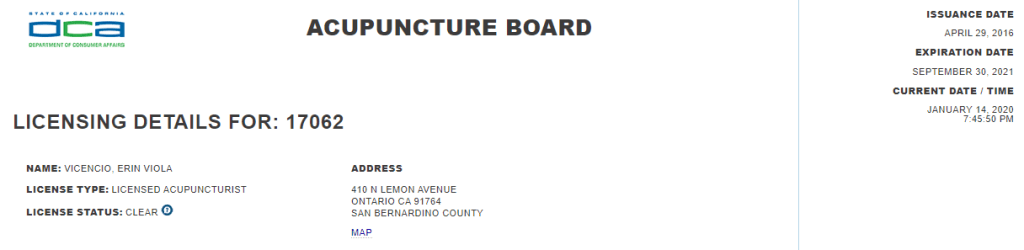
This is my acupuncturist. She went to UCI for undergrad the received a Masters degree and Doctorate degree in Acupuncture and Oriental Medicine. I have no idea if the Oriental Medicine schools are any good but at least she has lots of education and is licensed!

More Medication (updated)

At dialysis today, just as the nephrologist stopped by to talk to me, the machine decides to measure my blood pressure and shows a 200/121. Both numbers flash red since they’re above the preset limits so the nephrologist decides to add one more blood pressure medication to my plethora of pills. Luckily it’s something I was taking before the heart surgery so it should not trigger any adverse reactions or strange side effects. That means I will be on three blood pressure medications: a beta blocker, an angiotensin II receptor blocker, and a calcium channel blocker. Whew!

To think that right after surgery my blood pressure was dipping low at times and I would feel faint. Now my blood pressure hardly drops below 160/100, even after dialysis. My cardiologist wants me to make an appointment to talk to one of their nurse practitioners about the high blood pressure as well.

==========

I measured my standing blood pressure about 40 minutes after taking all three hypertension medications. The reading was 129/77 which is pretty good, and the lowest I’ve seen in a long time. My blood pressure earlier this afternoon was 161/96. I don’t know how long it takes for each medication to take effect but a 30 point drop is pretty good. I hope the effect of the ER pill lasts through the night.

Plethora of Pills

After surgery, I was ready for doctors to prescribe a few pills. Since then, I’ve had a couple of medications remove but a lot more added. I’m up to about 17 pills a day now.

Morning:

  • Aspirin
  • Blood pressure
  • Another blood pressure
  • Diabetes
  • Blood thinner
  • Phosphorus binder (dialysis)

Noon:

  • Phosphorus binder (dialysis)

Evening:

  • Blood pressure (same as morning)
  • Another blood pressure (same as morning)
  • Blood thinner (same as morning)
  • High cholesterol
  • Phosphorus binder (dialysis)
  • Foot fungus (hopefully three months only)
  • Vitamin D (dialysis)
  • Vitamin B+C (dialysis)
  • Laxative + stool softener x2

The few items at the end of the list are non-prescription. Needless to say, I’m at my pharmacy all the time since there are eight separate prescriptions. This is not counting the glucometer lancets and test strips which are also prescription only and I’m stealing them from my mom. A lot of the items are marked with “(dialysis)”; they should go away after a kidney transplant.

Walking 1/13/2020

Since I had to go to LAX area for a work errand this morning, I only got home around 2:30 pm. That includes lunch at Ding Tai Fung in Torrance with an old church friend. Food was great but probably very expensive. My friend paid so I owe him a big lunch next time. This is only my third DTF location. I’ve been to the one in Seattle several times and to the Taipei 101 location in Taipei once.

Since I have a therapist appointment this afternoon at 4:00 pm, I only had time for a short walk. I walked 0.68 miles at a pace of 23’56”. I need to find a way to pick up the pace a bit. I think I used to be able to walk at 3 mph or a pace of ~20’00” before surgery.

Dialysis Blood Pressure 1/11/2020

Even though I haven’t posted my blood pressure for a few days, I’ve still been keeping track. Here are Saturday’s numbers:

TimeSystolicDiastolicPulseNotes
6:37 am1839973Lying down
7:07 am18010374Sitting up
7:27 am16810475Sitting up
7:37 am17710872Sitting up
8:09 am19912075Sitting up
8:49 am20011772Sitting up

I missed a few reading at the end but I think the final standing reading was 159/90-something. Since I carry my Metoprolol with me, I took 25 mg at about 8:15 am thinking it may kick in before being dialyzed out. Looking at the 8:49 am reading, it looks like it did not help. This pattern is pretty common too. I would come in with a high reading, then it would drop slowly as I’m being dialyzed as you expect with fluid removal, then at some point, the numbers would increase. I’m not sure why that happens when the number should keep dropping until the end of the dialysis session.

Anyway, I’m going to start taking an extra 20 mg of Olmesartan at the same time I take the “morning” Metoprolol since there’s a chance it may dialyze out too. Hopefully that will lower the blood pressure some. I’m sure having such high numbers, even after heart surgery, is not good.

Government Agencies, Part II

Man, I feel like I’m caught in a time warp. I just checked both the SSA (Medicare) and EDD (CA disability), and there is no movement on both. I looked back at my posts and “Part I” of this post was only six days ago. Honestly, it felt like at least a few weeks have past.

For the SSA, I filed my Medicare paperwork on 12/23/2019. I’m supposed to receive my Medicare card within a month so there’s 10 more days. For the EDD, my cardiologist filed the paperwork online on 1/6/2020. They’re supposed to complete the claim within 14 days so there another seven days to go. I’m not very optimistic about any of this. I figure I have to call the SSA in 10 days to check on my Medicare application, and since there are no humans on the phone at the EDD, I’ll have to write another letter in a week.

Urgent Medical Device Correction

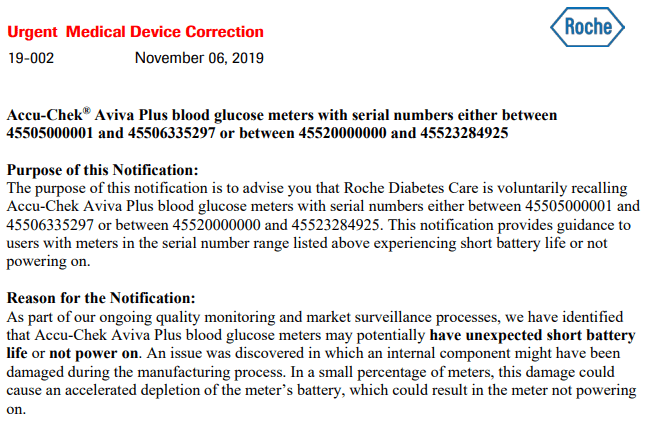
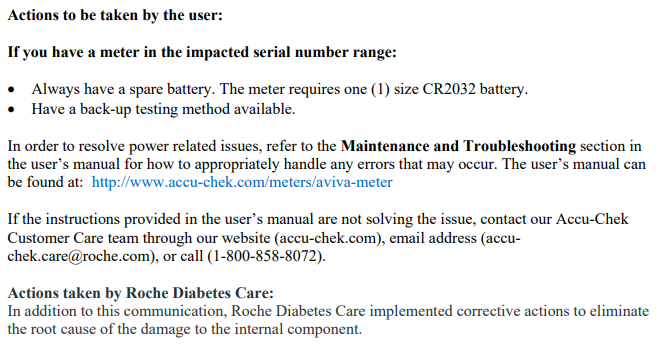
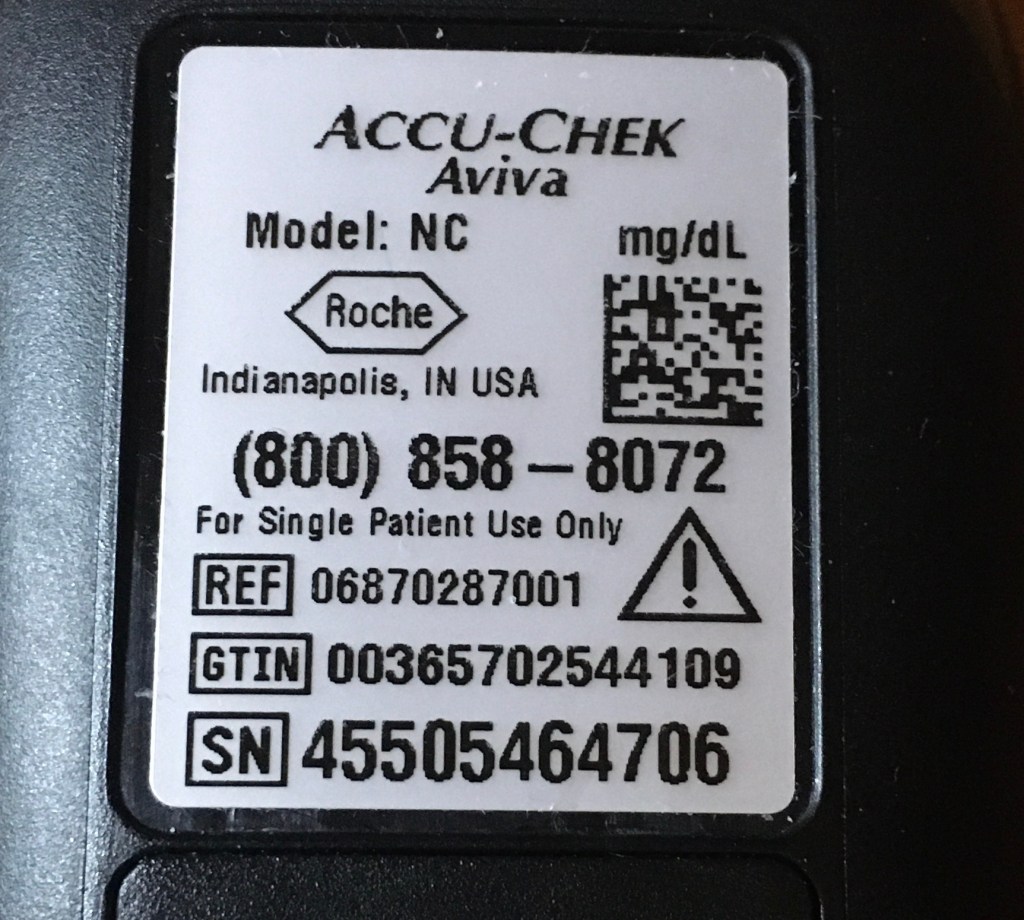
On Roche’s website for Accu-Chek, there are a lot of these correction notices. There was one for the Accu-Chek Guide, and several for the Accu-Chek Aviva. I looked up the serial number for my Aviva, and sure enough, it was included in the notice.

As I’m reading this, I’m thinking that they will send out a new replacement meter or something. The meter only costs $30; surely they want me to keep using it so I can keep ordering supplies. Nope.

Basically, it says to keep an extra battery and an extra glucometer around in case the meter dies. That’s pretty lame. Why keep using this meter if it will burn through expensive CR2032 batteries, or fail often enough to require a second meter? Look at the section titled Action taken by Roche Diabetic Care: we communicated the problem. That’s their fix? Hey, we told you your meter is busted. I didn’t include it in the screenshots but there is a section in the notice for Risk to Health and it says the problem may potentially lead to an adverse medical event or consequences. Wow!

For the record, I think I had to replace the battery once already but otherwise have no issues with the meter. Still, when I’m done with my current inventory of test strips, it’s going into the trash.

Accu-Chek Guide

Between me and my mom, we have lots of glucometers at home. For the longest time, I used a OneTouch UltraMini. I remember needing to pay a $25 co-pay for test strips so I used my mom’s supply since there was no co-pay for Medicare, and she was using the same glucometer model. More recently, her doctor prescribed a few new meters so we also have an Accu-Chek Aviva and more recently, an Accu-Chek Guide.

All the glucometers are priced really cheap. You can get the Accu-Check Guide for $30. There is a lot of technology in the meter, including Bluetooth connectivity. I found the iOS app that allow you to connect to the meter and download all the readings. It also passes info through to Apple Health so everything can be viewed in one app. I wish Fitbit had that feature built-in.

Obviously these companies makes all their money from supplies, including lancets and test strips. For the Accu-Chek Guide, the lancets cost $18.99 for 102 count, and test strips are $29.99 for 50 count. That comes out to $0.786 per test or $2.36 per day if you test three times a day. That’s not super expensive but it adds up to $860 for an entire year if you buy from the manufacturer. If you had an emergency episode of hypoglycemia like I did and testing your blood sugar eight times a day, it will cost you more.

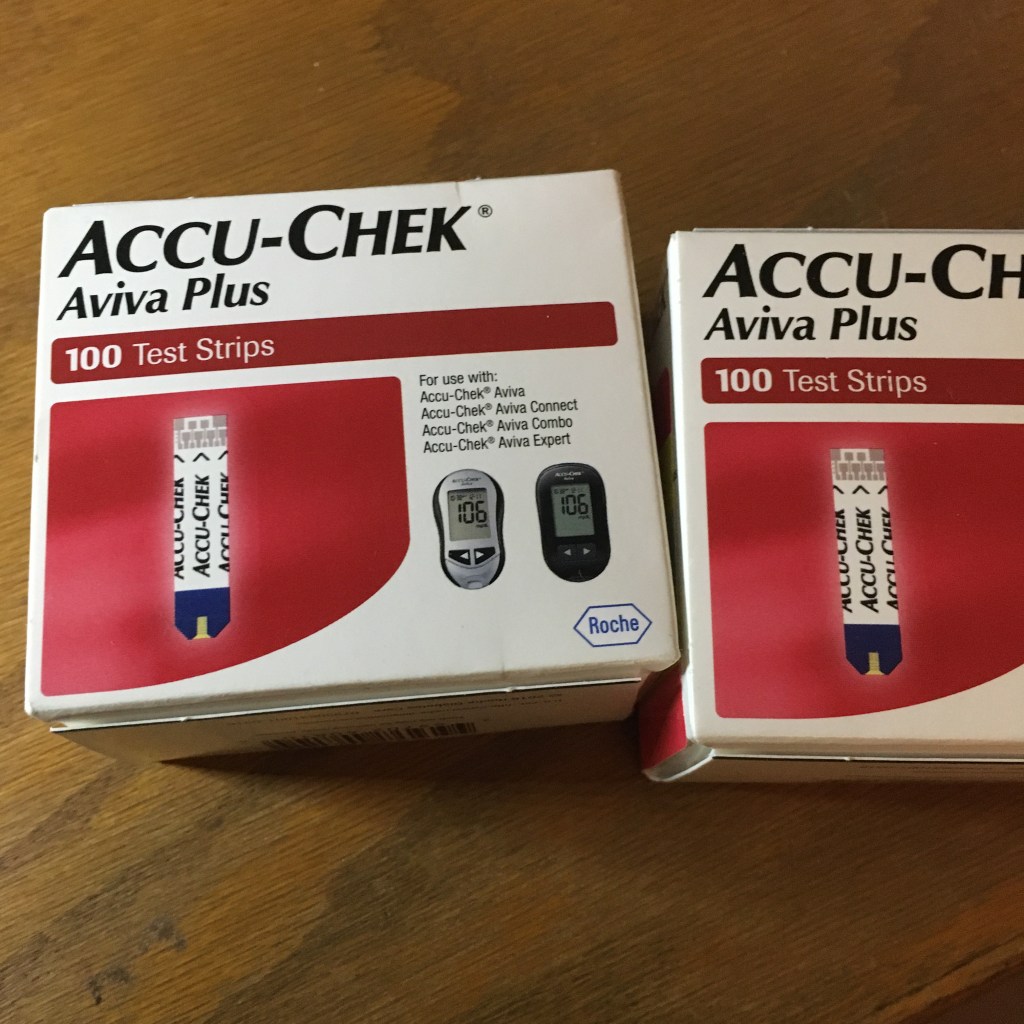
The cost is more ridiculous for the Aviva. Test strips are $109.99 for 50 count or $2.20 per test without lancing costs. My mom did say that she got the Accu-Chek guide since the pharmacy was not carrying supplies for the Aviva anymore. Maybe they’re trying to move people away from that model. I have two boxes of 100 test strips so that’s like $440 worth?

Walking 1/12/2020, Part II

We headed out to a Chinese restaurant for lunch right after the first walk today. The wait ended up being like 45 minutes. We took two cars so I returned home right after lunch and decided to walk a bit more. I walked 0.91 miles at a pace of 24’18”. I thought the path I took was longer than it was so I ended up not even walking a mile. The pace was faster and more even since I was by myself.

The pauses are when I had to wait for traffic to clear before crossing the street. The weird skip in just past half way is probably a hiccup in the Fitbit tracker. On the elevation track, there’s a corresponding dip that was not there physically; it’s just a gentle climb. Weird.

Sleep Update, 1/12/2020

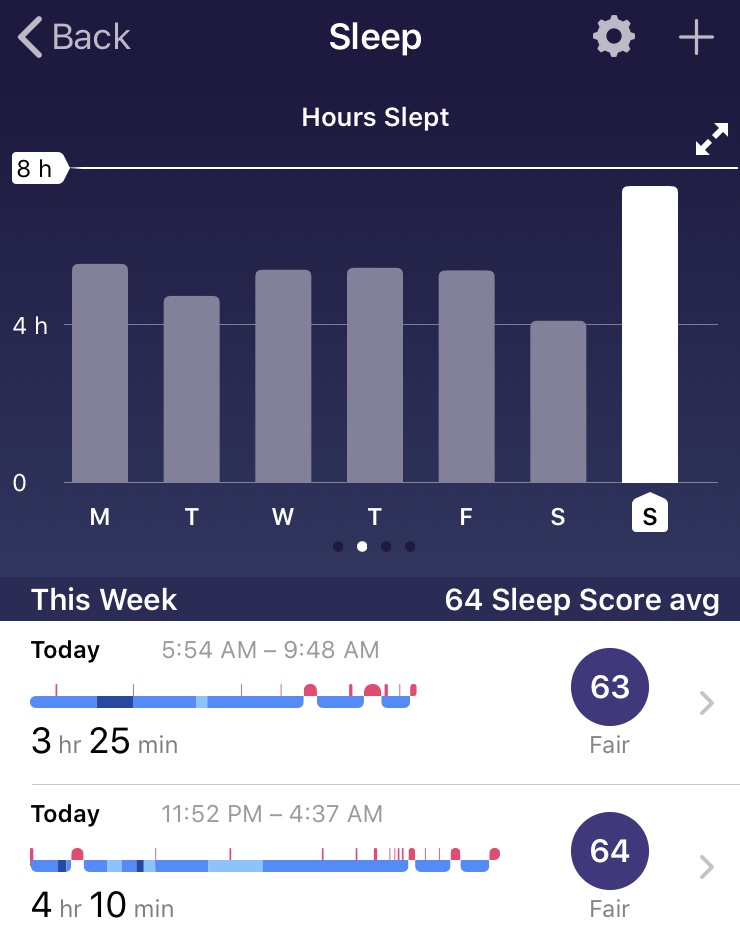
Finally, I got more than 7 hours of sleep overnight. Had to sleep until 9:30 am to do it. Still got up in the middle of the night too but sleeping better throughout.

I ended opening the window a tiny bit overnight to get the temperature down sightly. I also grabbed a large body pillow that allowed me to sleep on my right side. I still can’t sleep on my left side; it hurts my chest and makes it hard to breathe. I have to leave the house tomorrow by 6:00 am so I have to get to bed early, like 10:00 pm. It didn’t work out well Saturday morning though where I only got an hour of sleep..

Walking 1/12/2020

Now that I’m not pushing the button on the Fitbit tracker, it’s working pretty well. I walked 1.53 miles at a pace of 27’59”. It’s a bit slow since I was walking with my mom again. Her leg feels better but she needs to walk a lot more. There were also a couple of Pokémon breaks again.

Lots of start/stops

The weather was deceptively cool. The sun was out again but the temperature was only 60 degrees. It got warm walking in the sun with three layers on but when I took off my jacket, it got cold fast. I also wore a new pair of shoes. I thought the previous pair was a bit tight so I bought the same model shoe but 1/2 size larger, and a bit wider. The new shoes looked a bit too large but I found some thicker orthotics inserts so it’s passable.

Body Mass Index (BMI)

From the CDC:

Body Mass Index (BMI) is a person’s weight in kilograms divided by the square of height in meters. A high BMI can be an indicator of high body fatness. BMI can be used to screen for weight categories that may lead to health problems but it is not diagnostic of the body fatness or health of an individual.

I’ve read before that BMI is not really useful as an indicator of overall health since it only takes weight and height into consideration. However, I think a lot of transplant centers use BMI as a criteria for transplant acceptance, both for live donors and recipients. I don’t know UCLA’s cutoff but the last time I was there in October, I weighted 221 lbs and they calculated a BMI of 30.8. In the After Visit Summary document, they have a chart titled Commonly accepted BMI ranges:

30.0 to 34.9Class 1 (low-risk) obesity
35.0 to 39.9Class 2 (moderate-risk) obesity
> 40.0Class 3 (high-risk) obesity

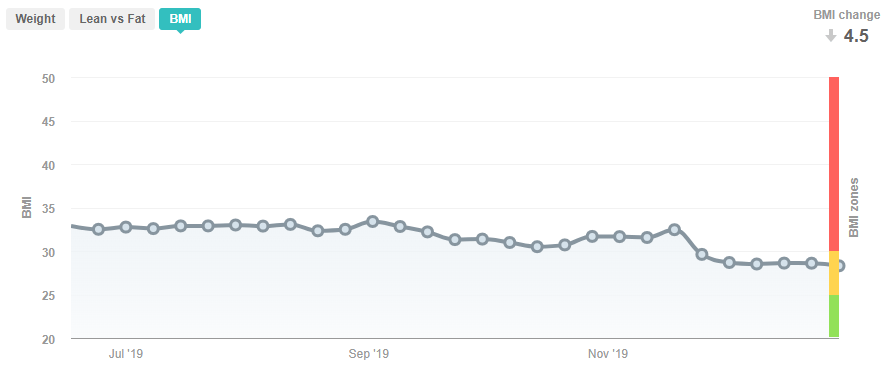
There were no instructions regarding the BMI reading of 30.8 so I assume Class 1 obesity was acceptable for transplant. Since heart surgery, I’ve dropped some weight. My last weigh in at home 15 minutes ago was 200.4 lbs. That calculates out to a BMI of 27.9. Still “overweight” but out of the “obese” category. Again per the CDC, for my height, normal weight range would be from 133 to 179 lbs. So if I drop another ~20 lbs, I will be in the “normal” range for the first time in probably 30+ years. My weight has stabilized after surgery at ~200 lbs however. I feel the fluctuations now are just due to fluid removal during dialysis.

BMI history from Fitbit. Since I was weighing myself on the wireless scale daily while on peritoneal dialysis, there is a lot of data. The big drop was actually in December when they got rid of excess fluid from the surgery by taking out a lot of fluid during dialysis each day. On November 10th, I was still ~230 lbs and even after surgery, on November 24th, I was still around the same weight. By December 3rd I was down to ~220 lbs and then ~210 lbs by December 6th. I think there was an extra dialysis day during that time, and I was pulling out extra fluid with the remaining PD solution. A week later, I was around ~205 lbs and it has remained between 201 to 206 lbs on the scale, depending on the dialysis cycle and what I’m wearing at weigh-in.

I think dropping another 20 lbs will be difficult since I’m not eating full meals at the moment. My nephrologist expects me to gain weight when I start eating “normal” again. I’ll need to bring up the 179 lbs goal to the dietitians and exercise specialists at cardiac rehab to see what they can recommend.

Multiple Listings for Kidney Transplant

Another thing they discussed at the Kidney Disease Support Group today was listing at multiple transplant centers, or just listing at Mayo Clinic in Phoenix for a shorter wait time. Even though the kidney wait list is national, kidney distribution is often local. Southern California has a long wait list due since there are lots of kidney patients and not enough donors. It’s especially bad for those with B blood type, like me. I was told the wait is from 6-10 years. I’ve also heard that the wait in Phoenix is only 3-4 years but you have to be reevaluate and accepted at a transplant center over there. Most people go with the Mayo Clinic. Even at today’s meeting, there were three people in the process of being listed at Mayo Clinic in Arizona even though there are lots of closer transplant centers. The only down side is that you have to travel there for a week of tests, then when a kidney becomes available, you need to stay in Phoenix for 6-8 weeks with a support person, no exceptions.

I think I’m going to wait until UCLA rejects both my current donors before considering listing at the Mayo Clinic. Since the result from a living donor is much better than from cadaver donor, I want to exhaust all living donor options first. The group also suggests sending out communication to all friends and family to look for a living donor. They suggest looking here for ideas on how to ask for a kidney. I’ve thought about this for a long time. My potential donors are my sister, and a high school friend that just volunteered without me asking. I would really struggle with asking for something this huge.

Activity History

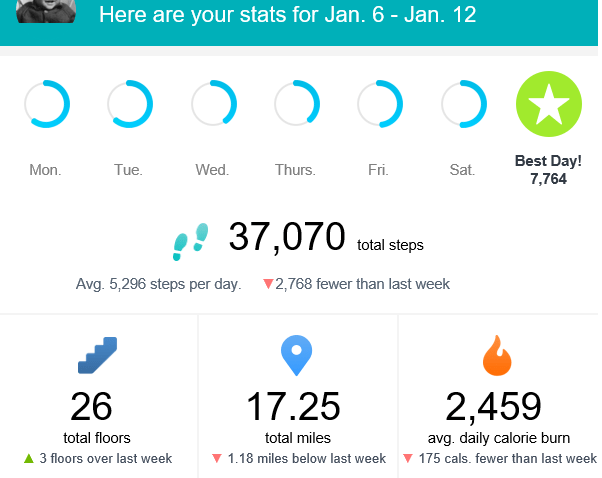
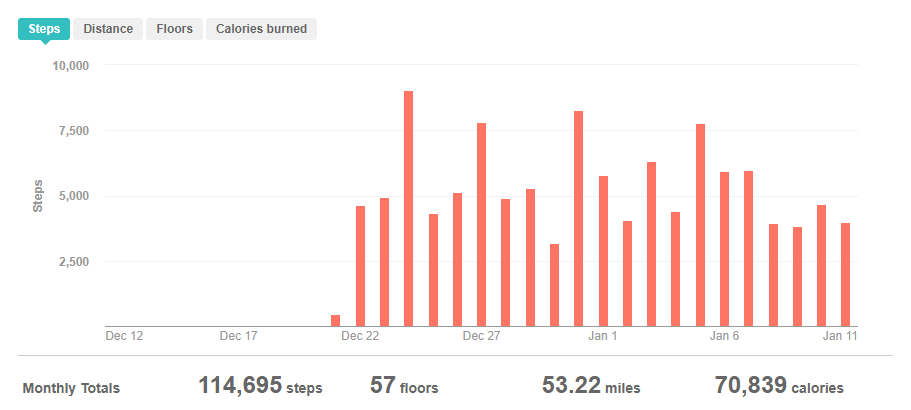
I was looking through Fitbit data on the web instead of using the iOS app. There are different graphs and overall data presentation. Here is a summary of activity since I got the larger Fitbit tracker.

This likely includes all steps tracked, including me going to the bathroom from my bed at night, then converted to miles. Still, 53 miles in three weeks. That’s farther than my commute to work. It’s probably not enough activity though. Fitbit sets the daily step goal at 10k which means I should have >210k steps for the number of days shown above. Once I start work, I will need to start running, or at least jogging, instead of walking. Otherwise I’ll never hit any of the activity goals with less free time.

Walking 1/11/2020

During your workout, tap to view different stats. To pause and resume your workout, press the button. When you’re done, press and hold the button to end your workout and see your stats.

Heh, so my Fitbit tracker is not broken. I was just pressing the button like an idiot and pausing the exercise tracking. So today, I started the walk using the tracker and didn’t touch it until I got home. No surprise, it worked. I walked 1.02 miles at a pace of 24’31”. Again, it was colder than expected so I didn’t try to walk any longer. My legs are still weak so that may be the poor circulation rather than the heart, though you would think walking everyday should improve circulation as well.

It’s about 4:30 pm. Maybe I can get a short nap in before dinner since my sleep today has been so poor.